
President Donald Trump has signed letters that will be sent to around a dozen nations ahead of next week’s deadline to reach a trade agreement, according to a July 5 post from a White House account on the social media platform X.
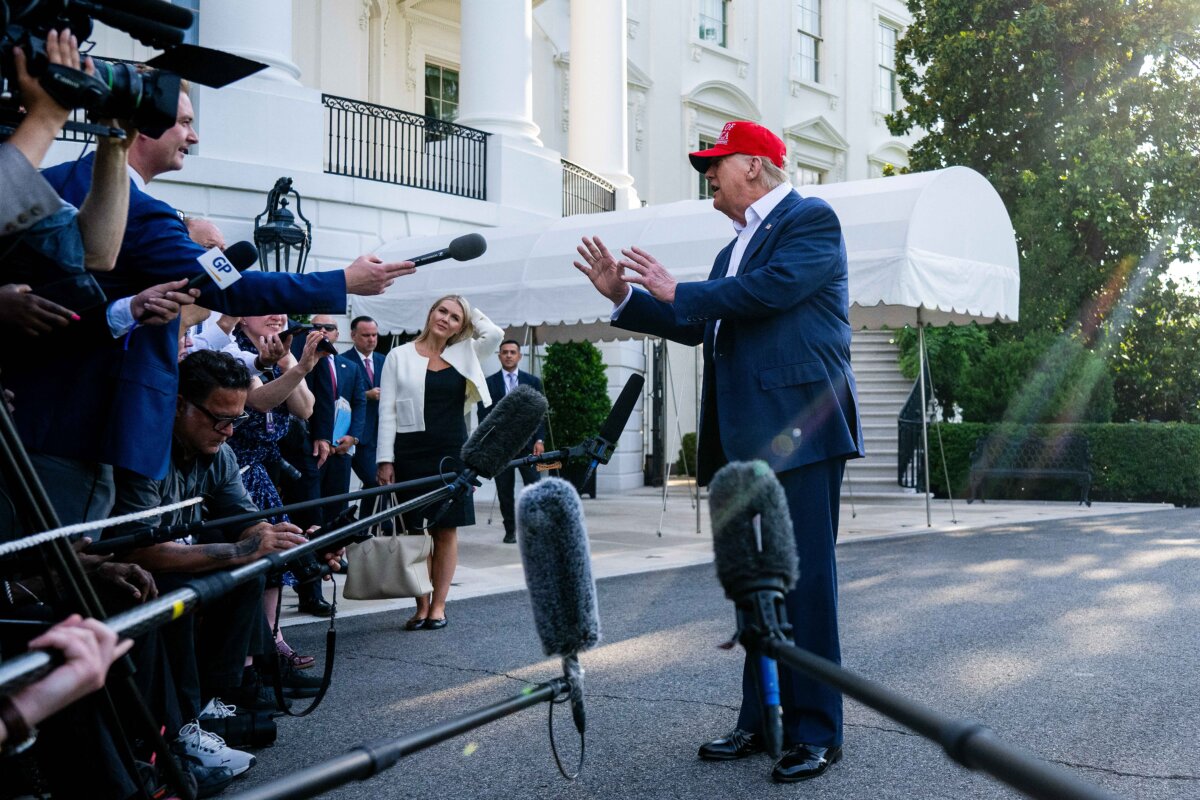
In a video that accompanied the post, Trump is seen responding to a reporter, saying the letters detail “different amounts of money, different amounts of tariffs, and somewhat different statements.” The letters are set to go out on Monday.
The Trump administration imposed a universal 10 percent tariff, as well as reciprocal tariffs, on several nations in April based on their trade barriers against the United States. Shortly thereafter, the president instituted a 90-day pause in reciprocal tariffs, which expires on July 9.
The 12 letters are being sent ahead of this deadline.
On Thursday, Trump highlighted the difficulty involved in making trade deals with numerous partners. “It’s just so many countries,” he said. “And then they go into specifics … beef, ethanol, I‘d rather just do a simple deal where you can maintain it and control it. ‘You’re going to pay a 20 percent, or 25, or 30 percent tariff.’”
Some of the major economies that have reached trade deals with the Trump administration include the United Kingdom and China. Washington is currently negotiating deals with the European Union, India, Japan, and Canada.
On July 1, Treasury Secretary Scott Bessent said the United States and India were “very close” to a trade agreement.
On July 2, Vietnam signed a deal under which American goods will enter the Vietnamese market tariff-free, while goods from Vietnam will face a 20 percent tariff in the United States. Goods transshipped from Vietnam, such as those from China, will face a tariff rate of 40 percent.
Following the agreement, a spokesperson for China’s Ministry of Commerce said on July 3 that the Chinese communist regime “firmly opposes any party reaching a deal at the expense of China’s interests.”
Meanwhile, in late June, the French finance minister called for more time to secure an EU-U.S. trade deal. Both the European Union and the United States are significant trade partners, with trade between the two regions hitting nearly $2 trillion last year.
In a July 4 post, think tank Geopolitical Intelligence Services (GIS) predicted that the “most likely” outcome between the EU and the United States is “regional fragmentation and selective retaliation.”
“Global trade may fracture into competing blocs in the future. The EU faces U.S. tariffs, such as the proposed 50 percent tariff on imports from the bloc, and responds with protective countermeasures,” GIS forecasted.
“U.S.-European trade declines significantly. Protectionist dynamics intensify, and the EU reinforces its defensive trade posture,” according to GIS.
 Friends Read Free
Copy
Facebook
Tweet
Friends Read Free
Copy
Facebook
Tweet