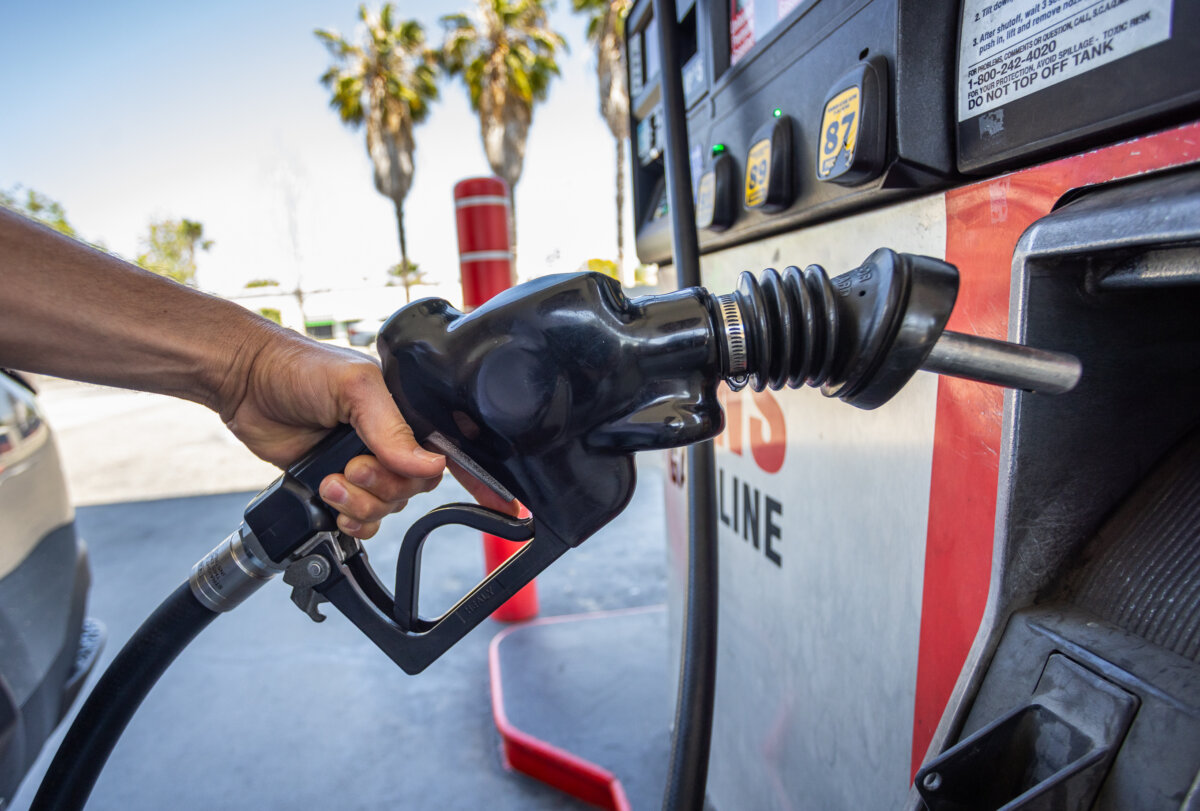

The national average retail price for gasoline in the United States fell below $4 a gallon on Sunday for the first time since mid-April, as hopes for a possible end to a months-long conflict between Washington and Tehran improve market sentiment.
GasBuddy data showed the average at $3.997 a gallon on Sunday, up 90.8 cents from a year earlier. The American Automobile Association reported a national average of $4.065 on Monday.
President Donald Trump announced that the United States and Iran had agreed to a memorandum of understanding to end the nearly four-month conflict, with the president stating on social media that “The Deal with the Islamic Republic of Iran is now complete.”
Trump also noted that the Strait of Hormuz, a critical waterway for global trade, would reopen without tolls and the U.S. maritime blockade on Iran would be lifted, writing: “Ships of the world, start your engines. Let the oil flow!”
A formal signing ceremony is scheduled for Friday in Switzerland. Pakistani Prime Minister Shehbaz Sharif and Iranian Deputy Foreign Minister Kazem Gharibabadi confirmed the memorandum of understanding has been finalized and that the war would end upon signing.
Crude oil prices fell rapidly in response. Brent futures fell more than 4 percent to $83.75 a barrel. West Texas Intermediate slipped more than 4 percent to $80.87 a barrel.
Neil Shearing, group chief economist at Capital Economics, noted the primary issue for the global economy depends on whether the agreement restores normal energy flows through the strait.
“Prior to the conflict, around 25 percent of global seaborne oil supply and one-fifth of seaborne natural gas passed through the Strait,” Shearing wrote in a June 15 analysis.
U.S. gasoline inventories were at 215.1 million barrels in early June, the lowest seasonal level in a decade, according to government data.
Strong domestic demand and robust exports drew down beleaguered stockpiles, which could place upward pressure on prices without fresh supplies.
Americans have spent about $46 billion more on gasoline since the conflict began, according to GasBuddy head of petroleum analysis Patrick De Haan.
Consumer inflation increased beyond 4 percent in May for the first time in three years. Easing gasoline prices tempered inflation expectations this month, Labor Department data noted.
De Haan said that lower prices now hinged on developments in the Strait of Hormuz.
“The real test now shifts to the Strait of Hormuz, where any reopening and resumption of normal oil flows would be the clearest signal that this relief is durable,” he said. “For now, the national average could continue falling, provided there isn’t a drastic reversal and the U.S. and Iran continue moving in a positive direction.”
SEB chief commodities analyst Bjarne Schieldrop said circumstances remain uncertain.
“This is a fragile structure,” Schieldrop said. “It can easily break down. There may be details which cannot be overcome.”
Clearing mines from the Strait and restoring tanker insurance could take weeks despite a formal reopening.
The national average for gasoline remains well above pre-conflict levels, as the Strait of Hormuz, which carries nearly a fifth of global oil trade, was effectively blocked after Iran began targeting ships following the start of hostilities in late February.
Reuters contributed to this report.
 Friends Read Free
Copy
Facebook
Tweet
Friends Read Free
Copy
Facebook
Tweet