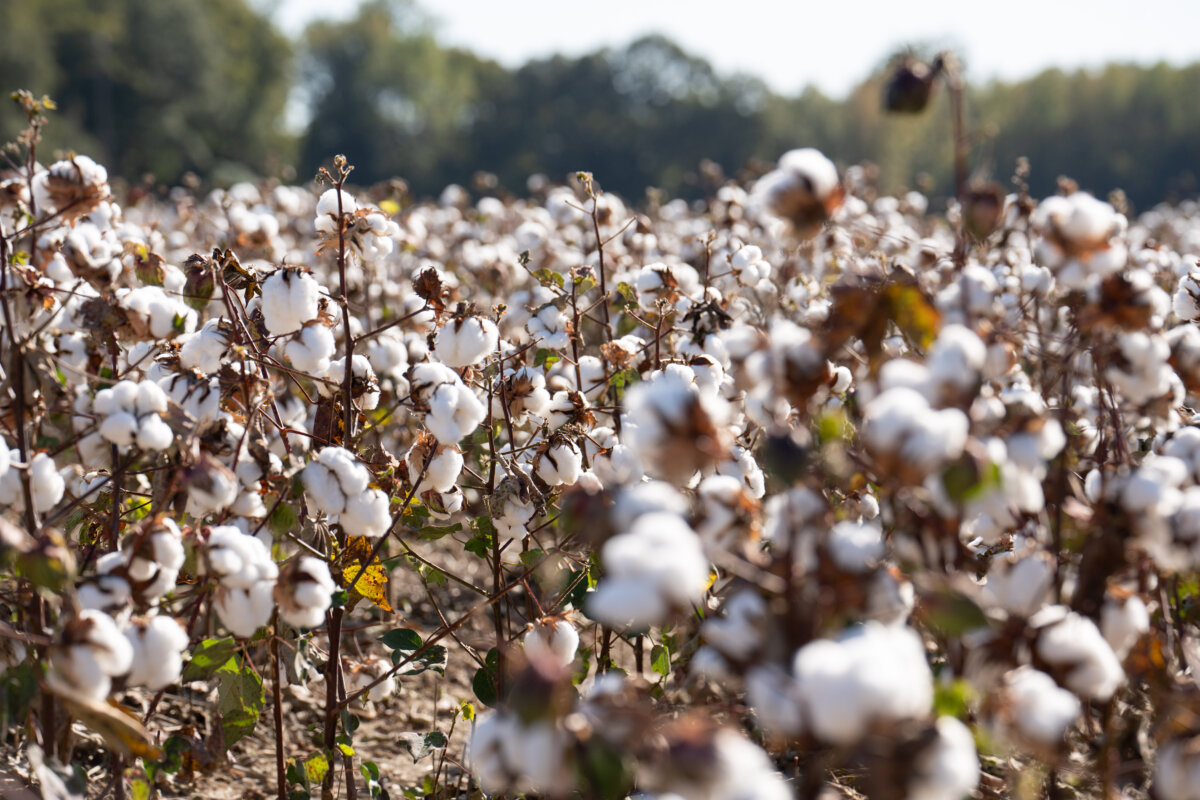

The United States Department of Agriculture (USDA) announced the launch of the Great American Cotton Plan, which seeks to strengthen the domestic cotton farm economy through measures such as increasing demand for American-grown cotton products, in a May 28 statement.
“The announcement comes as cotton producers face a fifth consecutive year of negative returns driven by rising input costs, trade distortions, and increasing competition from synthetic materials,” USDA said. “As part of the plan, USDA will elevate the ‘Plant Not Plastic’ initiative to encourage consumers to purchase products made with healthy natural American cotton fibers rather than synthetic plastic-based alternatives.”
“Since 1980, the number of U.S. cotton gins has declined from 2,254 to 446, while domestic textile production facilities have sharply contracted over the last two decades. At the same time, nearly 70 percent of the world’s textile fibers are now synthetic, most of them plastic-based materials such as polyester.” A cotton gin is a machine used to separate cotton fibers from seeds.
The domestic cotton industry faces continued economic pressure, with the USDA predicting that producers could lose around $2.6 billion across nine million planted acres for the upcoming crop year.
The Great American Cotton Plan seeks to address the challenges faced by the cotton industry through four measures—promoting the domestic consumption of cotton, increasing domestic production and demand to ensure cotton affordability, boosting cotton trade, and protecting cotton producers from adverse risks.
According to a report on the plan, the Trump administration will implement the provisions of the One Big Beautiful Bill Act to trigger a revival of the country’s cotton industry.
The Act made the Death Tax Exemption permanent, and raised the tax exemption from $14 million per individual or $28 million per couple to $15 million per person or $30 million per couple. This threshold was also indexed to inflation. The provision better enables farm owners to pass along their farms to the next generation. Without this provision, family-owned farms in America would have seen the exemption being slashed to just $7 million this year.
The bill made 100 percent immediate deductions for farm purchases, such as machinery, permanent. This benefit was set to phase out next year.
The Act also allows farm owners to defer capital gain payments on certain farmland sales, provided the land is sold to another farmer who will retain it for farming use. This ensures the land is not lost to other activities.
For the 2026 cotton crop, the bill raised loan limits for two financial assistance programs, giving cotton producers more liquidity during harvest time to “best market their crop,” the report said.
The payment rate for USDA’s Economic Adjustment Assistance for Textile Mills, which offers financial assistance to modernize and upgrade cotton mills, was raised from three to five cents per pound of processed cotton.
The United States is currently the fourth-largest cotton producer and the second-largest exporter globally, with the sector supporting more than 125,000 jobs. The industry is made up of more than $21 billion in annual products and services.
Just $1 of cotton value is estimated to generate $15 of direct economic activity. Cotton is grown across 12 million acres in 17 states. In addition to the decline in cotton gins over the last decades, the number of U.S. textile mills has fallen from 3,919 in 2002 to 1,146 in 2022.

Secretary of Agriculture Brooke L. Rollins said that American cotton farmers grow some of the highest-quality cotton in the world.
However, “over the last several years America’s cotton growers have been crushed by rising costs, unfair foreign competition, and a flood of cheap synthetic products. In 2023, we lost our status as the world’s top cotton exporter to Brazil. This change starts today,” Rollins said.
“The Trump Administration is committed to ensuring American cotton once again becomes the fiber of choice with the Great American Cotton Plan—a bold effort to restore profitability for cotton producers, strengthen rural economies, rebuild domestic textile manufacturing, and bring American cotton back into the products families use every day.”
Declining Cotton Mill Use
According to a 2024 report from the USDA’s Economic Research Service, U.S. cotton mill use, which refers to the volume of raw cotton processed into textiles, started to decline from the early 1940s after synthetic fibers started substituting cotton.
Some promotion efforts pushed revived cotton mill use. But this peaked in the 1990s, and the numbers then declined after a World Trade Organization agreement phased out America’s import quotas for textile and apparel products.
“By the early 2000s, cotton mill use in several countries—particularly China—expanded to take advantage of the phased-out quotas on cotton product exports to the United States,” the report said. “Although U.S. raw cotton exports benefited from increased foreign mill demand, U.S. cotton mill use weakened.”
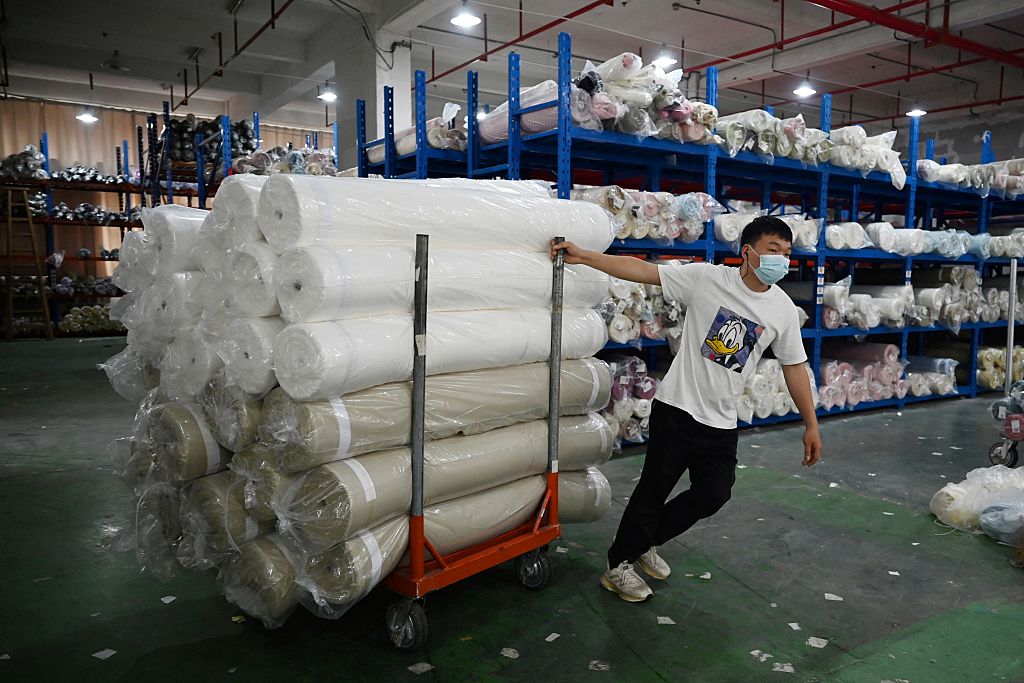
For the 2025–2026 marketing year, U.S. growers planted 9.3 million acres of cotton, a 17 percent decline from the previous year, according to a February report from the National Cotton Council of America.
In a May 28 statement, the council commended the announcement of the Great American Cotton Plan. The group thanked President Donald Trump and other congressional leaders for beneficial provisions in the One Big Beautiful Bill Act and other actions.
These measures “help cotton farmers plan ahead, reinvest in their operations, and keep family farms viable for the next generation. Together, these efforts make meaningful progress in strengthening the farm safety net, improving risk management tools, and supporting rural America,” the council said.
 Friends Read Free
Copy
Facebook
Tweet
Friends Read Free
Copy
Facebook
Tweet