
The United States has launched a trade investigation into a German plan to lower its spending on pharmaceutical products, U.S. Trade Representative Jamieson Greer said on Thursday.
The United States claims that there is evidence that “Germany implements unfair pricing policies and practices with regard to innovative pharmaceutical products,” according to the Office of the Trade Representative.
It added that there is also evidence “that reduced revenue associated with these acts, policies, and practices contributes to, among other things, reduced investment for R&D that supports the development of innovative pharmaceuticals.”
“I am particularly concerned with news that Germany is fast-tracking legislation that would further reduce its spending on innovative pharmaceuticals,” Greer said in a June 18 statement.
“This is a serious step backwards at a time when our trading partners need to step up and start paying their fair share to fund innovative pharmaceutical research and development,” he added.
The probe comes under Section 301 of the Trade Act of 1974, Greer said, adding that his office will open a docket for submission of written comments on June 25 and its Section 301 Committee will hold a public hearing on the probe in September.
In April, Germany’s Ministry of Health introduced draft legislation designed to reduce pharmaceutical spending. This legislation would impose an additional mandatory rebate for patented medicines starting in 2027.
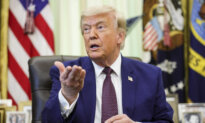
In May, U.S. President Donald Trump announced a plan that he said would lower prescription drug prices in the United States by up to 80 percent.
The president signed the Most Favored Nation Drug Pricing executive order at the White House on May 12.
The plan requires drug makers to offer the lowest price found in other developed countries for certain high-cost prescription medications.
“The United States will no longer subsidize the health care of foreign countries,” Trump said before signing the executive order. “And we will no longer tolerate profiteering and price gouging from Big Pharma.”
Some countries—especially in Europe, where many countries have single-payer health care systems—leverage their buying power to gain unfairly low prices from drug manufacturers, Trump said in announcing his plan.
That causes drugmakers to seek higher profits in the United States, artificially inflating prices.
Americans generate three-quarters of pharmaceutical profits, according to a White House statement.
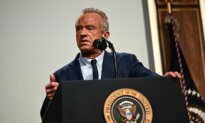
“Fighting the war against disease is a shared burden across wealthy nations,” said U.S. Department of Health and Human Services Secretary Robert F. Kennedy, Jr. in a June 18 statement. “The United States is calling on Germany to pay its fair share for the innovative treatments its people use.”
“Fair reimbursement strengthens medical innovation and helps ensure the development of the next generation of lifesaving cures,” he added.
In a June 19 post on X, former senior EU trade official Rupert Schlegelmilch said, “This will not go down well, neither in Germany nor the EU.”
“Problem is U.S. high prices, not public interest policies in the EU,” he said.
On May 12, 2025, the president directed the U.S. Trade Representative to “take all necessary and appropriate action” to address foreign countries’ unfair actions that have the “effect of forcing American patients to pay for a disproportionate amount of global pharmaceutical research and development, including by suppressing the price of pharmaceutical products below fair market value in foreign countries.”
Americans pay more than three times the price for brand-name drugs that comparable nations pay, according to the White House, even after accounting for discounts provided by manufacturers within the United States.
Americans also pay higher prices for prescription drugs than any nation in the world, according to a 2024 report from the Department of Health and Human Services (HHS).
The United States has about 4 percent of the world’s population but accounts for more than two-thirds of global pharmaceutical profits, according to Trump on May 12.
“American patients were effectively subsidizing socialist health care systems in … all parts of the European Union,” Trump added.
The Epoch Times contacted the German government for comment.
Lawrence Wilson and Reuters contributed to this report.
 Friends Read Free
Copy
Facebook
Tweet
Friends Read Free
Copy
Facebook
Tweet