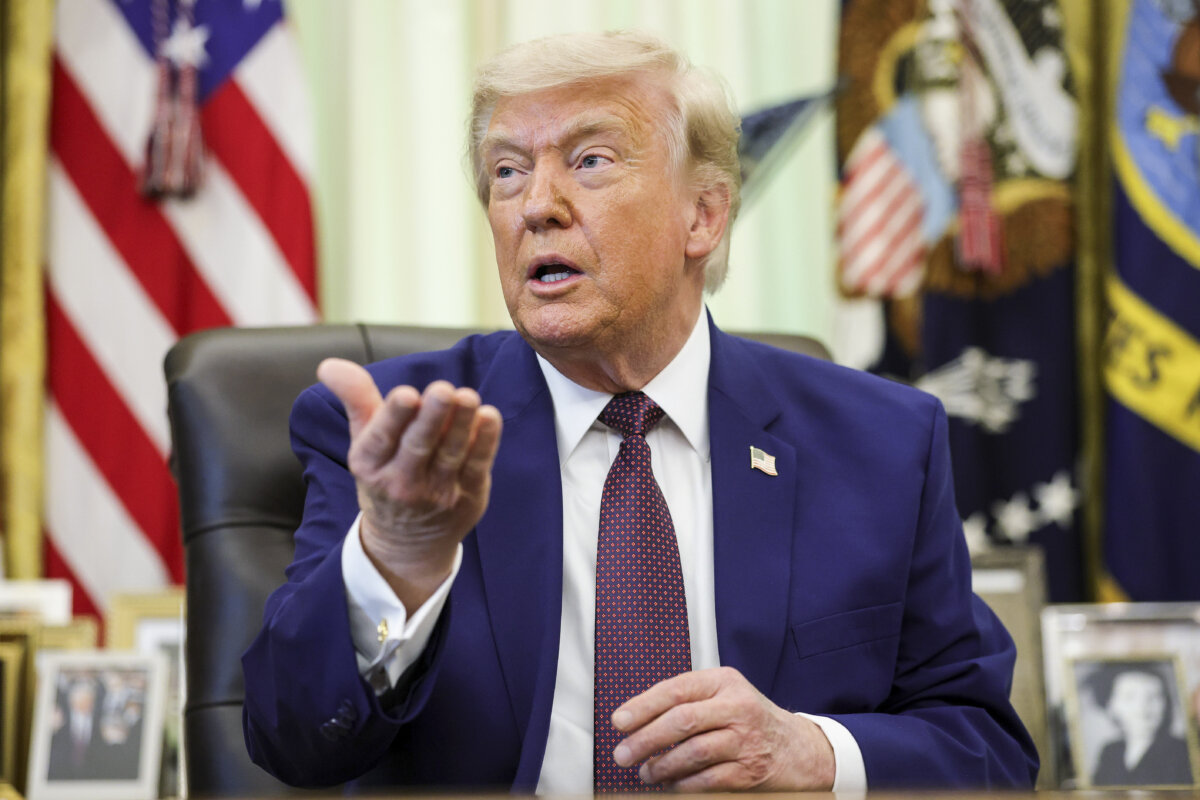

U.S. President Donald Trump on June 19 responded to criticism of a memorandum that Washington signed with Tehran to end the Iran war, saying that the Iranian regime is finished and doesn’t have much of a military left.
The memorandum included a provision that starts a 60-day negotiating clock to reach a final deal on the future of Iran’s controversial nuclear program. The Trump administration, in the memorandum and in public comments, left open the door to carry out more attacks if Iran does not comply.
“We didn’t meet out of desperation, Iran did. They are FINISHED!” the president wrote in a post on Truth Social. “We’ll play out the 60 days. They get no money, not ten cents!”
Trump said that the war had “diminished Iran,” which doesn’t have “an Air Force, a Navy, Antiaircraft Equipment, Radar, or practically anything else.”
He also chided critics of the deal, claiming that Iran is now “better off” than it was four months ago, or when the U.S. strikes started.
Trump signed the memorandum of understanding with Iran on June 17 while dining with French President Emmanuel Macron at the Palace of Versailles in France. The deal is slated to take immediate effect and extends a ceasefire while ending a U.S. blockade of Iran’s ports and fully reopening the Strait of Hormuz, which Iran has effectively blocked since the conflict started.
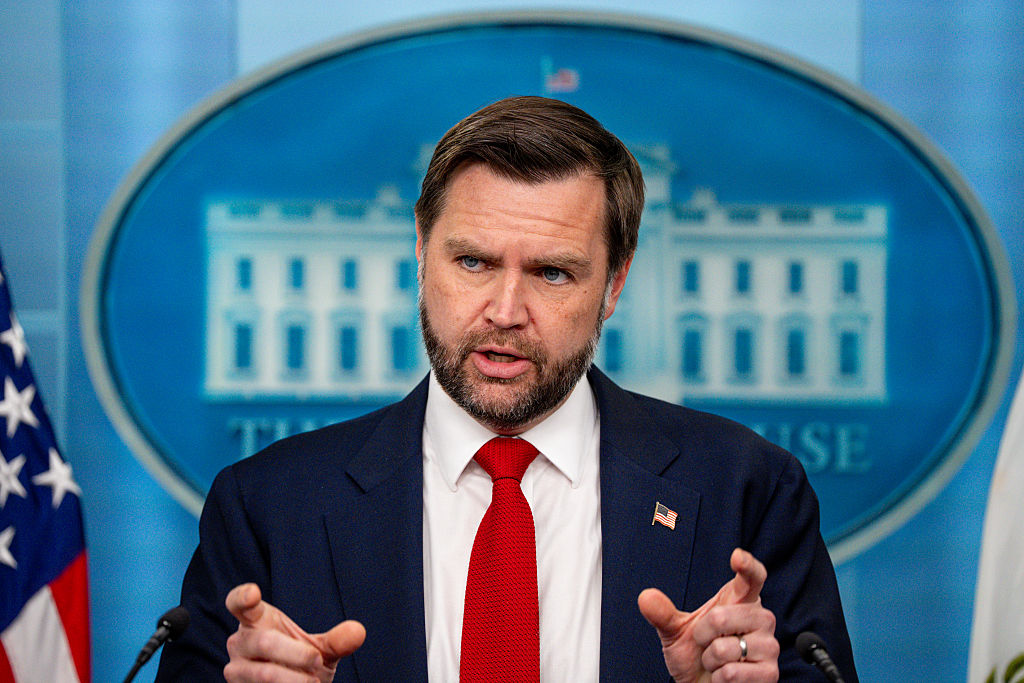
U.S. Vice President JD Vance, in comments to reporters at the White House, shrugged off criticism that the rollout of the initial deal was confusing, saying, “I don’t think our public messaging has been chaotic.”
He also offered a warning to Israel, which has pushed the United States to take a harder stance against Iran and launched attacks on the Iranian-backed Hezbollah terrorist group in Lebanon throughout the war, including just before the deal extending the ceasefire was reached. Those attacks complicated the peace efforts with Iran.
Trump appears to be “the only head of state in the entire world who is sympathetic to the nation of Israel at this moment in time,” Vance said. “And he happens to be the head of state of the world’s superpower.”
The vice president said more than 12.5 million barrels of oil went through the Strait of Hormuz on Wednesday night and said that the United States easing its blockade of Iran means “honoring our end of the early part of the agreement.”
U.S. Central Command said in a June 18 post on X that American warships “will remain in the general area to make sure that all aspects of the agreement are adhered to, obeyed and in full force and effect.”
Under the agreement, Iran’s stockpile of highly enriched uranium must at minimum be diluted under international supervision. It also says that Iran shall not procure or develop nuclear weapons.
A private fund would be established to help Iran rebuild after the conflict and would also serve as investment into the oil-rich nation’s industries, according to the memorandum. It stipulated that Tehran must comply with the agreement.

After contours of the deal were announced this week, both Democratic and Republican lawmakers were critical of the agreement.
Sen. Roger Wicker (R-Miss.), the head of the Senate Armed Services Committee, told Reuters that he is concerned the memorandum “negotiates away” U.S. military successes.
Wicker also said it would be a mistake to force Israel to stand down against Hezbollah in Lebanon and opposed lifting any sanctions on Iran or unfreezing Iranian funds, “in exchange for Iran’s mere agreement to negotiate for another 60 days.”
Sen. Jeanne Shaheen (D-N.H.), the top Democrat on the Senate Foreign Relations Committee, said in a statement that the administration has “offered concession after concession to the Iranian regime for next to nothing in return.”
The Associated Press contributed to this report.
 Friends Read Free
Copy
Facebook
Tweet
Friends Read Free
Copy
Facebook
Tweet