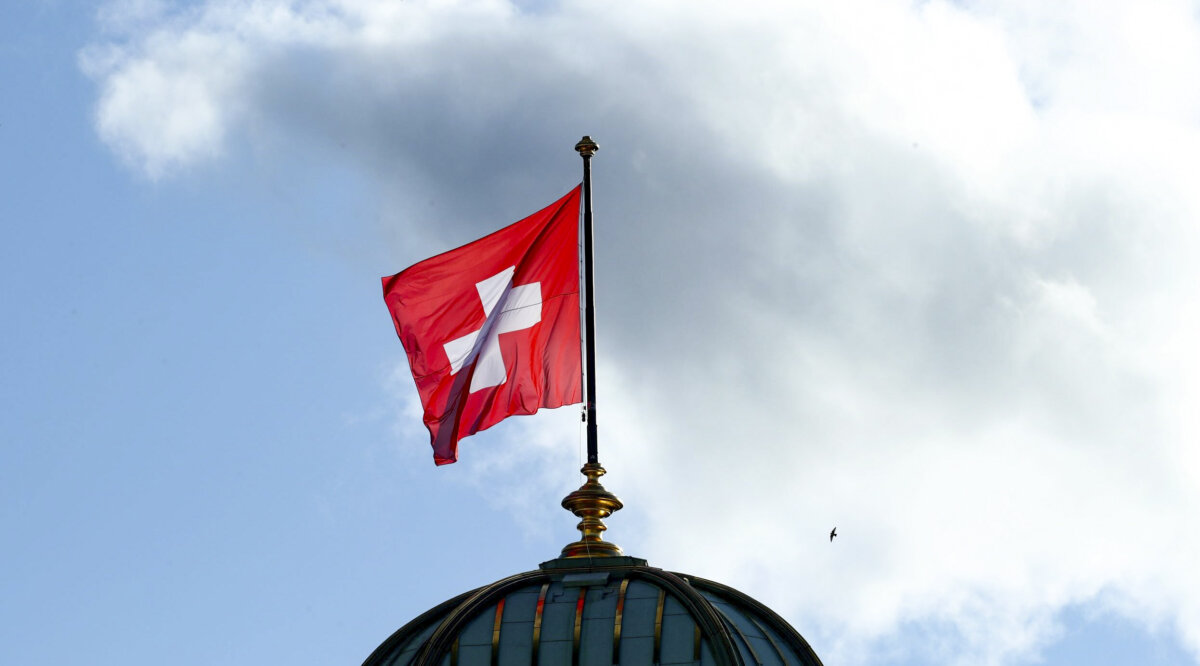

Talks between the United States and Iran in Switzerland scheduled for June 19 have been postponed, the Swiss Foreign Ministry said.
“The planned talks between the US, Iran, Qatar and Pakistan have been postponed,” the ministry said in a June 19 statement. “Switzerland remains ready to facilitate these talks. The relevant preparatory work at Bürgenstock is continuing. No further information can be provided at present.”
Negotiations had been scheduled to take place at the Bürgenstock mountaintop resort overlooking Lake Lucerne.
The White House said on June 18 that Vice President JD Vance will not travel to Switzerland for talks with Iran because plans for the discussion have not been finalized.
During a June 18 press briefing, Vance said technical talks on a long-term deal with Iran were expected to begin this weekend, but that the timing could change depending on when the Iranians can attend.
A White House spokesperson later said in a statement that the talks have been postponed.
“As the vice president said at his press conference, the plans for the upcoming technical talks have not been finalized, and the U.S. delegation has been prepared to depart at the first available opportunity. But the logistics of these negotiations have never been simple or predictable,” the spokesperson said. “As of now the vice president is not departing tonight. We will let you know as soon as we have a concrete update about next steps.”
The discussions were expected to kick off 60 days of negotiations to implement the memorandum of understanding (MOU) struck between Tehran and Washington that aims to end the war launched by the United States and Israel in late February.
Iranian leader Ayatollah Mojtaba Khamenei said in a June 18 statement read by state media that he supports direct negotiations with the United States.
“It is obvious that the face-to-face negotiations that will be held in the future will not mean accepting the enemy’s opinion,” he said.
It was Khamenei’s first response to the MOU. Khamenei has not been seen in public since the beginning of the war.
Israel Continues Action in Lebanon
In the wake of Vance postponing his trip to Switzerland, Iranian state-affiliated media Mehr reported on June 19 that the Iranian delegation had suspended its trip to Geneva due to continued Israeli strikes on southern Lebanon, although Iranian officials have not commented.
Another regime-affiliated outlet, the Islamic Republic News Agency (IRNA), reported the same day that the country’s National Security Council had issued a statement saying it was monitoring the negotiation process with “complete distrust of the treacherous and treaty-breaking enemy,” adding that “should any deviation or violation occur on the part of the American side, reciprocal action will be taken according to the pre-determined plan.”
The cessation of Israel’s attack on its northern neighbor was a key element of the MOU.
U.S. President Donald Trump said in a June 18 post on Truth Social that the United States expects “a complete Ceasefire on all fronts, including Lebanon, Hezbollah, and Israel.”
The Israel Defense Forces (IDF) confirmed it had conducted strikes in southern Lebanon on June 19.
“The Israeli army carried out attacks throughout last night and continues to strike terrorists and terrorist infrastructure belonging to the Hezbollah terrorist organization in several areas of southern Lebanon,” the IDF said in a post on X. “These attacks were carried out following repeated violations of the ceasefire agreement by the Hezbollah terrorist organization.”
Israeli Ambassador to the United States Yechiel Leiter said on June 18 that Israel remained committed to the ceasefire agreement reached between Israel, Lebanon, and the United States, provided Hezbollah also complied.
“If Hezbollah does not violate the agreement, it will be kept,” Leiter wrote in a post on X.
Israeli National Security Minister Itamar Ben-Gvir called for expanded military action in Lebanon, saying “all of Lebanon must burn.”
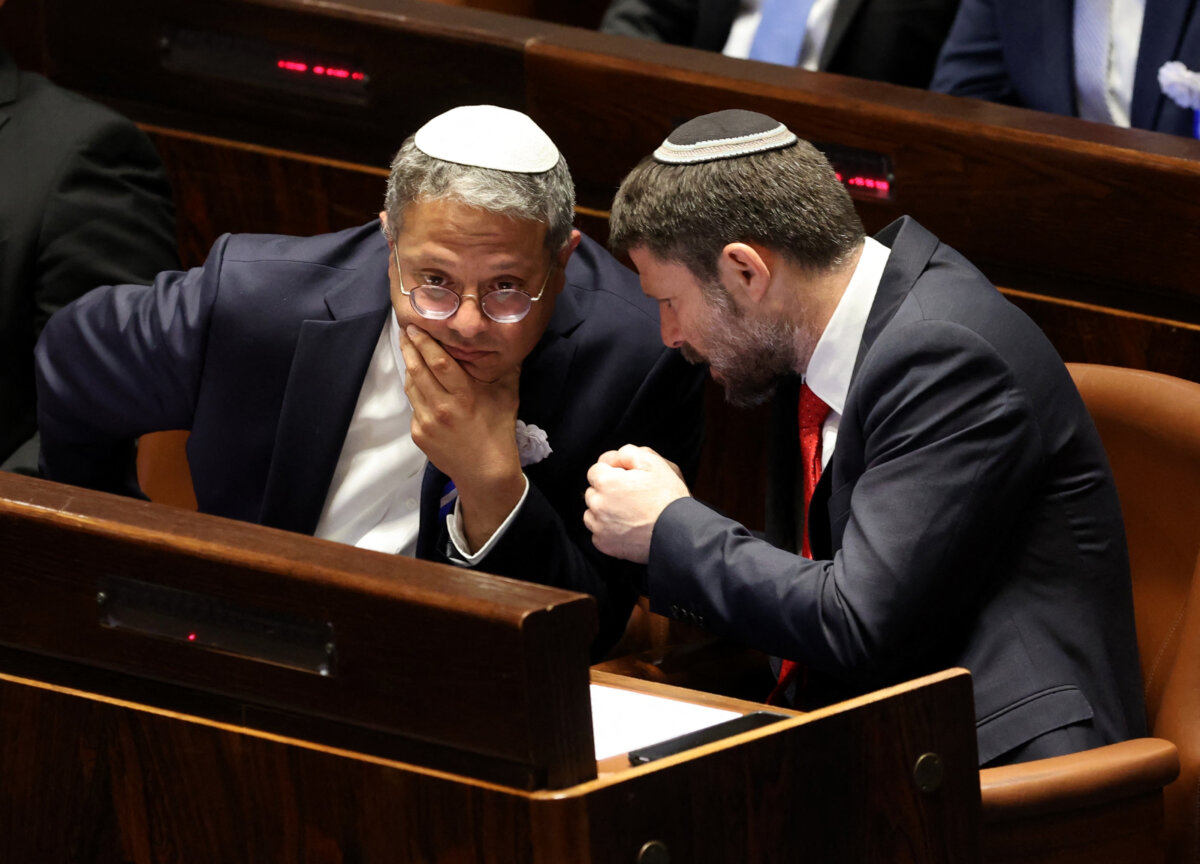
“For every tear of an Israeli mother, a thousand Lebanese mothers should cry. All of Lebanon should burn!” he said in a June 19 post on X. “With all due respect to the Americans, Israel must make clear to the entire world that the blood of our sons and the security of our citizens are not up for grabs. All of Lebanon should burn. Our highest duty is to protect the citizens of Israel and IDF soldiers, and that commitment takes precedence over every other consideration.”
Israeli Finance Minister Bezalel Smotrich said in a post on X that it was a “difficult morning” and time “to speak with fire. To open the gates of hell.”
As of publication time, the Lebanese government had not yet publicly commented on the statements from the Israeli ministers.
Ben-Gvir said in a June 15 post on X that “Trump’s agreement does not bind us.”
On the same day, Smotrich said in a post on X that an “agreement with Iran is bad for Israel and for the entire free world. Period.”
Without naming Israeli lawmakers, Vance said during his June 18 press conference that some ministers in the cabinet of Israeli Prime Minister Benjamin Netanyahu had “very personally attacked” Trump.
“I guess my message to them would be twofold. Number one: Donald J. Trump is the only head of state in the entire world who is sympathetic to the nation of Israel at this moment in time, and he happens to be the head of state of the world’s superpower,” Vance said. “If I was in the cabinet of the Israeli government, I might not be attacking the only powerful ally that I have anywhere left in the entire world.”
He added that “the problem for Israel is not Donald J. Trump. And anybody in Israel who thinks their biggest problem is the President of the United States needs to wake up and smell the reality of the situation that country is in.”
 Friends Read Free
Copy
Facebook
Tweet
Friends Read Free
Copy
Facebook
Tweet