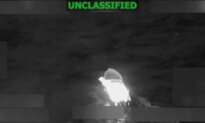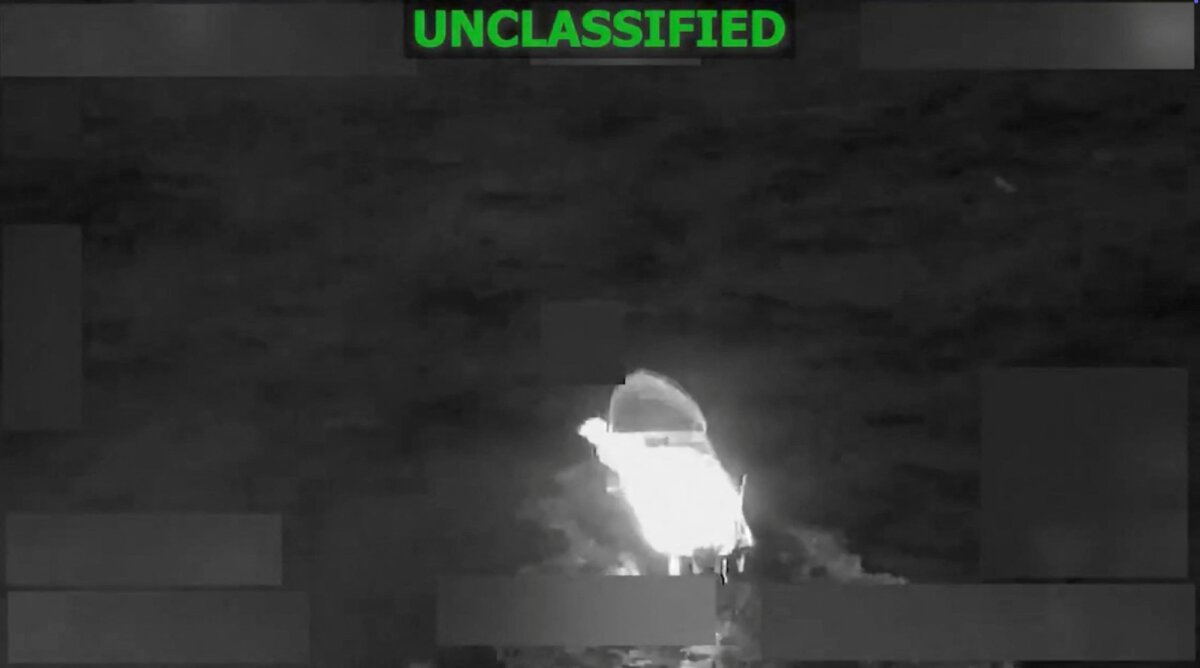

The U.S. military said on Feb. 5 that it killed two people in a strike on an alleged drug-trafficking vessel in the Eastern Pacific, the latest in a series of actions under an ongoing campaign to disrupt organized criminal networks the Trump administration has branded as “narco-terrorists.”
The U.S. Southern Command (SOUTHCOM) said in a statement on X that intelligence confirmed the vessel was transiting along known narcotics-trafficking routes and “was engaged in narco-trafficking operations” when it was hit with a “lethal kinetic strike.”
No U.S. military personnel were harmed in the action, which was ordered by Gen. Francis L. Donovan, who earlier in the day assumed leadership of SOUTHCOM, which oversees U.S. military operations across Latin America and the Caribbean.
“Together with our partner nations, we will continue to address shared challenges, uphold democratic values, and ensure a safe and prosperous future for the region,” Donovan said in a statement posted to X, adding that it’s an honor to lead a warfighting headquarters that works “tirelessly to strengthen security, stability, and partnerships across the Western Hemisphere.”
Operation Southern Spear
The Feb. 5 strike was carried out under Operation Southern Spear, a campaign launched in November 2025 aimed at identifying and disrupting drug trafficking and other illicit maritime networks in the Western Hemisphere.
Dozens of similar strikes have been conducted as part of the operation, targeting vessels suspected of smuggling narcotics—primarily in the Caribbean Sea and the Eastern Pacific. In January, a strike by Joint Task Force Southern Spear killed two people and triggered a search-and-rescue effort for a third survivor. Other operations last year included strikes that killed three people on a Caribbean vessel in November and multiple strikes in late 2025 that U.S. officials said were directed at narcotics trafficking operations.
The Trump administration has said that those being targeted are involved in smuggling fentanyl, cocaine, and other drugs linked to large numbers of overdose deaths in the United States. The campaign has been accompanied by an expanded U.S. naval and Coast Guard presence in the region, including recent deployments of warships to Haiti as part of Southern Spear operations.
Some lawmakers have raised concerns about the drug boat strikes. Classified briefings held on Dec. 4 reviewed a September strike in the southern Caribbean that killed two people, with Rep. Jim Himes (D-Conn.) saying video shown during the briefing was “one of the most troubling things” he had seen in public service, describing individuals in visible distress on a disabled vessel before they were killed.
Responding to those concerns, Sen. Tom Cotton (R-Ark.) said that he didn’t “see anything disturbing about it,” instead pointing to the damage done to U.S. communities by narco-traffickers.
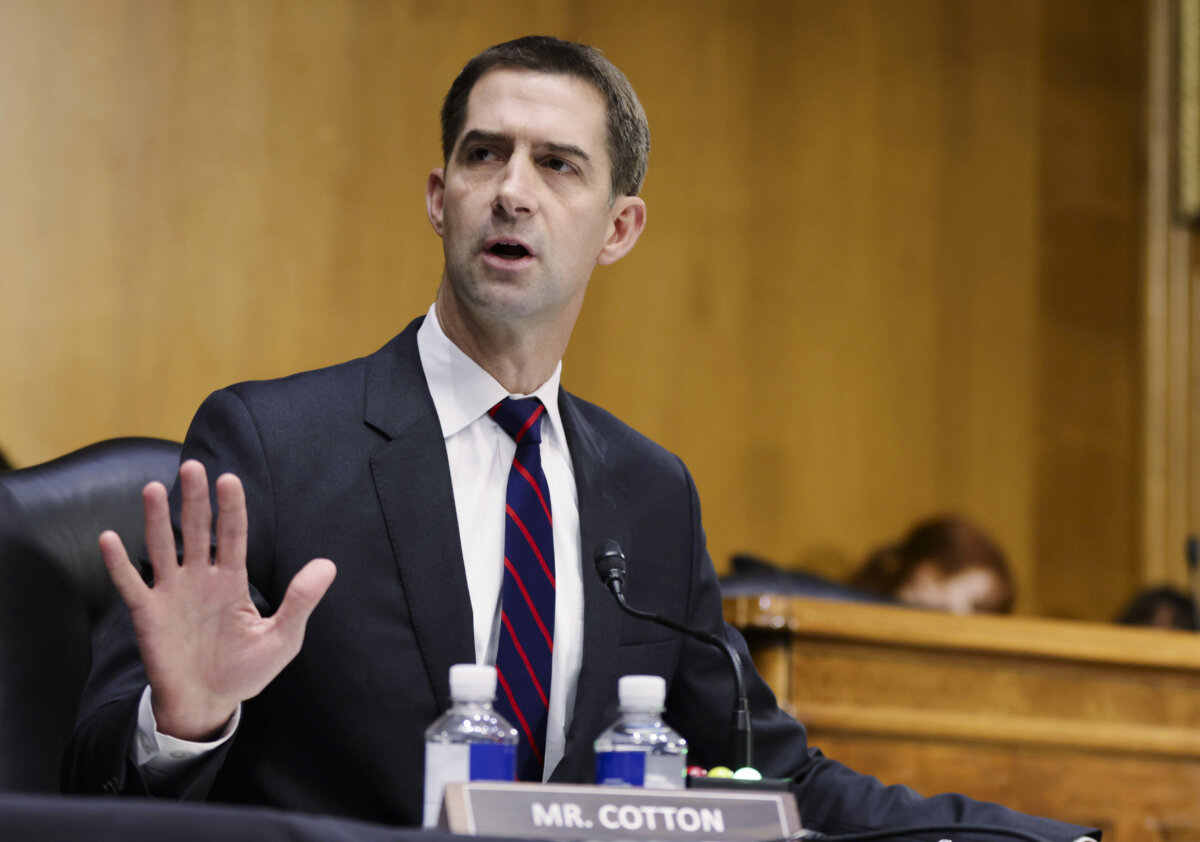
“What’s disturbing to me is that millions of Americans have died from drugs being run to America by these cartels,” Cotton told reporters, adding that he found it gratifying that, after decades of inaction under prior administrations, Trump decided to “take the battle to them” and “strike these boats until cartels learn their lesson that their drugs are no longer coming to America.”
The strikes have drawn criticism from human rights groups and international bodies. In its 2026 annual report, Human Rights Watch condemned the U.S. campaign, describing the strikes on boats in the Caribbean and Pacific as “blatantly unlawful.”
The Inter-American Commission on Human Rights has also expressed concern about the operations, urging the United States in a Dec. 2 report to ensure that all maritime security operations “are consistent with international human rights obligations, particularly regarding the protection of the right to life, the use of force, due process guarantees, and accountability mechanisms.”
Operation Southern Spear is part of the Trump administration’s national security approach that includes a greater military role in the Western Hemisphere, as outlined in the recently announced national security strategy and its “Trump Corollary,” which calls for targeted operations against drug cartels, including potential lethal force.
 Friends Read Free
Copy
Facebook
Tweet
Friends Read Free
Copy
Facebook
Tweet