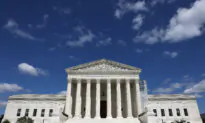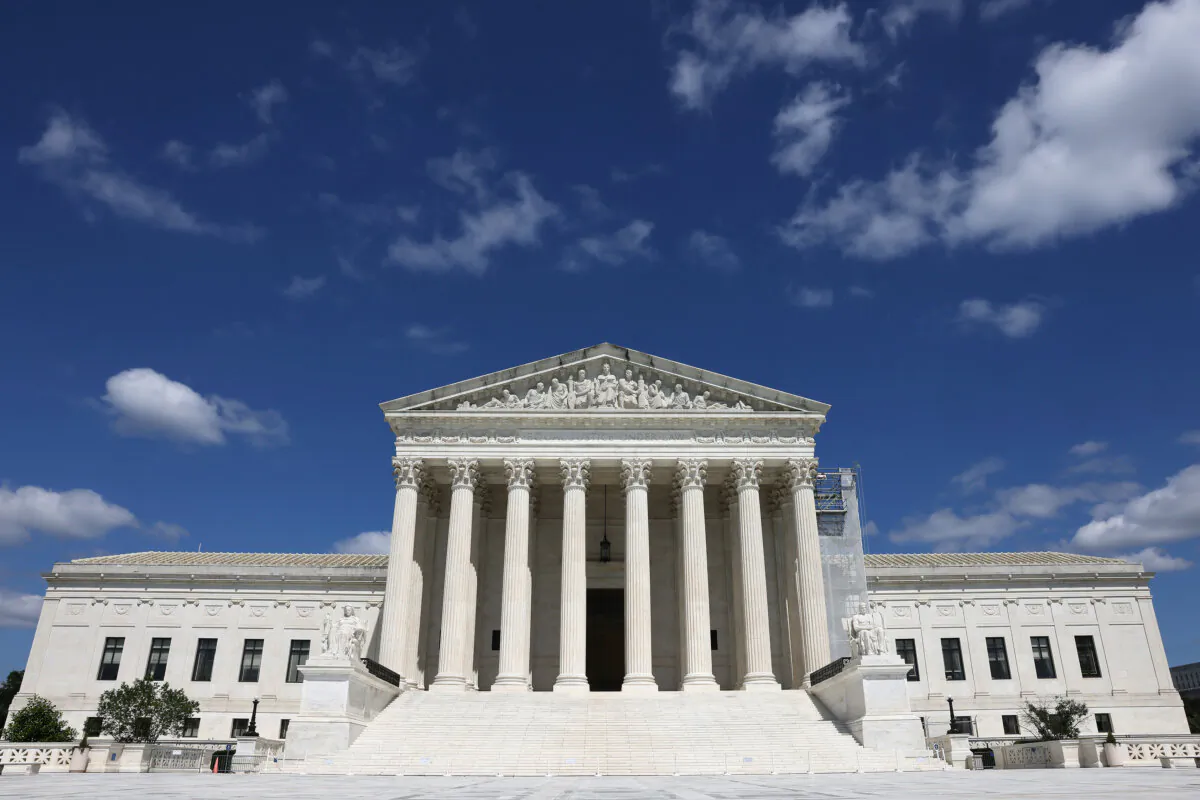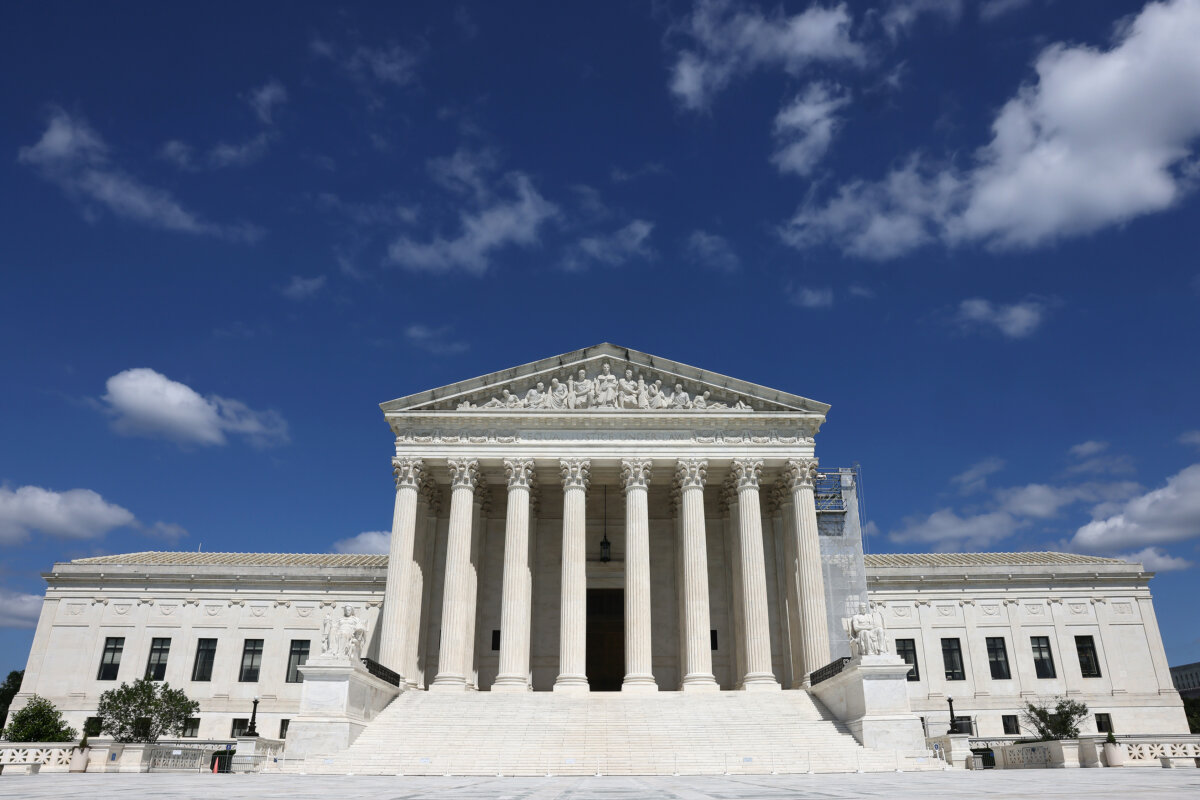

The U.S. Supreme Court was asked to issue a ruling on whether citizens can enforce the Voting Rights Act after a court ruled that the government is the only entity that can enforce the law.
A petition filed on Sept. 2 to the high court from a Native American coalition asked the justices to overturn a ruling that was issued by the U.S. Court of Appeals for the Eighth Circuit earlier this year that found that only the government can enforce the Voting Rights Act (VRA). It also said that voters and groups cannot bring lawsuits under the 1965 law’s Section 2, which encompasses racial discrimination and voting laws.
“Section 2 is, and always has been, enforced primarily by private litigants,” the coalition’s petition reads. “Congress enacted the VRA to enforce the rights-creating guarantees of the Fourteenth and Fifteenth Amendments, and crafted Section 2 in explicitly rights-creating terms.”
Arguing that the appeals court’s decision should be reversed, the petitioners wrote that “there is abundant textual evidence that Congress intended and sought to encourage vigorous private enforcement of Section 2.”
Section 2 prohibits voting procedures that discriminate on the basis of race, skin color, or language, according to the text of the law on the website of the Department of Justice (DOJ).
The Eighth Circuit, which covers Arkansas, Iowa, Minnesota, Missouri, Nebraska, North Dakota, and South Dakota, has issued three rulings holding that individuals and private entities don’t have standing to bring challenges against voting laws. The court issued rulings in May and July on the issue.
The Sept. 2 petition to the high court was brought by the Spirit Lake Tribe and Turtle Mountain Band of Chippewa Indians, arguing that North Dakota’s 2021 legislative map violated the Voting Rights Act and claiming that the redistricting would weaken the two tribes’ voting strength.
The appeals court, in the May order, wrote in a 2–1 decision that only the DOJ could bring such lawsuits, and the full circuit declined to take up the case.
Appellate Judge Raymond Gruender, writing for the 2–1 majority, said that although the tribes “are within the general zone of interest” of the Voting Rights Act, the act has not “unambiguously conferred an individual right.” The plaintiffs also lack a “cause of action under” the section to enforce the law, and a lower court ruling that said otherwise was erroneous, the appeals court majority said.
The U.S. Supreme Court blocked the ruling in July as it decides whether to weigh in on the case, issuing an unsigned order at the time that it is likely to take up the matter. Justices Samuel Alito, Neil Gorsuch, and Clarence Thomas indicated they would have rejected an appeal of the lower court order.
The Eighth Circuit also had ruled in an Arkansas case in 2023 that private individuals can’t sue under the same provision of the Voting Rights Act.
University of California–Los Angeles law professor Richard Hasen stated in August on his Election Law blog, citing a law review article published by a Florida State University researcher, that more than 90 percent of cases brought under Section 2 between 1984 and 2024 were brought through private enforcement rather than through the DOJ.
“Moreover, private plaintiffs were highly successful in these challenges, winning nearly two-thirds of the time,” the article stated.
The federal government under Section 2 appears to be “ill-equipped as both a practical and a political matter to fill this gap in enforcement,” it further stated.
In early July, the nine justices went on their annual recess. They’re expected to hold their opening conference later in September, according to a calendar from the high court, with arguments being considered starting in early October. If the court takes up the Sept. 2 petition, the justices are likely to render a ruling by the end of their term in mid-2026.
The Associated Press contributed to this report.
 Friends Read Free
Copy
Facebook
Tweet
Friends Read Free
Copy
Facebook
Tweet