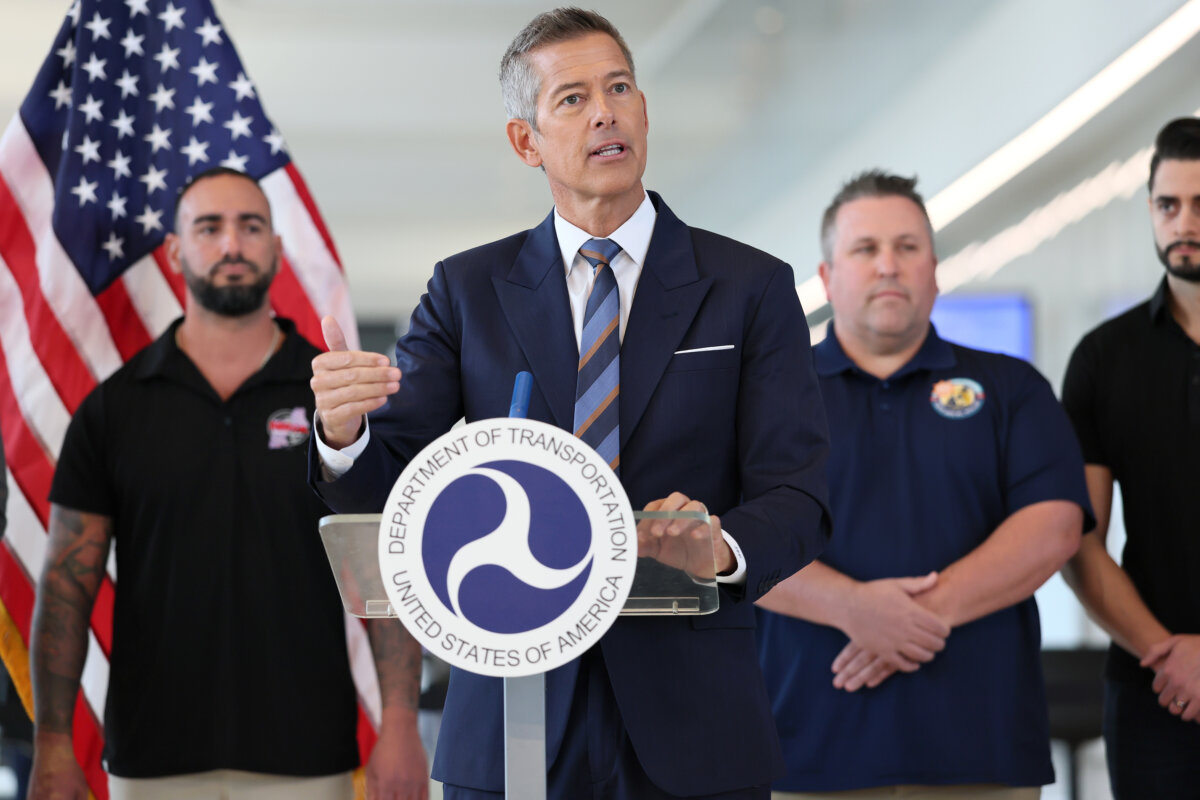

The Department of Transportation (DOT) will grant $3 billion to states to invest in the maintenance of aging bridge infrastructure nationwide, the department said in a May 14 statement.
The amount is being granted under the Federal Highway Administration’s Bridge Investment Program, which focuses on reducing the overall number of bridges that are damaged or are in fair condition but at risk of falling into poor condition. The program was established under the Infrastructure Investment and Jobs Act, which was signed into law in 2021.
The $3 billion funding is being offered via two types of grants. First, planning grants for planning, feasibility studies, and revenue forecasting for bridges that require maintenance.
The second grant provides funds for bridge preservation, rehabilitation, protection, and replacement. The ceiling cost of each project must not exceed $100 million.
“For too long, essential infrastructure has been held hostage by red tape, delaying improvements that move traffic,” Transportation Secretary Sean Duffy said.
“Under President Trump, the Department is clearing the path for states to rebuild aging bridges faster and more efficiently. We are putting the focus back where it belongs: safety, reliability, and getting Americans home to their families.”
According to data from the Bureau of Transportation Statistics, out of the 624,193 highway bridges in the United States, 41,685, or around 6.6 percent, were classified as being in “poor” condition in 2025.
States with the highest share of bridges in poor condition include Maine, West Virginia, Iowa, and South Dakota. In these states, more than 15 percent of bridges were classified as being in poor condition.
In June 2025, the DOT’s Federal Highway Administration announced a massive funding of almost $4.9 billion under the Bridge Investment Program, and additional funding of up to $500 million to replace or repair bridges in rural areas through the Competitive Highway Bridge Program.
The department announced that the grant programs had been updated to remove certain social justice and climate requirements instituted by the previous administration.
“Under the Trump Administration, America is building again. This announcement will help address the tens of thousands of bridges across the country—including approximately 42,000 bridges in poor condition—that are in dire need of repair,” the DOT said.
“These grants will help address the critical need to move people and goods across the nation, connecting local communities and economies, strengthening national supply chains, and improving critical corridors for freight travel.”
More recently, on April 8, the Federal Highway Administration announced it would invest $407.7 million across 12 states to repair 119 bridges in rural communities.
According to a July 2025 report from Pew, roads and bridges together support almost $19 trillion in freight annually. For fiscal year 2024, states spent roughly $247 billion on such assets.
“Yet even with those hundreds of billions spent, many states and localities struggle to make the investments necessary to preserve and maintain their transportation systems, a situation that in turn threatens economic development, the safety of millions of drivers and residents, and the long-term sustainability of public budgets,” the report said.
In June 2025, a bipartisan group of lawmakers introduced the Bridge Corrosion Prevention and Repair Act, which seeks to strengthen standards for infrastructure projects funded with federal dollars by instituting strict requirements for corrosion prevention work on these structures, according to a statement from the office of Rep. John Garamendi (D-Calif.).
Garamendi said that the persistent corrosion of roads and bridges was a problem that needed to be addressed urgently.
The bill “requires all federally funded bridge projects to use certified contractors for any corrosion control work and employ industry-recognized standards for corrosion mitigation and prevention,” the lawmaker said.
“America’s corrosion professionals, union painters, and new apprentices are ready, willing, and able to do the job.”
The bill has been referred to the Senate Subcommittee on Highways and Transit.
 Friends Read Free
Copy
Facebook
Tweet
Friends Read Free
Copy
Facebook
Tweet