
The number of Americans filing unemployment benefit claims fell below 200,000 for the fifth time this year, according to new government data.
Initial jobless claims fell by 10,000 to 196,000 for the week ending Sept. 12, from 206,000 in the previous week, according to a Department of Labor report released on Thursday.
This came in firmly below the consensus estimate of 208,000 and marked the third-lowest level since 1969.
Stripping out week-to-week volatility, the four-week average fell to 203,250, from 206,000.
Unemployment claims have hovered in a historically low range of 189,000 to 230,000 this year, as companies refrain from following through on widespread layoffs.
“The data sends a clear message: the U.S. labor market remains resilient, and layoff activity is not accelerating,” Chris Osmond, CIO for Fifth Third Wealth Advisors, told The Epoch Times in an emailed note.
As for the public sector, initial claims submitted by federal employees edged up by 10, to 398, a historically low level. This has captured economists’ attention since President Donald Trump returned for a second term and aimed to shrink government payrolls.
Economists have often described today’s labor market as entrenched in a “low-fire, low-hire” environment, with companies navigating headwinds ranging from tariffs to persistent war-driven price pressures.
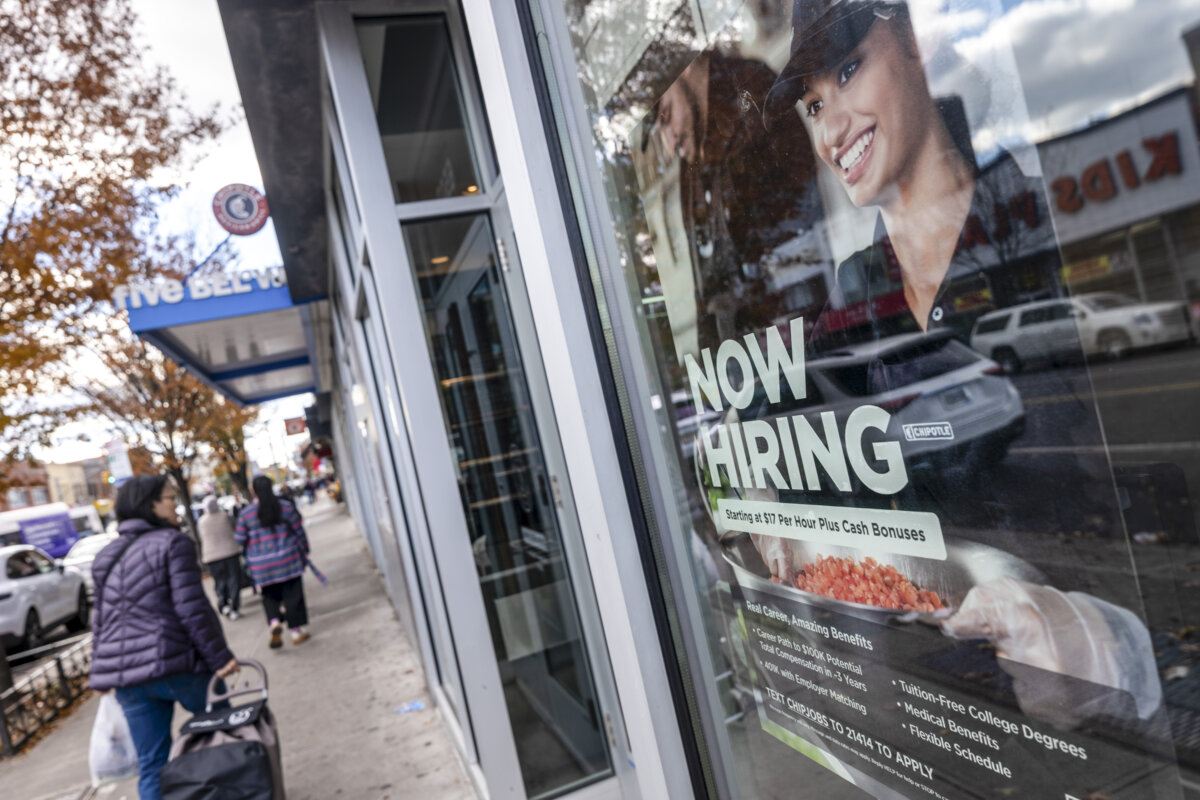
While layoffs are tepid, various indicators suggest hiring momentum could be building.
Continuing jobless claims—a measure of individuals currently receiving unemployment benefits—declined to 1.73 million, the lowest since January 2024.
Economists use this as a proxy for the current hiring climate and the challenges workers may face in finding new employment.
Heading into the fall, labor demand appears to be picking up steam. Job postings on Indeed have been trending higher over the past several weeks.
Additionally, the ADP Research Institute reported that U.S. private employers added an average of 16,250 jobs per week in the four weeks ending Aug. 29. This is up from an average weekly increase of 12,250 in the prior four-week period.
August’s nonfarm payrolls data also confirmed that the U.S. economy added 162,000 new jobs following months of anemic job growth.
But job growth from last month’s report could be “overstated due to seasonal factors,” economists at Oxford Economics said in a Sept. 15 research note.
The three-month moving average is 71,000, well above the break-even pace, which economists estimate to be between zero and 50,000.
“Encouragingly, job growth has diversified beyond healthcare, with sectors like transportation and professional services showing increased momentum,” they wrote.
“However, information and financial activities continue to experience job losses, largely attributed to the adoption of AI technologies.”
What the Fed Thinks
Federal Reserve policymakers believe the labor market will remain a source of strength over the next few years.
The median unemployment rate is forecast to be 4.1 percent from 2026 to 2029, according to the Summary of Economic Projections—the central bank’s quarterly outlook for policy and the economy—released on Sept. 17.
“Economic activity is expanding at a solid pace,” the Fed said in a post-meeting statement. “Job gains have kept pace with the workforce, and the unemployment rate has changed little.”
Fed Chairman Kevin Warsh and 11 colleagues voted to raise interest rates by a quarter point, the first hike since July 2023. At his post-meeting press conference, he told reporters that the institution is focused on the price-stability side of its dual mandate—with maximum employment as the other.
But economic observers worry that tightening monetary policy could threaten the current economic expansion and robust job market.
“Rate hikes have a cost and do not solve oil, Iran, or supply issues, but they can undo the labor standoff that prior rate cuts have provided,” Byron Anderson, head of fixed income at Laffer Tengler Investments, said in an emailed note to The Epoch Times.
“‘Low hire, low fire’ is different from a robust labor market. Is the Fed really willing to put enough pressure on the economy with rate hikes to pull inflation to target by hitting demand?”
Warsh has said this month’s rate decision removes only a “dose of accommodation.”
 Friends Read Free
Copy
Facebook
Tweet
Friends Read Free
Copy
Facebook
Tweet