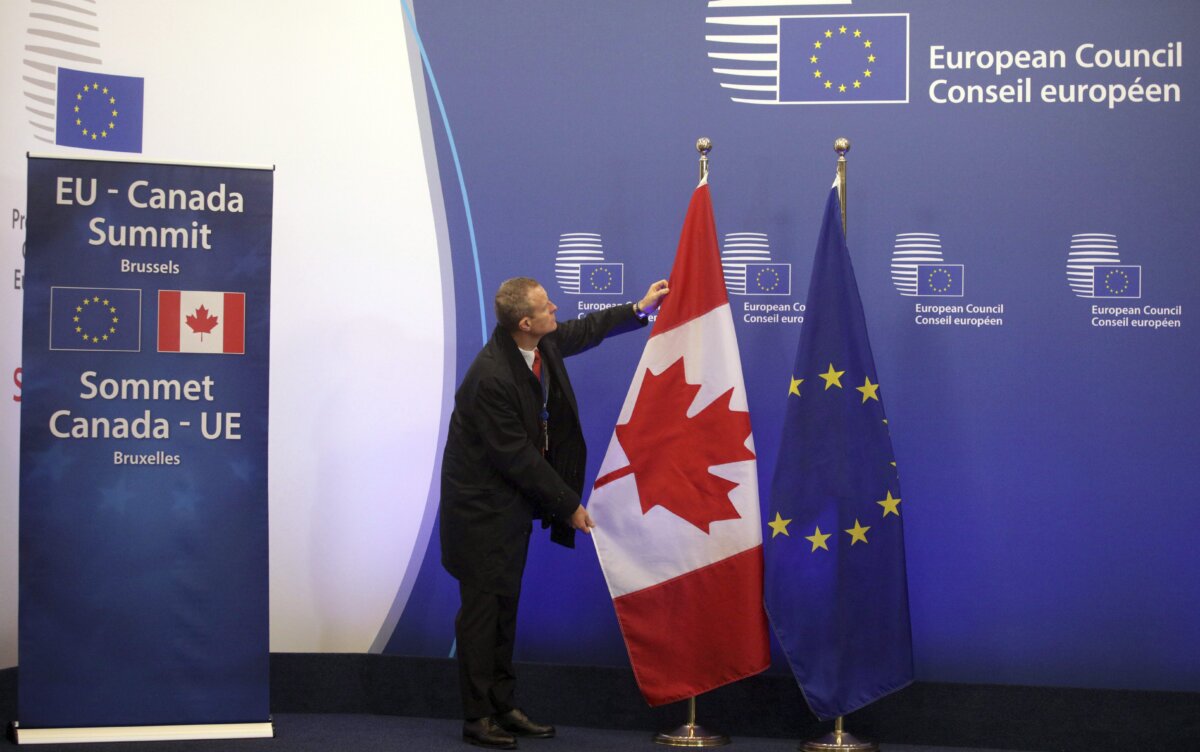

Opposition parties are raising concerns about Canada potentially becoming an “associate member” of the European Union.
Conservative Leader Pierre Poilievre and Bloc Québécois Leader Yves-François Blanchet both said the move brings up potential sovereignty issues for Canada, three days after Prime Minister Mark Carney said Sept. 13 that Canada doesn’t want EU membership but instead a “unique alliance” with the bloc.
“Conservatives are clear: we support the decades-old free trade [and] NATO defence alliance with Europe. But no EU taxes, no EU laws, and no EU open-border immigration policies should be imposed on Canadians. Canada must be independent and sovereign. Period,” Poilievre posted Sept. 16 on social media.
He also raised objections to Carney’s comments on earlier reports that Canada is seeking associate membership of the EU.
“The Prime Minister can’t seem to get his story straight about the ‘associate membership,’ ‘unique alliance,’ or whatever else he is negotiating with the EU,” Poilievre said.
Blanchet said potential inclusion in the EU has “potential” but also serious “pitfalls.”
“Europe is a better partner, ally, and friend than China, which we must be wary of. Defence, visas, culture, the digital sector … are good topics,” he wrote in French on social media Sept. 16. “But there are pitfalls in terms of institutions and sovereignty, and above all, if it’s still, only, and always just a pretext for exporting hydrocarbons (oil and gas) to Europe, it’s a scam by the Carney government. And that, that’s a no because it doesn’t serve Quebec at all.”
‘Associate Member’
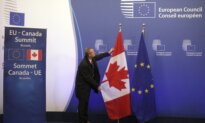
During an address to the European Parliament Sept. 16, European Commission President Ursula von der Leyen said she wants to create a new “associate member” category for Canada to join the 27-nation EU in order to “bring the relationship with Canada to the highest level possible.”
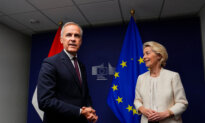
Carney’s office said he “welcomed the President’s proposal” to form “a far stronger, more ambitious alliance in the future,” and said Canada becoming an associate member would be “a unique approach that they will define together.”
The Prime Minister’s Office also said that the two leaders talked about digital trade, energy security, defence industrial capacity, AI, space, and financial services during their Sept. 16 meeting.
No further details as to what an “associate member” status for Canada would specifically entail have been revealed by von der Leyen or Carney as of publication.
However, von der Leyen has outlined a desire for deeper cooperation between Canada and the EU on technology, the Arctic, energy, critical minerals, AI, quantum computing, defence, cybersecurity, and economic collaboration.
Closer partnership with allied nations like Canada are a response to a “fracture in the international rules-based system,” she said.
‘Unique Alliance’
The news about Canada and the EU seeking potential associate membership for Canada was first reported by the Wallstreet Journal based on anonymous sources.
When Carney was asked by reporters if Canada is considering to become an “associate member,” he responded that Canada isn’t seeking to become a “member,” while saying his government is instead pursuing a “unique alliance” with the bloc.
“We share the same values. We have the same priorities, and we have very complementary strengths. We’re stronger together, and this is at a time when the world’s more dangerous and divided, and friends need to stick together at these times,” Carney said Sept. 13 while attending the Toronto International Film Festival.
Canadian Ambassador to the EU Jonathan Wilkinson was asked by reporters to elaborate what an associate membership with the EU would mean for Canada.
He confirmed that the term has been discussed on both sides, but added that “alliance for the future” was also cited as an option to define the partnership.
 Friends Read Free
Copy
Facebook
Tweet
Friends Read Free
Copy
Facebook
Tweet