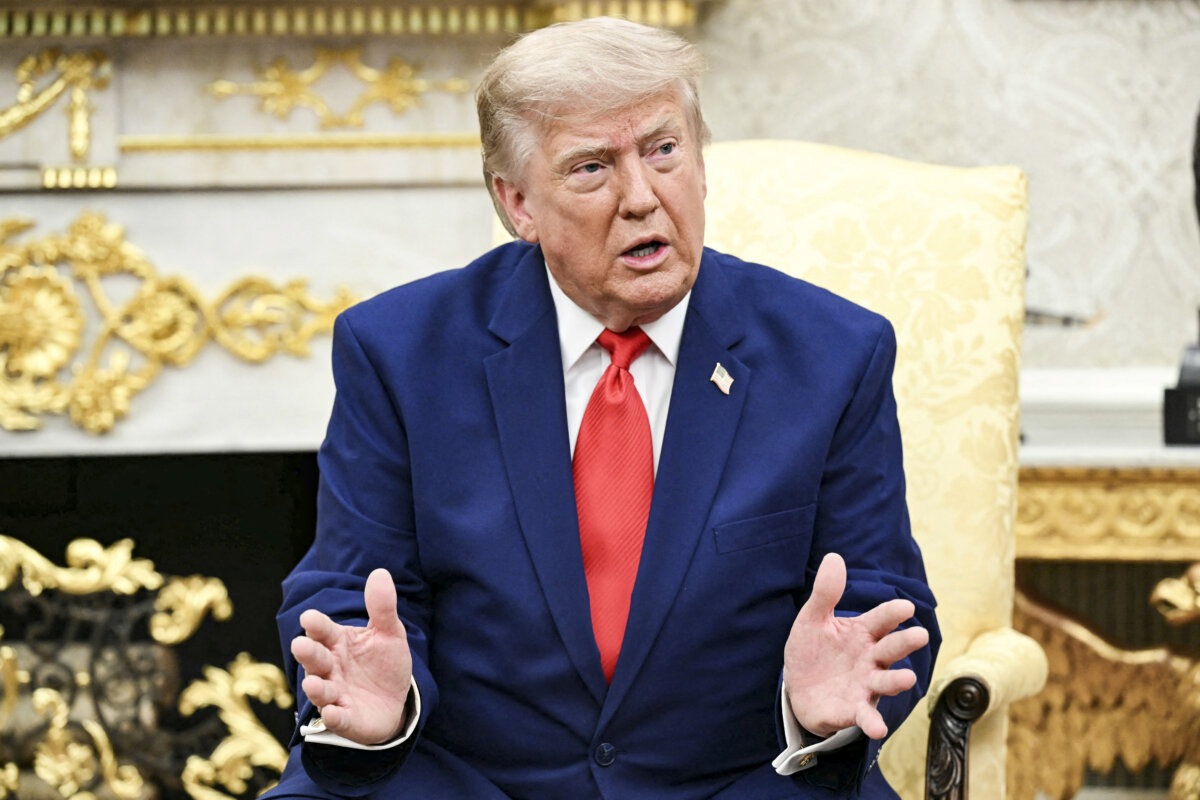

U.S. President Donald Trump has signed a memorandum directing the removal of Canadian-origin goods from the federal civil procurement system, following through on a commitment he made earlier this month.
The Sept. 16 memo authorizes the director of the Office of Management and Budget, the United States Trade Representative, and the Federal Acquisition Regulatory Council to “identify and take all steps toward removing or otherwise making non-available for purchase Canadian-origin items in the federal civil procurement system.”
The memo also directs U.S. Trade Representative Jamieson Greer to monitor “Canada’s continued treatment of U.S. origin goods in Canadian government procurement.”
The action follows Trump’s Sept. 8 directive to the General Services Administration (GSA) to remove Canadian-origin products from its Multiple Award Schedules, a government-wide contracting program that manages more than US$50 billion in federal procurement. The GSA schedules give federal agencies access to millions of commercial products and services.
“Everyone knows that Canada doesn’t let our Great Dairy Farmers sell into the Canadian Market, and that the only reason Canada makes Autos is because of previous disastrous Trade Agreements while other Presidents were in Office,” Trump said on social media after issuing the GSA directive.
Trump also said Canadian governments, including provincial governments, have “banned American Small Businesses and Companies from selling into their Government Procurement Markets.”
The procurement measures come amid an escalating trade dispute between the two countries.
Canada imposed new counter-tariffs on Sept. 8 covering about US$20 billion in U.S. imports, with rates of 15, 25, and 50 percent. The tariffs target products including steel and aluminum, dairy, appliances, agricultural equipment, pulp and paper, plastics and electronics.
The Canadian measures matched U.S. tariffs of 50 percent on about the same value of Canadian products imposed under Section 338 of the Tariff Act of 1930, effective Aug. 22.
Canada has also implemented a “Buy Canadian” policy, while all provinces except Alberta have restricted or prohibited the sale of U.S. alcoholic products, or imposed tariffs on them, and have also enacted measures to prioritize Canadian suppliers for government contracts.
Since Canada first announced its intention to impose counter-tariffs in response to the new U.S. tariffs that went into force on Aug. 22, Trump also announced new 50 percent tariffs on Canadian vehicles and auto parts beginning in 2027. He also said he would ban the sale of products made by Canadian aviation giant Bombardier in the United States unless they are made in America, and announced new import bans on certain Canadian goods beginning on Sept. 29.
Some of the Canadian products banned for U.S. import include most alcoholic products, certain dairy products, and motorcycles.
Trump said while visiting Ireland on Sept. 12 that the two countries could have a trade deal “fairly soon,” while repeating his criticism of Canada’s trade practices.
“We actually have a good [relationship] with Canada, but the United States has been ripped off for 50 years by Canada,” Trump said.
Carney said on Sept. 14 that he welcomes the president’s comments that a deal could be reached soon.
“We’re ready to sit down and negotiate that and move it forward,” Carney told Bloomberg.
Carney has said that diversifying away from the United States is a priority for his government.
“We are building our strength at home and diversifying our partnerships abroad,” he said in a speech on Sept. 15.
 Friends Read Free
Copy
Facebook
Tweet
Friends Read Free
Copy
Facebook
Tweet