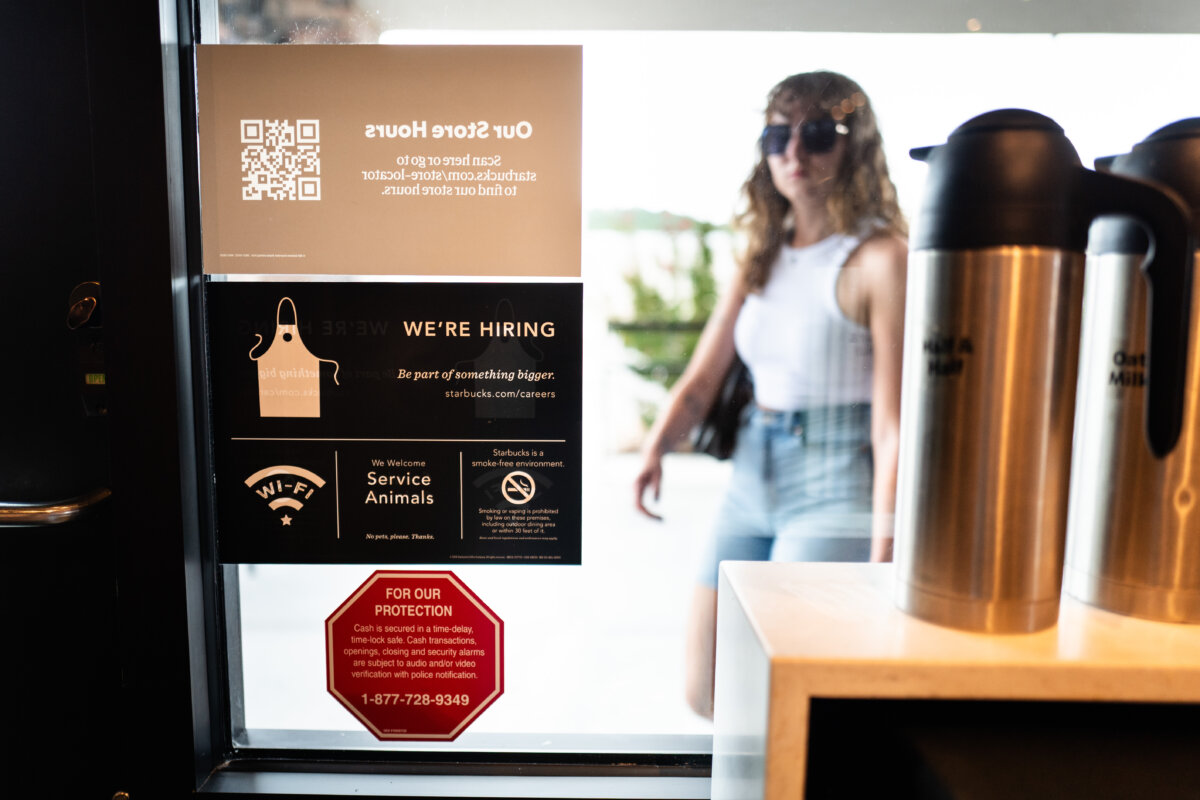

The number of Americans newly filing applications for unemployment benefits climbed to the highest level in four years last week, new Department of Labor data released on Sept. 11 show.
For the week ending Sept. 6, initial jobless claims rose by 27,000 to 263,000—marking the highest level since October 2021 and surpassing the consensus estimate of 235,000.
The four-week moving average, which smooths out weekly noise, also increased to 240,500 from 230,750.
A program for federal employees filing jobless claims rose by 12, to 527. Economists have been closely monitoring this data metric to assess the impact of the current administration’s policies on federal payrolls.
Recurring jobless claims—the number of out-of-work individuals currently receiving unemployment benefits—was unchanged at a smaller-than-expected 1.93 million.
The elevated number represents the 16th consecutive week of continuing claims remaining at or above 1.9 million, signaling the challenges that unemployed Americans face in finding new employment opportunities.
Still, the U.S. labor market remains at a standstill with trade uncertainty impacting the economy, says Jeffrey Roach, chief economist at LPL Financial.
“Despite the slowdown in hirings, actual layoffs are historically low for where we are in the business cycle,” Roach said in a note emailed to The Epoch Times.
Recent data have depicted a U.S. labor market that is rapidly slowing.
Last week, the Bureau of Labor Statistics reported that the economy created 22,000 new jobs in August, far below economists’ expectations of 75,000. Additionally, the country lost 13,000 jobs in June for the first time since December 2020.
The bureau also released its annual preliminary benchmark revisions, which showed job growth was overstated by 911,000 between March 2024 and March 2025.
Workers Turning Sour
More individuals have become pessimistic about locating a new job.
According to the New York Federal Reserve’s August Survey of Consumer Expectations, the mean probability of finding a job in the next three months if employment were lost today declined to 44.9 percent, the lowest since June 2013.
Expectations for a higher unemployment rate one year from now ticked up to 39 percent, although it is down from the April peak of 44 percent.
In addition, employee confidence has deteriorated, says Daniel Zhao, chief economist at Glassdoor.
The August Glassdoor Employee Confidence Index, which highlights employees reporting a positive six-month business outlook, fell to 44.5 percent, slightly above the all-time low of 44 percent registered in June.
“Workers remain unhappy about the state of the job market as fears about economic uncertainty and job security remain top of mind,” Zhao said in a note.
While a freeze has been cast over the national labor market for months, small businesses may he ramping up their hiring, according to a new survey.
New data from the RedBalloon-PublicSquare Freedom Economy Survey show that 44 percent of small businesses plan to hire in the next few months by either backfilling roles or expanding personnel.
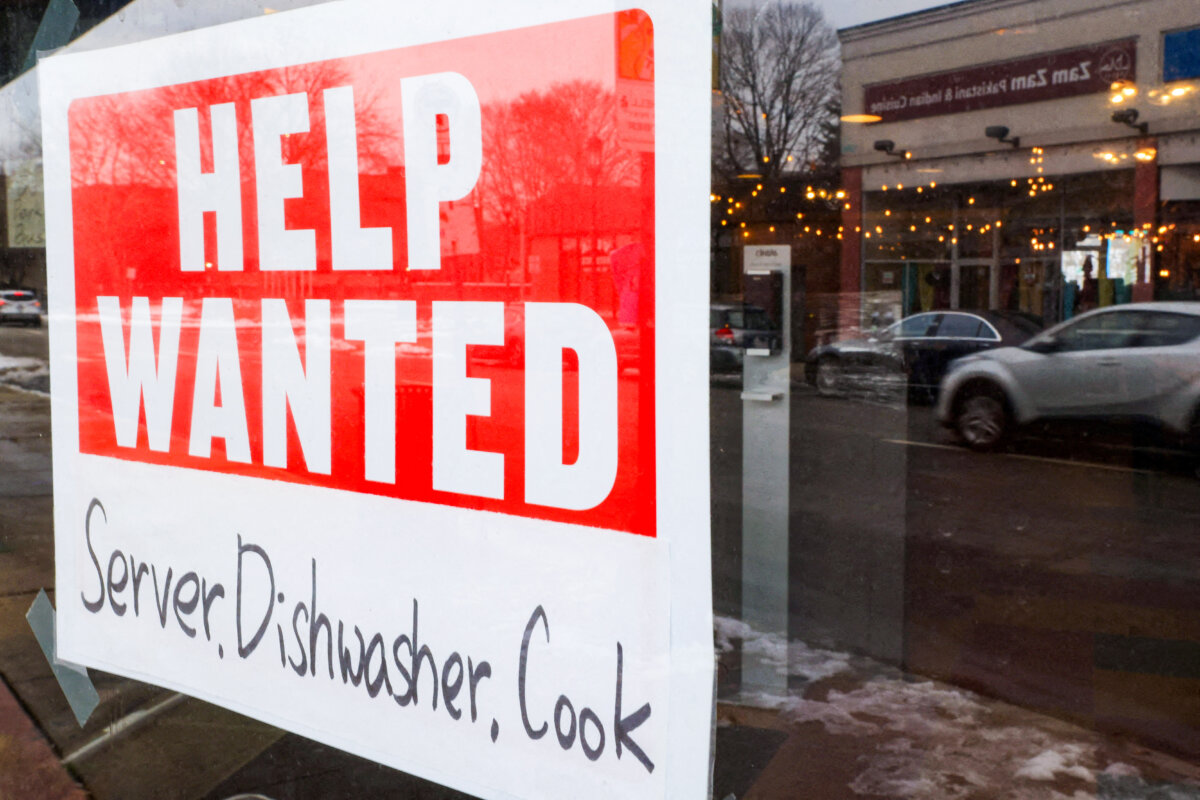
“If you listen to the academic crowd, you’d think the latest jobs data signals the American economy is teetering on recession,” Michael Seifert, CEO of PublicSquare, said in a statement to The Epoch Times.
“But from Main Street, the story looks very different. While traditional economists wring their hands over slowing job openings, the small business owners we work with every day see something more encouraging: stabilization.”
Fed to the Rescue
Since January, the Federal Reserve has left interest rates unchanged in a range of 4.25 percent to 4.5 percent following a series of three cuts.
Monetary policymakers have refrained from restarting the central bank’s latest rate-cutting cycle over tariff-driven inflation fears. However, Fed Chair Jerome Powell and other officials have signaled a pivot, with a renewed focus on the U.S. labor market.
According to the CME FedWatch Tool, investors are penciling in a 90 percent chance of a quarter-point rate cut at the Sept. 16–17 Federal Open Market Committee policy meeting.
While there has been a debate about whether to follow through on a half-point reduction to the benchmark federal funds rate, the slightly hotter-than-expected August inflation data may force the Fed to move ahead with a more cautious 25-basis-point cut, experts say.
The August consumer price index (CPI) showed the monthly inflation rate climbing by 0.4 percent, slightly above the market consensus of 0.3 percent. Core inflation, which omits volatile energy and food prices, also rose by 0.3 percent, in line with economists’ expectations.
Roach noted that these new numbers highlight some impact from tariffs, particularly on cars and clothing. At the same time, insurance could also play a role in inflation over the coming months, he said.
According to the Bureau of Labor Statistics, new vehicle prices rose by 0.3 percent, and apparel increased by 0.5 percent. Tenants’ and household insurance swelled by 0.6 percent monthly. However, motor vehicle insurance dipped by 0.1 percent, and health insurance ticked up by 0.1 percent.
“The hot inflation print will not likely change the Fed’s plan to cut rates in September, but it’s possible the Fed will hold in October if inflation expectations no longer look well-contained,” Roach said.
Looking ahead to the September CPI data, the Cleveland Fed’s Inflation Nowcasting Model points to a 0.4 percent monthly increase. Core CPI is also estimated to rise by 0.3 percent.
 Friends Read Free
Copy
Facebook
Tweet
Friends Read Free
Copy
Facebook
Tweet