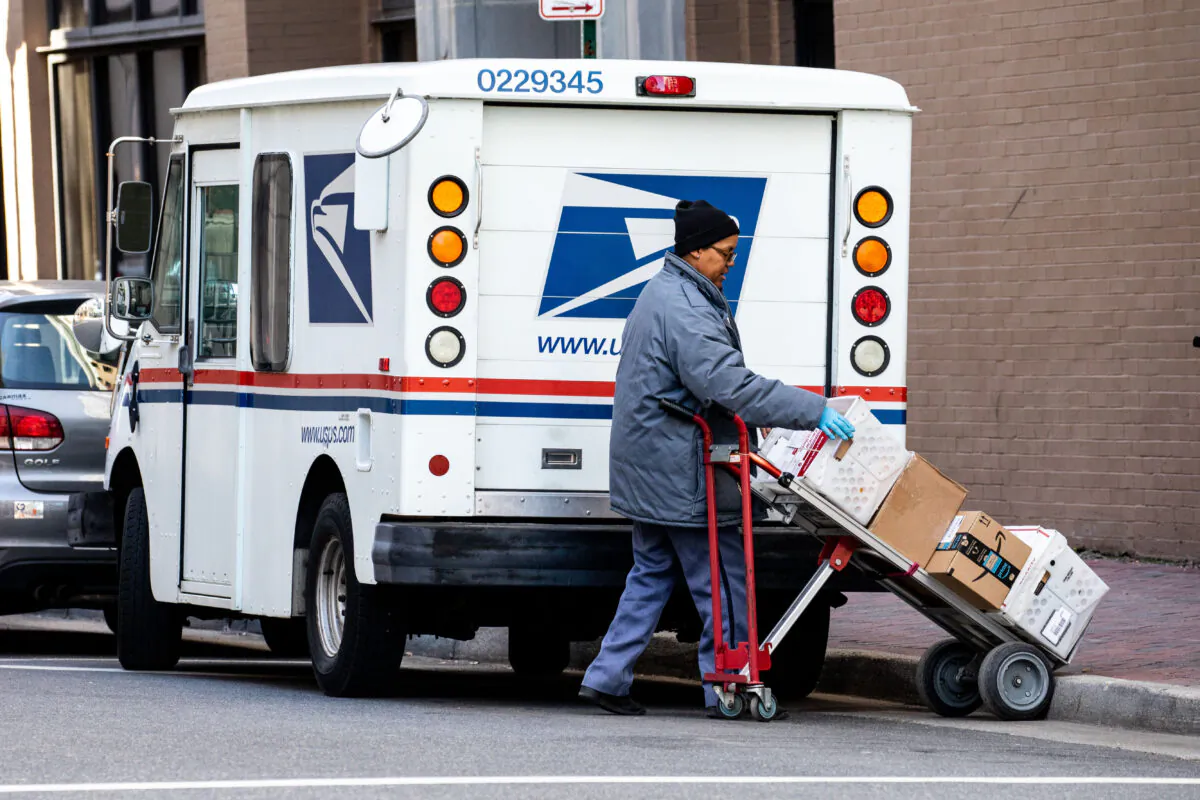

The U.S. Postal Service (USPS) saw an improvement in delivery performance during the recent holiday season, with mail items and packages delivered within 2.5 days on average compared to 2.8 days during the same period the previous year, the independent agency said in a Jan. 15 statement.
In total, 16 billion pieces of mail items and packages were delivered this season, USPS said. The agency attributed the improved delivery times to new logistics planning and execution, and large investments in new technology.
“These results reflect the tenacity of our workforce as well as the network improvements we continue to implement,” Postmaster General David Steiner said in the statement.
“We will keep improving service throughout the coming year—optimizing our network, strengthening reliability, improving delivery times, and ensuring high value products and services for residential and business customers in every community we serve.”
The best on-time delivery scores were seen among last-mile destination delivery units (DDU), which are local post offices responsible for final delivery to a set of addresses.
USPS said it also saw an uptick in customer satisfaction.
There was a 44 percent fall in package-related customer service inquiries and a 23 percent decline in calls to the USPS customer care center this holiday season compared to a year ago.
Last month, USPS said it was opening up its DDU last-mile delivery network for a wider base of customers. There are more than 18,000 DDUs across the United States.
Typically, the service has been reserved for a limited number of “very large customers,” it said. But beginning late January or early February, USPS will start accepting bids from shippers, large or small, who wish to use this DDU last-mile delivery service.
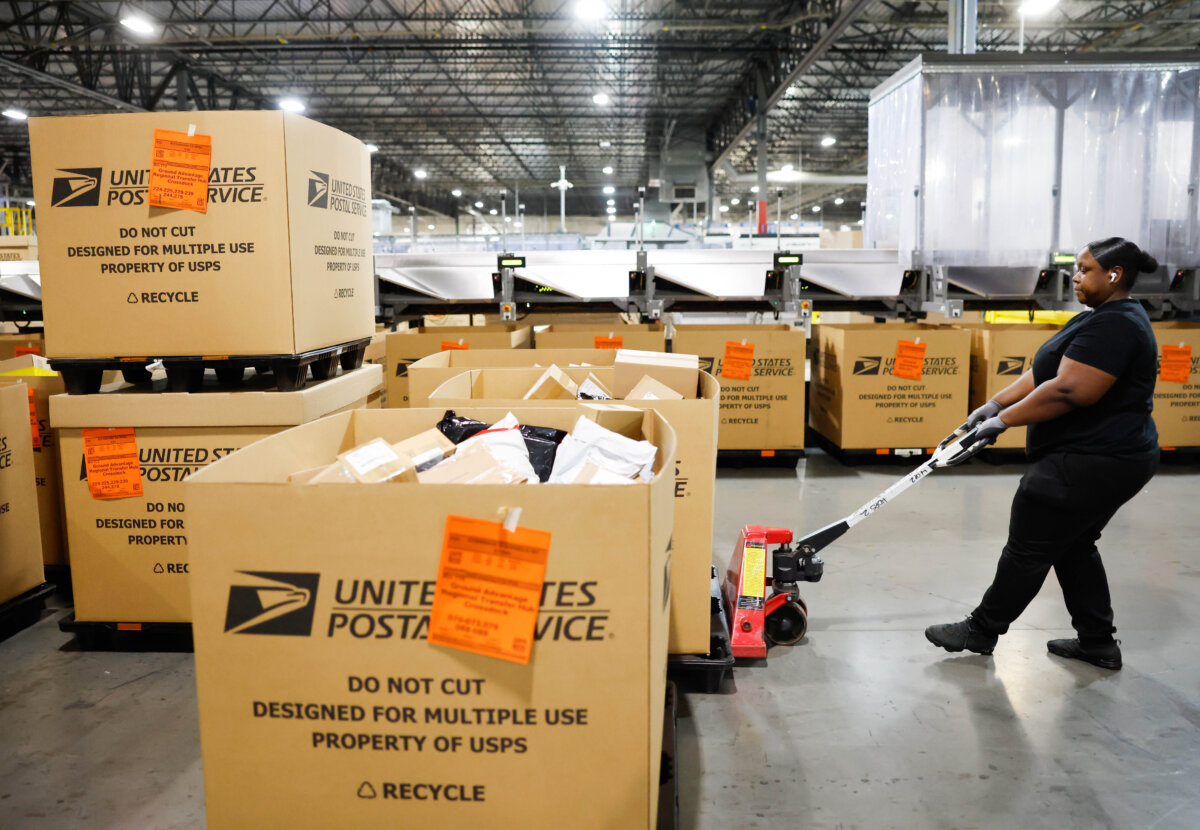
“In the logistics business, the most expensive part of delivery is generally the ‘last mile’ portion of a route. As part of our universal service obligation, we deliver to more than 170 million addresses at least six days a week, so we are the natural leader in last-mile delivery,” Steiner said.
“We see this initiative as a compelling value proposition for many shippers who we know are wrestling with the need to deliver to their customer as quickly and reliably as possible. Our solution is to establish a fair bidding process that enables the marketplace to find the best mix of local shipping attributes for the best volume-driven pricing.”
USPS said it is confident that it will see an increase in total revenues generated via DDU service, which would likely make USPS a more financially viable entity.
The expansion of DDU comes as USPS continues to experience financial losses in its operations.
USPS had a net loss of $9 billion for fiscal year 2025, slightly down from the $9.5 billion in the previous year, according to a Nov. 14 statement from the postal service. Its net loss for fiscal year 2023 was $6.5 billion.
Chief Financial Officer Luke Grossmann said the 2025 results reflected difficulties in cost structure and the continued decline in volume. In 2024, USPS handled 112,456 million pieces of mail, which fell to 108,695 million in 2025.
“The Postal Service is seeking further administrative and legislative reforms to remedy outdated and unwarranted financial and regulatory burdens,” USPS said.

USPS said these reforms include changes in retiree pension benefit funding rules for the Civil Service Retirement System (CSRS) benefits, diversification of pension assets, and raising the statutory debt ceiling.
Earlier in August, advocacy group Keep US Posted asked Steiner, who began his tenure in July, to ditch the previous postmaster general’s strategy of continued rate hikes, focusing on packages over mail, and service delays, arguing that these policies were negatively impacting the financial viability of USPS.
Under the previous Postmaster General Louis DeJoy, USPS pursued its “Delivering for America” 10-year plan, published in 2021, that sought to institute several changes at the agency to improve its financial and operational efficiency.
“While the Delivering for America plan promised to grow parcel volumes, lower costs, and allow the Postal Service to break even by 2023, it lost $6.5 billion that fiscal year, and it continues to hemorrhage money,” Keep US Posted executive director Kevin Yoder said in August.
“Steiner should … pursue his own strategy to help USPS recover so that it can keep delivering to every American six-days per-week.”
The Epoch Times reached out to USPS for comment but did not get a response by publication time.
 Friends Read Free
Copy
Facebook
Tweet
Friends Read Free
Copy
Facebook
Tweet