Venezuelan authorities signed a major deal granting New York-headquartered investment firm Heeney Capital operational and export rights for a “prolific” gold mine.
The agreement was signed on Wednesday at the G20 Energy Abundance Ministerial in Houston, Texas.
Washington is encouraging U.S. investments in Venezuela after the capture of former leader Nicolas Maduro in January.
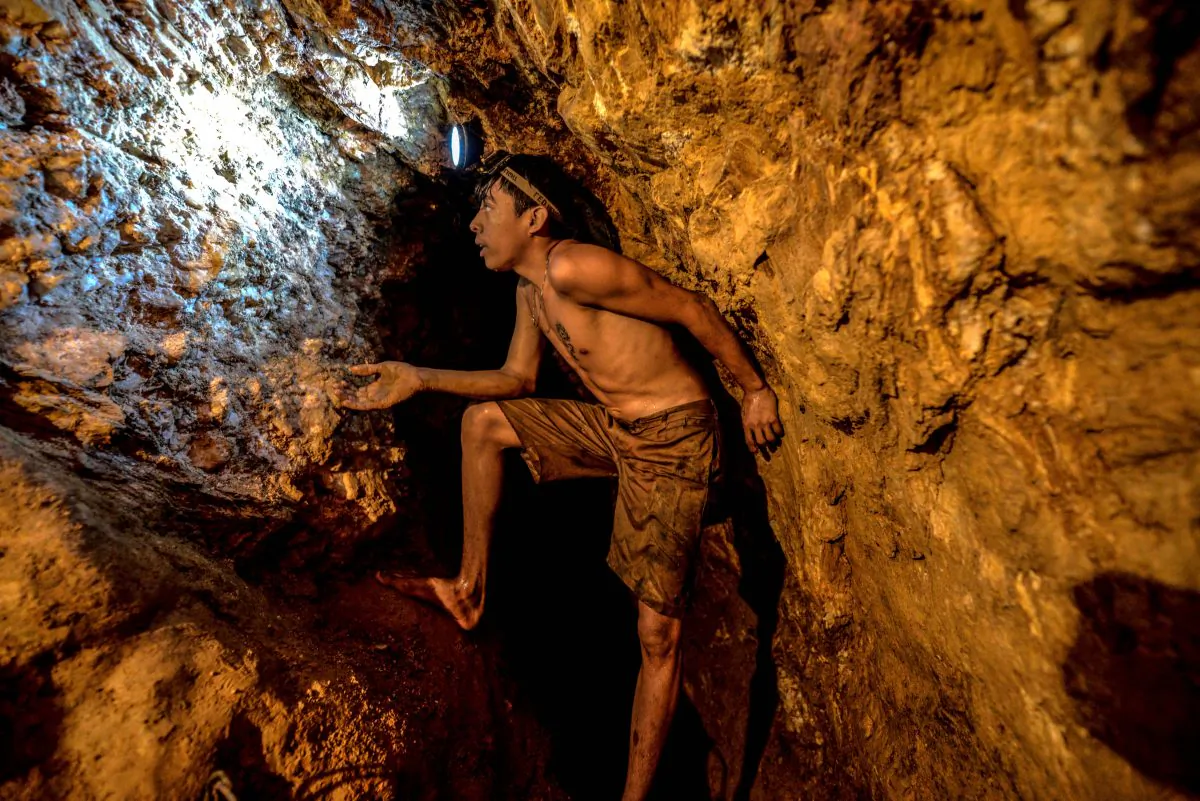
Heeney Capital said in a Sept. 16 statement that the mining concession with the Republic of Venezuela and Corporación Venezolana de Minería will develop and operate a major gold mining project in the El Callao Mining District of Venezuela, which it said was one “one of the most prolific gold belts in the Guayana Shield that hosts numerous Tier 1 gold assets.”
The initial investment in the El Callao mine is estimated to be up to $1 billion.
Venezuelan Minister of Mining Héctor Silva said that “these actions are part of efforts to strengthen bilateral relations between Venezuela and the United States, fostering investment to revitalize the national productive sector and consolidate Venezuela’s position as a mining and energy powerhouse.”
On March 27, the Trump administration opened Venezuela’s mining sector to Western companies, lifting some sanctions that had kept outside investors from buying and selling the country’s gold and other minerals.
The lifting of restrictions came three weeks after U.S. Interior Secretary Doug Burgum announced gold worth $100 million had been transported from Venezuela to the United States as part of a commercial agreement.
The United States imposed heavy sanctions on Venezuela’s gold sector starting in 2018, targeting Maduro’s regime and the state mining firm Minerven. The sanctions froze the Maduro government’s assets and prohibited transactions.
In March, the U.S. Treasury softened sanctions on Minerven.
The Venezuelan government has now given security assurances to foreign mining companies interested in investing in the country’s rich resources, Burgum said.
Roland Mineral Enterprises Corp., a Canadian exploration company, announced on March 27 that it had launched an acquisition program to seek and acquire interests in Venezuelan mineral properties, including mining rights to known gold, silver, and copper deposits.
The company considers the Las Cristinas Gold project mine in Bolivar State in southeastern Venezuela, opened in 1997 by Placer Dome Inc., one of the largest undeveloped gold deposits in the world.
Roland has signed an agreement for exclusive use of the mine’s current owner’s assets to study the site.
In 2011, then-Venezuelan leader Hugo Chavez announced that he was considering opening a large portion of Venezuela’s southern territory to mining. In the same year, he nationalized the gold industry, seizing mines from Crystallex International, Gold Reserve, and Rusoro Mining.
Chavez’s successor, Maduro, officially implemented this vision in 2016, as Venezuela’s economy spiraled into crisis, by carving out 12 percent of the country’s territory and labeling it the Arco Minero, or Orinoco Mining Arc (OMA), to generate revenue.
According to the Organized Crime Index, illegal gold mining particularly dominates Venezuela’s illicit economy.
It said that the area is controlled by non-state armed groups, including Colombian National Liberation Army (ELN) guerrillas and Revolutionary Armed Forces of Colombia (FARC) dissidents. Gangs such as El Tren de Aragua also operate there.
Executives from Oklahoma-based oil company Continental Resources signed a memorandum of understanding on Sept. 16 with Venezuela’s state oil company, PDVSA, seeking to further operate and develop the Ayacucho 2 area in the prolific Orinoco Belt.
The company said that following the Trump administration’s call for American energy companies to help rebuild Venezuela’s oil industry, it “undertook an independent evaluation of opportunities in the country.”
Located north of the Orinoco River in Venezuela’s Anzoátegui state, the Ayacucho 2 Block encompasses approximately 126,000 acres and contains an estimated 30 billion barrels of in-place resources.
“Ayacucho 2 represents one of the most significant resource opportunities in Continental’s nearly 60-year history,” it said.
Jill McLaughlin contributed to this report.
 Friends Read Free
Copy
Facebook
Tweet
Friends Read Free
Copy
Facebook
Tweet