
Virginia Democrats closed their first legislative session during which they held a trifecta in state government having passed bills to raise the minimum wage, ban “assault firearms,” limit cooperation with Immigration and Customs Enforcement, establish a legal cannabis retail market, and expand family and paid sick leave—priorities echoed by Democratic parties in statehouses across the country.
Republicans, who ran against Democrats on an affordability message in 2025, said the session failed to deliver.
The session ended on March 14 without a budget.
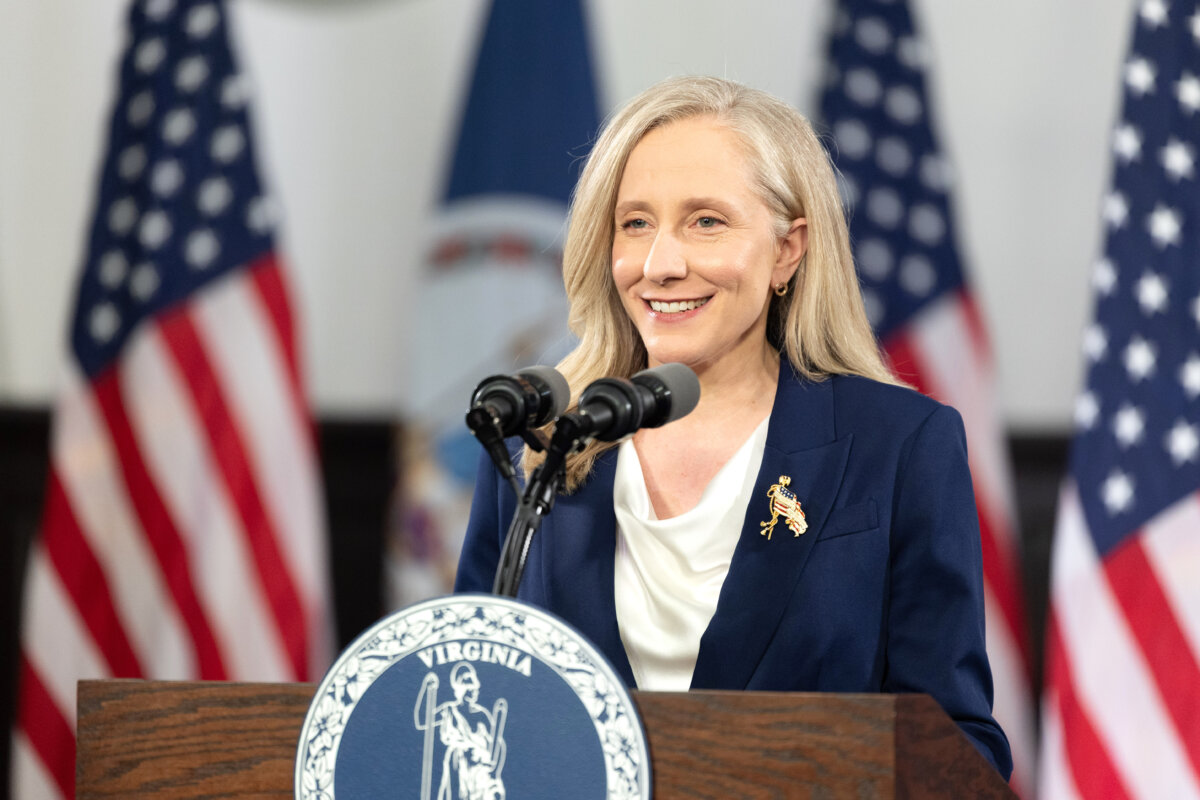
Gov. Abigail Spanberger said she was reviewing legislation on her desk and reaffirmed her intention to call lawmakers back to Richmond to complete budget talks.
“I remain in close contact with leaders in the General Assembly, and I look forward to calling lawmakers back to Richmond on April 23 to pass a budget that delivers on the responsible, pragmatic leadership Virginians voted for this past November,” Spanberger said in a statement on March 14.
The budget standoff centered on a sales and use tax exemption for the data center industry. State Sen. Louise Lucas, a Democrat, addressed the dispute directly on the Senate floor the night before adjournment.
Lucas said the Senate’s objective had always been to invest in making life more affordable through a balanced budget and that doing so required new revenue.
“Our responsibility to hardworking Virginians is a budget that doesn’t burden them,” Lucas said.
She also said that the Senate had always been the body to look beyond a two-year budget cycle, House elections, one-term governors, or any short-term gimmicks to get a budget over the finish line.
Lucas said that she voted for the original data center exemption in 2008 to incentivize the industry but that no one could have imagined the scale of growth that followed. She said that data center jobs are concentrated in the construction phase and that operational facilities employ as few as 10 to 50 workers.
She also said that revenue from an earlier expiration of the exemption could fund education, transportation, and social services.
Sen. Scott Surovell, a Democrat, acknowledged that when the exemption was initially adopted, no one anticipated how large the industry would grow.
He said that between 36 and 39 other states have similar exemptions, arguing that many states have viewed the computer chips in data centers as the equivalent of industrial equipment, which is not subject to sales tax. According to the National Conference of State Legislatures, as of December 2025, 37 states had tax exemptions for data centers.
“The reason it’s hitting us so hard is because we’ve been so successful, and so it has a big impact on us,” Surovell said.
He said the conversation about the exemption was overdue but cautioned against policies that could push the industry out of Virginia.
Both chambers voted on March 14 to petition the governor to call a special session, and lawmakers requested that the governor call them to return to Richmond on April 23.
Outside the budget fight, Democrats moved a broad legislative agenda through both chambers largely on party-line votes.
The General Assembly passed a ban on the import, sale, manufacture, purchase, and transfer of “assault firearms,” with exceptions for antique firearms, permanently inoperable firearms, and manually operated firearms such as bolt-action, pump, lever, or slide-action guns. It also banned the import, sale, barter, or transfer of large-capacity ammunition feeding devices.
It approved a phased increase to a $15-per-hour minimum wage by Jan. 1, 2028. Lawmakers passed measures ensuring paid family and medical leave and paid sick leave for all employees.
They also passed limits on Immigration and Customs Enforcement’s cooperation with local and state law enforcement, and they passed legislation creating a “prescription drug affordability board” tasked with conducting affordability reviews of certain prescription drugs sold in the commonwealth and setting upper payment limits on drug costs for state-sponsored and state-regulated health plans.
Spanberger said the session’s housing and energy cost bills together composed what she called the “Affordable Virginia Agenda.”
State Delegate Tony Wilt, a Republican, pushed back on the Democratic agenda in a post-session newsletter to constituents, stating that the majority had blocked Republican efforts to ease cost burdens.
Wilt said Democrats rejected a floor amendment that would have directed the State Corporation Commission to prioritize lower electric bills and reliable service and declined to cap the payroll deduction tied to the new paid family and medical leave program.
“Their actions this week make crystal clear where Democrats stand on affordability,” he wrote.
Delegate Wren Williams, a Republican, responded on X to a post by House Democrats touting the session’s accomplishments: “I love how they just declare they did things. No legislation cited, no policy, no fiscal impact, no proof at all that these bills accomplish any of these things. In fact, we know the opposite occurs. And they can’t even balance the budget! Just more feelings, and ‘we did this!'”
Republicans accused Democrats of introducing dozens of new tax proposals that contradicted their affordability message. The Virginia GOP said on X that Democrats were “breaking every promise they made on affordability” while “proposing 50+ new taxes.”
Several of the proposed tax measures were scaled back, defeated, or never taken up by lawmakers before the session ended. House Speaker Don Scott, a Democrat, told Virginia Public Radio that Democrats had “done historic things” and delivered on their core promises to working families.
Voters will also weigh in on a mid-decade congressional redistricting referendum on April 21. Early voting is already underway. If approved, the measure could allow Democrats to redraw Virginia’s congressional map to favor the party in up to 10 of the state’s 11 districts ahead of the November midterms. Republicans challenged the referendum in court. The Virginia Supreme Court allowed it to proceed while litigation continues.
Spanberger has until April 13 to sign, veto, or amend legislation passed this session. The General Assembly will reconvene on April 22 to consider her actions, and the special budget session will begin the following day.
 Friends Read Free
Copy
Facebook
Tweet
Friends Read Free
Copy
Facebook
Tweet