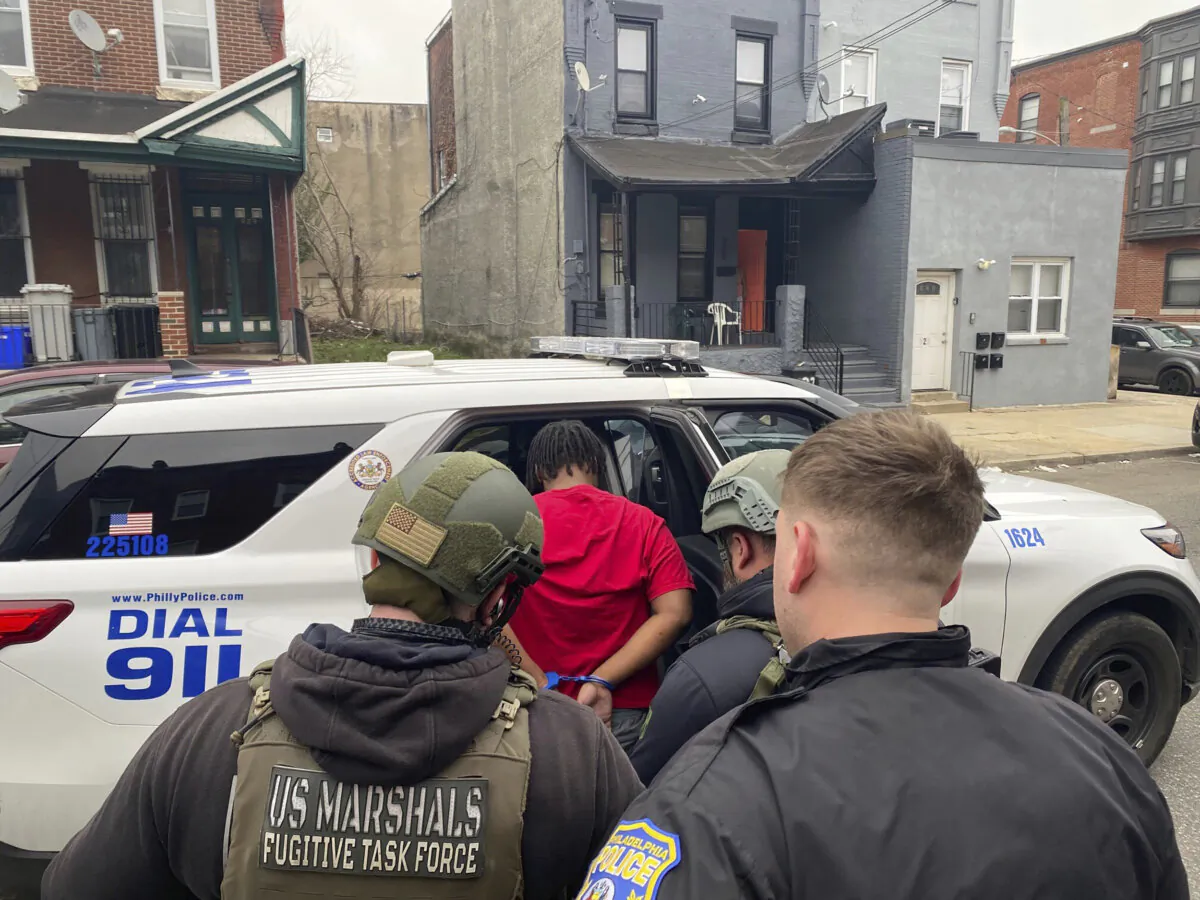

A five-week-long operation led by the United States Marshals Service (USMS) in New Mexico has resulted in the arrests of 237 individuals.
The arrests were made as part of Operation Triple Beam-Prolific that focused on violent fugitives and narcotics- and firearms-related offenders in Las Cruces city and surrounding regions.
In addition to the arrests, authorities seized 17 firearms, 403.4 grams of methamphetamine, 110 grams of fentanyl, and 54 grams of cocaine, USMS said in an Oct. 2 statement. Two vehicles were also recovered.
The operation, which took place between Aug. 24 and Sept. 25, was a coordinated effort aimed at reducing violent crime.
It was carried out in cooperation with federal, state, and local partners, including the Federal Bureau of Investigation, the Drug Enforcement Administration, the New Mexico State Police, and the Las Cruces Police Department.
“Our officers see firsthand the harm criminals cause in Las Cruces and across New Mexico. I thank the U.S. Marshals Service for leading this operation and every agency involved for their commitment to keeping our communities safe,” Matthew Broom, chief of the New Mexico State Police, said in the statement.
“These arrests show what we can accomplish together. The New Mexico State Police will continue to stand alongside our local, county, state and federal partners to protect the people who call New Mexico home.”
In March, the USMS had announced that the 17-week Operation Triple Beam-Shadow Break had led to the arrests of 920 individuals. This operation had focused on illegal gun possession, narcotics, and violent fugitives in Albuquerque and surrounding areas.
Albuquerque, the largest city in New Mexico, saw the deployment of the National Guard last year when state Governor Michelle Lujan Grisham authorized the action due to a “significant increase in crime” in the city, according to an April 2025 statement from the governor’s office.
At the time, the American Civil Liberties Union (ACLU) of New Mexico had criticized the deployment of National Guard troops in the city, calling it a concerning development.
“Governor Lujan Grisham’s deployment of the National Guard to support Albuquerque police is a show of force, not a show of solutions,” Daniel Williams, a policy advocate with the state’s ACLU, said in a statement at the time.
Grisham authorized the deployment after Albuquerque Police Department chief Harold Medina had requested Guard support in a March 31, 2025, letter to the governor. While the department had made progress in combating crime, “sustaining this momentum requires immediate enforcement,” Medina had said.
According to the City of Albuquerque, various crime rates have dropped over the past year. Between Jan. 1 and Aug. 30, there were 40 homicides, down by 18 percent compared to the same period last year. Auto theft, residential burglary, sex crimes, robbery, shoplifting, and commercial burglary also registered declines.
Northern New Mexico Crackdown
There have been crackdowns on criminal activity in other parts of New Mexico.
In a Sept. 2 statement, the Department of Justice (DOJ) announced that the FBI-led Operation Tempest led to federal charges against multiple individuals accused of narcotics trafficking, firearms offenses, and violent crime in northern New Mexico.
The operation targeted some of the most dangerous offenders identified by local law enforcement and tribal partners. Targeted individuals included those convicted of second-degree murder, attempted aggravated assault, and child abuse.
“Every arrest made through this operation represents one more step towards a safer community. Today’s success demonstrates what we can accomplish when law enforcement agencies work together for a common goal,” Justin A. Garris, special agent in charge of the FBI Albuquerque Division, said in the statement.
New Mexico is also taking enforcement actions against various immigration-related violations.
In a DOJ statement, the United States Attorney’s Office for the District of New Mexico announced charges against hundreds of people for offenses committed during the four-week period ending Oct. 2.
A total of 288 individuals were charged with illegal reentry after deportation, 232 were charged with illegal entry, and 23 people were charged with immigrant smuggling.
 Friends Read Free
Copy
Facebook
Tweet
Friends Read Free
Copy
Facebook
Tweet