
Reforming higher education was a campaign promise made by President Donald Trump, and it remains among his highest priorities.
Shortly after taking his oath of office, Trump signed executive orders prohibiting diversity, equity, and inclusion (DEI) policies, anti-Semitism, and other practices on college and university campuses.
Announcing that the wealthiest institutions would be examined first, he opened investigations into 60 universities. The president also froze federal funding at several institutions, citing civil rights laws that prohibit discrimination based on race, gender, religion, or national origin.
Many of the schools Trump has confronted have reluctantly reached an accord with the federal government—for the time being—according to Peter Wood, president of the National Association of Scholars.
“The attitude of college administrators is, ‘We don’t want to be the next one to be in the spotlight like Harvard or Columbia,’” Wood, who has also worked as a university professor and administrator, told The Epoch Times.
“I don’t need to be the fastest one to run away from the bear. I just need to be faster than the other guy.”
Here is a summary of the actions by the Trump administration so far.
Harvard University
The oldest U.S. university remains locked in a legal battle with the Trump administration over DEI, anti-Semitism, and international student visas, although both sides have signaled signs of cooperation.
On July 29, Harvard announced that it would release employee documents to the Department of Homeland Security, which has concerns about the eligibility of noncitizens. Before that announcement, Trump on two occasions noted that he and Harvard are close to reaching an agreement on other matters.
The Trump administration previously accused the Boston-based Ivy League university of both anti-Semitism and discriminatory DEI practices and froze billions of dollars in federal research funding. That prompted a lawsuit from Harvard, which called the action unconstitutional and a violation of free speech. The matter is still in federal court.
A second lawsuit against the federal government ensued after Trump attempted to end Harvard’s visa program for foreign students. A federal judge blocked that executive action. Trump has also threatened to revoke the university’s tax-exempt status.
Duke University
Trump’s fight with the Blue Devils school is unique in that his administration specifically cited affirmative action practices at the prestigious Southern university’s medical school and law school, as opposed to general DEI practices that go beyond just hiring and student admissions.
On July 28, the Health and Human Services Department froze $108 million in research grants to the medical school and ordered administrators at Duke’s medical and law schools to create a “merit and civil rights committee” that would discourage race-based selection practices in the future.
Columbia University
On July 23, Columbia administrators agreed to pay a $200 million fine, plus $20 million to Jewish employees who were harassed by co-workers and students. They also implemented a mask ban on student protests, ended hiring practices based on gender and race, moved the student disciplinary process to the provost’s office, agreed to a federal review of its Middle Eastern studies program, and pledged to implement more scrutiny of admission applications from foreign students.
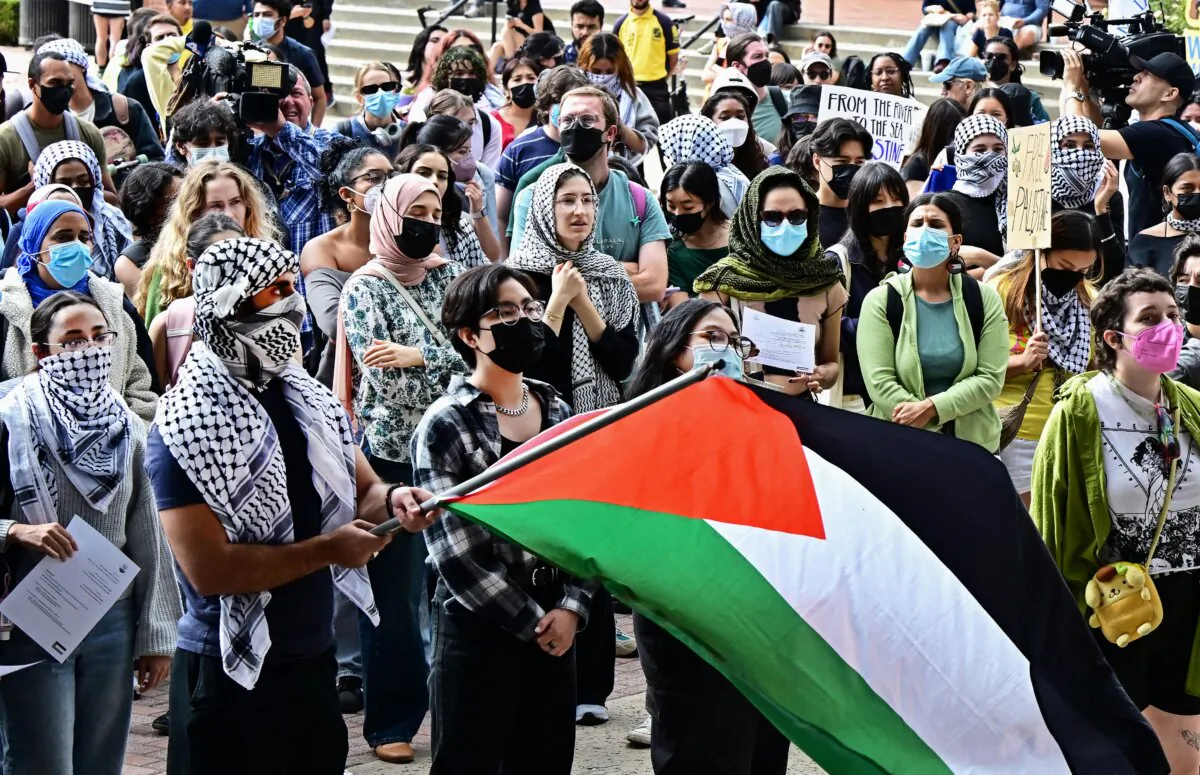
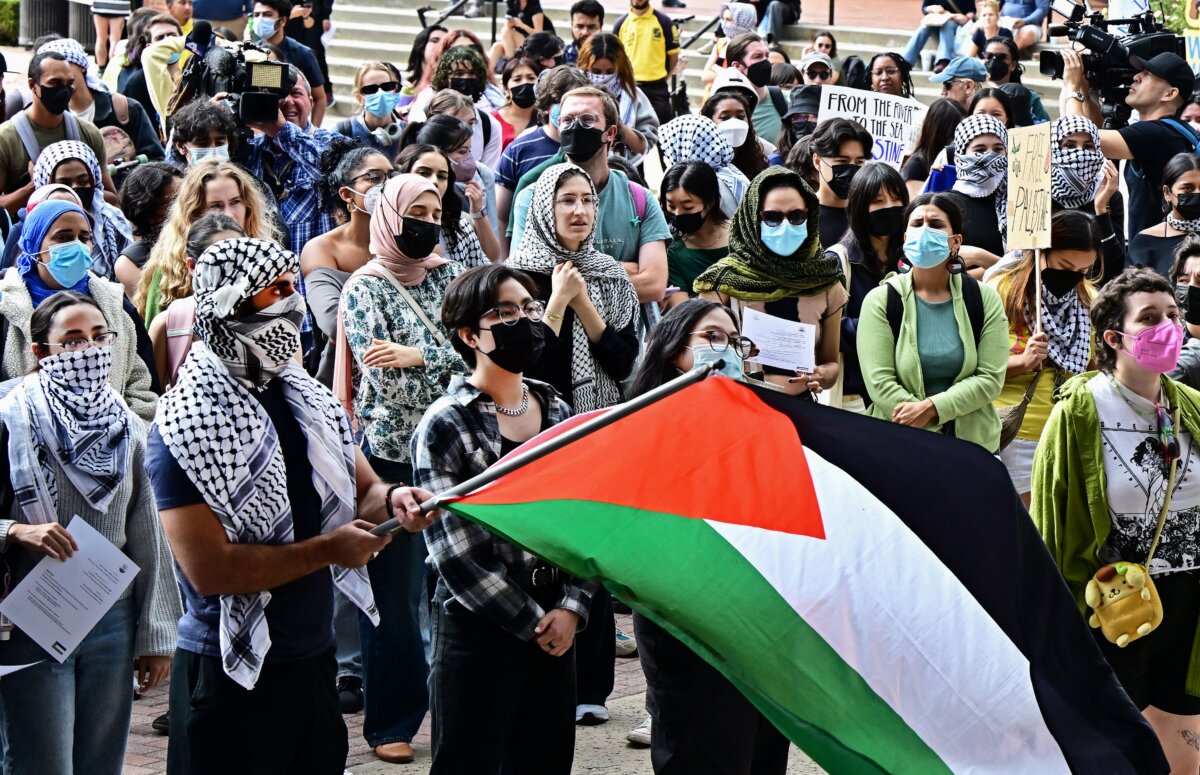
Trump initially froze $400 million in research funding following months of campus protests, encampments, and the vandalism and occupation of a building stemming from pro-Palestinian disruptions that followed the Hamas terrorist group’s Oct. 7, 2023, attacks on Israel and the ensuing war.
The American Association of University Professors, a union of about 45,000 members that champions Harvard’s resistance, denounced Columbia’s decision as “a disaster for academic freedom, freedom of speech, and the independence of American higher education,” according to a statement the organization emailed to The Epoch Times.
Other Prestigious Schools
The federal government’s actions against the University of Pennsylvania were specific to Title IX, which prohibits sex discrimination in any education program that receives federal dollars and subsequently protects women’s sports. UPenn swimmer Lia Thomas, a male who identified as transgender and won an NCAA championship in 2022, was stripped of all awards and honors, and the school was required to send a letter of apology to every swimmer who competed against Thomas.
The University of California–Los Angeles was informed by the Department of Justice on July 29 that it was violating students’ civil rights by failing to address campus anti-Semitism. Administrators were given an Aug. 5 deadline to enter into a voluntary agreement to resolve this issue.
In April, a White House official confirmed that the administration had frozen $1 billion in federal funding to Cornell University following an investigation into campus civil rights violations.
A month before, an undisclosed amount of federal money was frozen at Princeton University following an investigation of campus anti-Semitism there. The Commerce Department cut $4 million to the school after determining that professors promoted environmental ideology and exaggerated implausible climate threats.
The Trump administration froze $790 million at Northwestern University in April following an investigation of anti-Semitism. The president also announced that $510 million in grants to Brown University would be halted because of harassment of Jewish students.
On April 25, the Department of Education announced that the University of California–Berkeley is under investigation for allegedly not reporting hundreds of millions of dollars in donations from a Chinese entity and allegedly sharing information about an important technology.
After Trump began his current term, colleges and universities across the nation removed references to DEI from their websites, often replacing them with terms such as “belonging” or “campus culture.”
Higher education institutions scored a win in their fight with the president on April 4 when a federal judge blocked Trump’s directive to cap overhead costs on National Institutes of Health grants at 15 percent. The lawsuit was filed by attorneys general from 22 states.
What Comes Next
Several schools investigated by the Trump administration have been reluctant to comply with conditions or negotiate with the federal government.
While higher education institutions may bring lawsuits against the federal government, the president has several tools at his disposal to bring administrators to the bargaining table, including research grants and federally backed student loans, both of which require schools to comply with civil rights laws.
Trump also has the authority to decertify student visa programs; foreign students are less likely to get financial aid and pay billions of dollars in tuition and fees, according to Wood. To a lesser degree, the administration can also make it difficult for university programs to maintain or obtain accreditation.
Higher education leaders are aware of this and, like Columbia’s leaders, are often willing to pay a heavy fine and comply with conditions to avoid losing billions of dollars in funding. But, Wood said, they will likely keep their heads down, grit their teeth, and hope to eventually reclaim the status quo.
“They still take the enlightened view of the American left and social justice,” he said. “They view higher education as … righteously theirs. They want to get back to their old way of doing things.”
Santa Ono, former University of Michigan president, serves as an example in the war of viewpoint diversity. He championed some of the most extreme DEI programs in the nation as head of the Great Lakes State’s flagship university but discontinued the required diversity statements in hiring practices and scrubbed the institution’s website after Trump was elected to his second term.
As the sole candidate to preside over the University of Florida, Ono said that, after a period of self-reflection, he opposed DEI practices. University trustees endorsed Ono, but the Florida university system Board of Governors ultimately rejected him.
Members of Congress continue their probe of higher education. The most recent of nine hearings on campus anti-Semitism in less than two years took place in July. Leaders from Georgetown, the University of California–Berkeley, and the City University of New York acknowledged current faculty members or programs that celebrated or downplayed the Hamas attacks on Israel and played a role in pro-Palestinian protests or encampments.
“I will stand by the contention that these hearings must continue,” Rep. Tim Walberg (R-Mich.), chairman of the House Committee on Education and the Workforce, said on July 15.
“We need to continue to highlight bad actors in our higher education institutions.”
 Friends Read Free
Copy
Facebook
Tweet
Friends Read Free
Copy
Facebook
Tweet