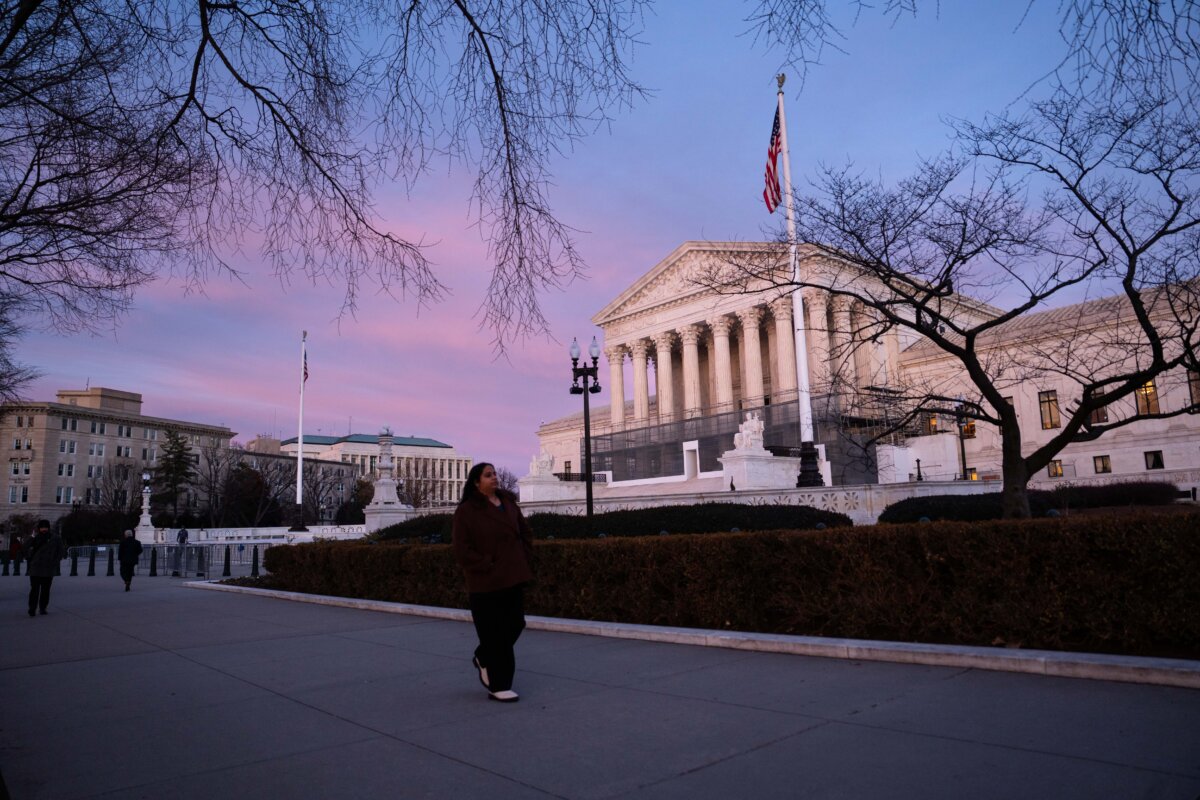

The Supreme Court is set to hear oral arguments over Hawaii’s gun control law, which could have long-term implications for the future of gun rights and restrictions.
At issue is Hawaii’s so-called “Vampire Law” which bans firearms on private property open to the public, such as a business. The law requires those carrying firearms to get express permission from the owner, manager, or someone with authority over the property to enter.
The U.S. Court of Appeals for the Ninth Circuit upheld the law last February in the case of Wolford v. Lopez. The law’s unusual moniker is based on the legend that a vampire must be invited in before he can enter a home.
The default rule in most jurisdictions is that carrying a firearm on private property open to the public is legal unless the owner prohibits it. The Hawaii law flips that, making much of the state a “gun-free zone,” the petitioners claim.
New York, Maryland, New Jersey, and California have passed these laws in addition to Hawaii. Gun rights advocates have viewed these laws as attempts to bypass the Supreme Court’s 2022 decision in New York State Rifle and Pistol Association v. Bruen.
That decision reduced the ability to control who could carry a gun by doing away with the may-issue permitting scheme.
Under that scheme, local authorities determined who could carry a gun. Bruen backed shall-issue permitting, in which the presumption is that law-abiding citizens can’t be denied the right to carry.
“Hawaii has long been attempting to stymie gun ownership and gun permits,” Carrie Severino, president of the Judicial Crisis Network, told The Epoch Times.
Severino added that laws designed to dampen the exercise of a constitutional right are antithetical to the country’s founding.
“Now, because of Supreme Court precedent, they have to have a shall-issue standard,” Severino said. “By flipping the defaults, you’re putting a huge thumb on the scale.”
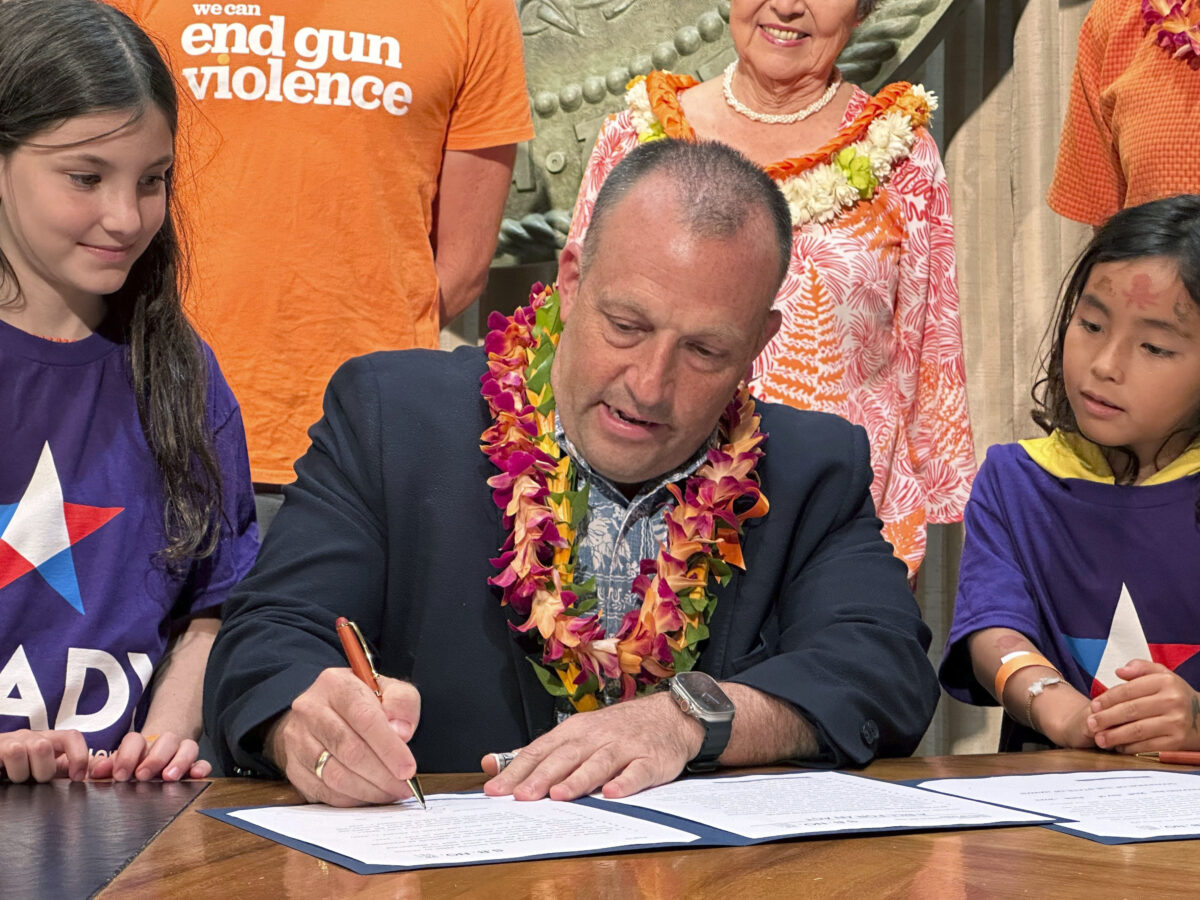
The Hawaiians suing the state point out that U.S. Circuit Judge Lawrence VanDyke said in his dissenting opinion that Hawaii’s law effectively denies a wide range of Hawaiians their Second Amendment rights.
“‘Hawaii’s law prohibits, presumptively or outright, the carrying of a handgun on 96.4 percent of the publicly accessible land in Maui County … and has ‘effectively nullified the Second Amendment rights of millions of Hawaiians,’” the petition reads.
The Brady Center and Giffords Law Center, two gun control groups, filed a joint amicus brief encouraging the justices to uphold the law to protect an owner’s right to control who has access to their property.
Gun control activists did not respond to a request for comment by publication time. However, Douglas Letter, chief legal officer for Brady, stated last month that, “Hawai‘i has an eminently reasonable law: Visitors must simply receive property owners’ permission to bring firearms onto their private property.”
Bruen’s Aftermath
Second Amendment attorneys told The Epoch Times that the Supreme Court would likely rule against Hawaii’s law because it didn’t properly adhere to the reasoning in Bruen.
In that case, the Supreme Court said Americans have the right to carry firearms in public. The court also held that gun laws must be consistent with the nation’s history and tradition of firearms regulations.
The Ninth Circuit said Hawaii’s law met this standard based on two older laws from New Jersey and Louisiana.
One was a 1771 New Jersey poaching law, that prohibited carrying a gun on private property without “License or Permission in Writing from the Owner or Owners or legal Possessor.”
The other was an 1865 Louisiana Black Code law that prohibited carrying firearms on “the premises or plantation of any citizen, without the consent of the owner or proprietor,” according to Joseph Greenlee, litigation director for the National Rifle Association’s Institute for Legislative Action.
“The Black Code law will likely not be considered the type of regulation that can establish a tradition. The Supreme Court has repeatedly declined to rely on racist historical laws in its second amendment analyses,” Greenlee told The Epoch Times.
The Ninth Circuit found that both these laws “applied to all private property,” since private property was a concept the founders recognized, and they had laws regulating carrying of firearms on such property.
Second Amendment attorneys dismiss those arguments.
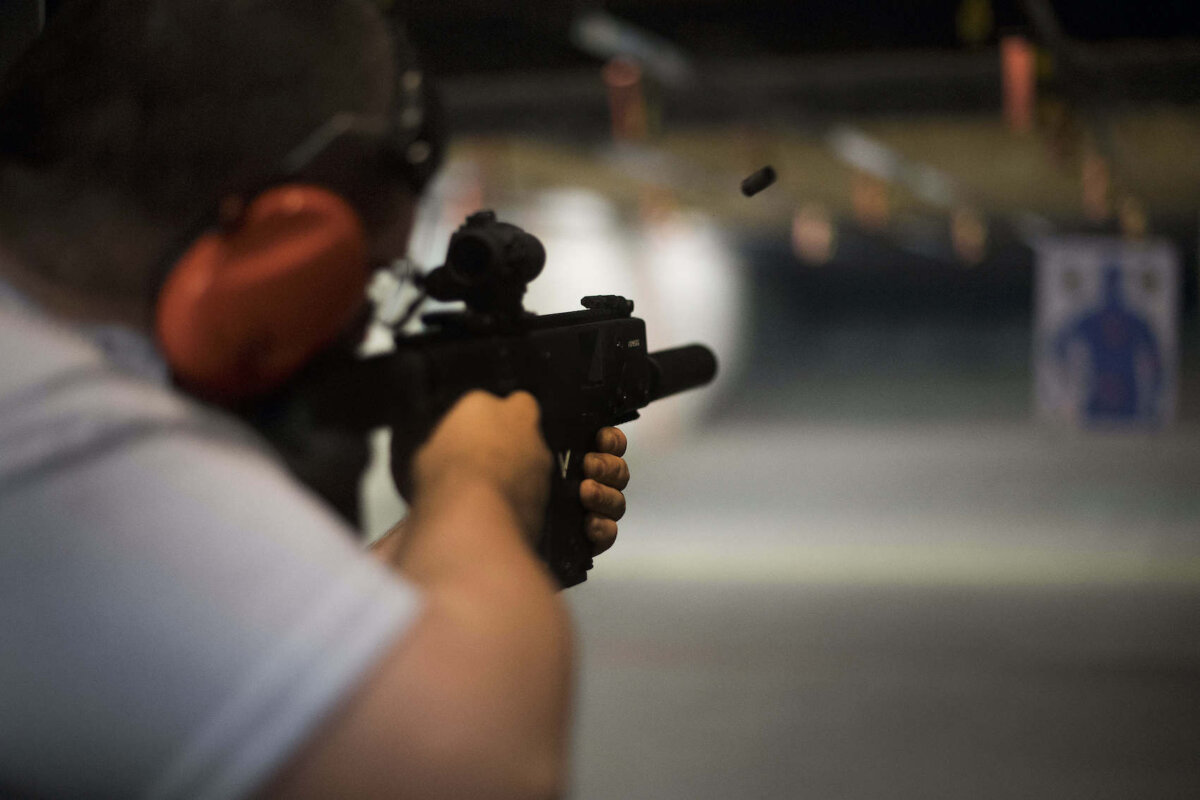
“The Supreme Court will find that the Second Amendment’s text is implicated, thereby shifting the burden to Hawaii to demonstrate that its law is consistent with a longstanding historical tradition of firearms regulation in the U.S. However, I doubt Hawaii will be able to meet its burden of showing such a historical tradition,” Mark Smith, a constitutional lawyer and host of a pro-Second Amendment YouTube channel, wrote in an email to The Epoch Times.
Possible Impact
Those interviewed say the court’s ruling will extend beyond the islands.
The lawyers point out that in addition to the four other states with similar laws, there are states like Colorado and Illinois likely watching to determine whether they will pursue similar regulations.
“[The case] gives the Supreme Court the opportunity to reiterate its test that it established in Heller, and already reiterated once in Bruen, and even detailed in Rahimi, and gives the Supreme Court the opportunity to address a carry issue that … has the potential to impact several states,” Cody Wisniewski of the Firearms Policy Coalition Action Foundation told The Epoch Times.
United States v. Rahimi is a 2024 case in which the high court upheld a so-called “red flag law.” Under red flag laws, local authorities can confiscate firearms from people deemed a threat to others even if they have not been convicted of a crime.
He and others believe the ruling will force lawmakers to refine the history and tradition standard, which could make it more difficult to find ways around Bruen.
Amy Swearer, senior legal fellow with Advancing American Freedom, said that if the Supreme Court strikes down the law, the greatest impact will be in the message it sends lawmakers.
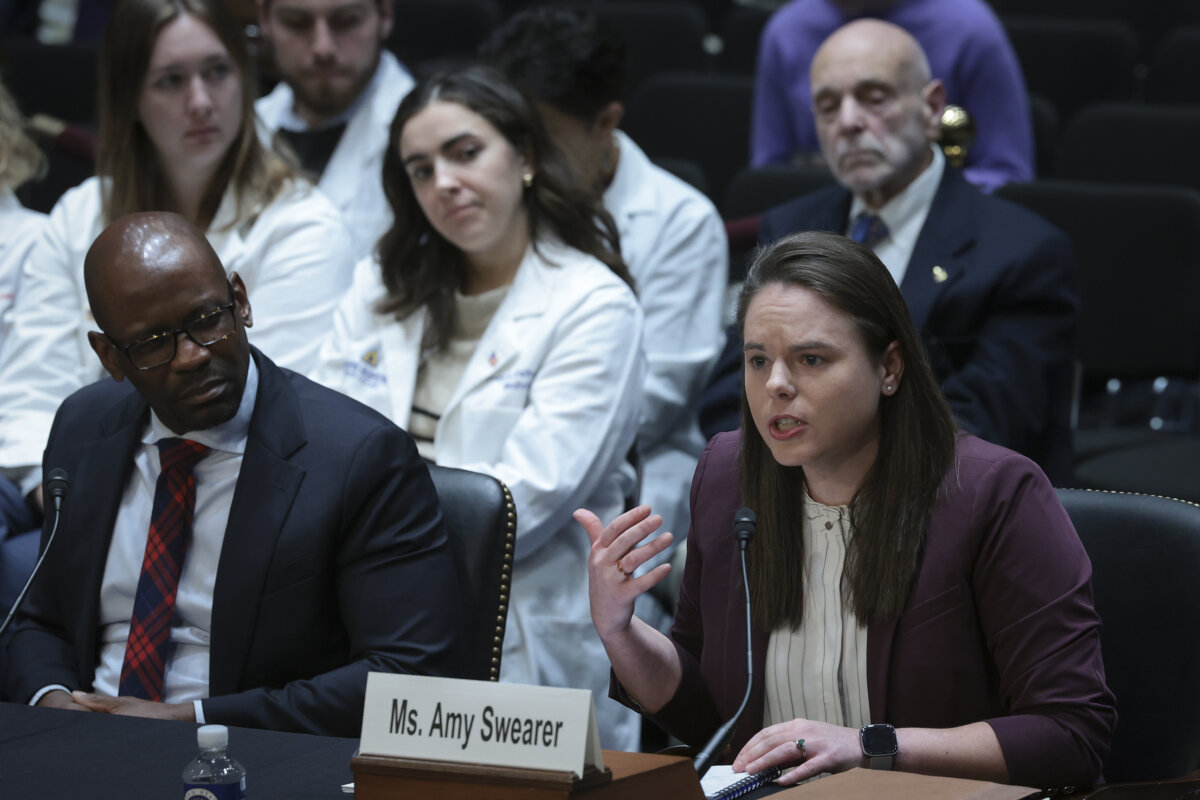
“[It’s] going to be much broader than the impact on the direct exercise of rights for these people [in Hawaii],” Swearer told The Epoch Times. “It’s all going to be part of … the Supreme Court demonstrating, ‘No really. We mean it when we say there is a right to armed self-defense in public. We mean it when we say you can’t cherry-pick laws about disarming black people.’”
However, Wisniewski said it’s difficult to predict what the justices will decide. He said they could rule with the broader impact of their decision in mind, or they could focus narrowly on the Hawaiian law.
“It’s very possible that the Supreme Court limits its opinion, and that’s one of those things that we have to watch for and see how an inevitable opinion comes out before we’ll know exactly the impact it’ll have,” he said.
Zachary Steiber contributed to this report.
 Friends Read Free
Copy
Facebook
Tweet
Friends Read Free
Copy
Facebook
Tweet