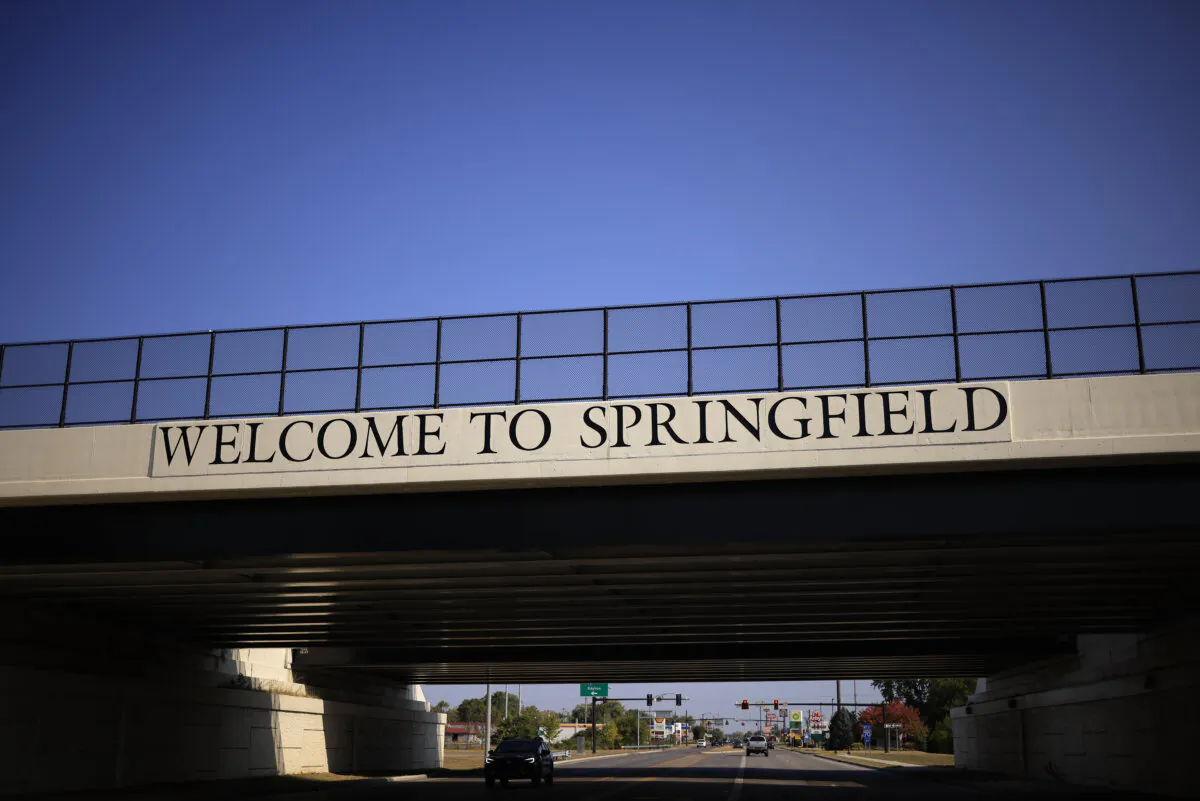

Haitian immigrants, community leaders, and residents in Springfield, Ohio, braced for the end of Temporary Protected Status (TPS) for Haiti in the United States earlier this week until a federal district court judge issued a reprieve.
On Feb. 6, the Trump administration appealed against that decision as this southwest Ohio city contemplates what’s next.
An estimated 15,000 Haitians live in Springfield, which is located between Dayton and Columbus and had a population of around 58,000 in the 2020 U.S. census.
Many Haitians in the community are TPS holders, which allows them to legally live and work in the country.
The temporary status was scheduled to conclude on Feb. 3, but Judge Ana Reyes of the U.S. District Court for the District of Columbia paused that plan.
Work authorization continues for Haitian nationals, who remain protected from detention and deportation for the duration of the judicial stay.
As the scheduled end of TPS neared, Haitian immigrants in Springfield were fearful that Immigration and Customs Enforcement (ICE) agents would descend upon the city and arrest them.
Viles Dorsainvil is executive director of the Springfield-based Haitian Community Help and Support Center. He said Reyes’s ruling “will lower the pressure quite a bit and ease the fear that has been in the community” but encouraged local Haitians to prepare for different scenarios, including the removal of TPS.
“We cannot give ourselves the luxury of living as if everything is normal,” Dorsainvil said.
Outside of Ohio, many Americans had never heard of Springfield until Trump called attention to Haitian immigrants in the city during a Sept. 10, 2024, presidential debate.
“In Springfield, they’re eating the dogs. The people that came in, they’re eating the cats. They’re eating the pets of the people that live there,” Trump alleged.
City officials, police, and Haitian immigrants denied the accusation, but Springfield became a central part of Trump’s promise to address the border crisis.
Starting Point for Deportation
On the campaign trail in September 2024, Trump promised “the largest deportation” in the history of the United States. He said that Springfield would be a starting point.
JD Vance, who is now vice president, said immigrants were overburdening Springfield’s services and housing.
Springfield had a small Haitian population before 2021, when the number of illegal border entries began to break records.
A shortage of entry-level and blue-collar workers made the city an attractive destination, especially because of its low cost of living compared with major metro areas.
Roudechel Charpentier moved from Haiti to Springfield in 2023. While dining at a Creole restaurant in the city earlier this week, he said that the Haitian community here is “happy right now” but noted that “everything is not done yet” because a final decision on TPS awaits.
“But the situation is much better than last week,” he added.
Before Reyes’s ruling, local groups were advocating for Haitian TPS holders to remain inside their homes.
Kristin Monroe is part of G92, a coalition of faith leaders and advocates focused on keeping Haitians in Springfield. She called Reyes’s decision “a short-term Band-Aid that has been extended” and added that he group wants “a long-term win.”
Cultural Differences Arise
Cultural differences between long-term residents and immigrants have caused tension for several years in Springfield, longtime resident Setys Kelly acknowledged.
Many residents have complained about an overburdened health care system and concerns about driver safety because of Haitians operating motor vehicles without licenses and a limited understanding of English.
Extending TPS is unfair to heritage residents of the city because an emphasis on accommodating Haitians has shifted focus away from public safety and homelessness, among other issues, Kelly said.
“Let’s take care of those that are here, let’s service those that are here,” Kelly said before urging Haitian TPS holders to prepare for leaving the community.
“Eventually you’re going to have to go,” Kelly said. “Whether it’s two years, five years, five minutes or 10 days, eventually you are going to have to go and people are going to have to start preparing them to leave.”
In her ruling, Reyes wrote that Department of Homeland Security (DHS) Secretary Kristi Noem did not consult with other government agencies when the department terminated TPS for Haiti last July.
“In terminating Haiti’s TPS designation without consulting, she acted contrary to law and in excess of statutory authority,” Reyes added.
Reyes also accused Trump of making “derogatory statements about Haitians and other nonwhite foreigners.”
That was evidence of discriminatory intent behind the decision that made it unlawful, Reyes wrote.
On X, after Reyes’s decision, Assistant Secretary of Homeland Security Tricia McLaughlin posted, “Supreme Court, here we come. This is lawless activism that we will be vindicated on.”
“Haiti’s TPS was granted following an earthquake that took place over 15 years ago, it was never intended to be a de facto amnesty program, yet that’s how previous administrations have used it for decades.
“Temporary means temporary and the final word will not be from an activist judge legislating from the bench.”
The Trump administration on Feb. 6 appealed against Reyes’s order and memorandum opinion to the D.C. appellate court.
It requested that the district court stay its ruling that prevents the termination from taking effect and asked the court to rule on the motion by Feb. 9 at noon.
Haiti and TPS
U.S. Citizenship and Immigration Services defines TPS as a designation given to people when armed conflict, environmental disasters, epidemics, or other extraordinary or temporary conditions happen in their home countries.
TPS allows foreigners to gain work authorization permits in the United States and prevents them from being deported.
A March 2025 Congressional report showed 330,735 Haitian migrants living in the United States under TPS.
The DHS originally sought to terminate Haiti’s TPS designation on Sept. 3, 2025.
In July 2025, that move was blocked, and TPS was extended to Feb. 3, 2026, by a New York U.S. district court judge.
Sen. Bernie Moreno (R-Ohio) chastised Reyes in a post on X.
“When a Democrat president can create a temporary program and an unelected Democrat judge can unilaterally block a duly-elected Republican president from ever undoing it, we do not live in a democracy,” Moreno wrote.
“It’s not Permanent Protected Status. This outrageous decision cannot stand,” he added.
A ‘Blow to the Economy’
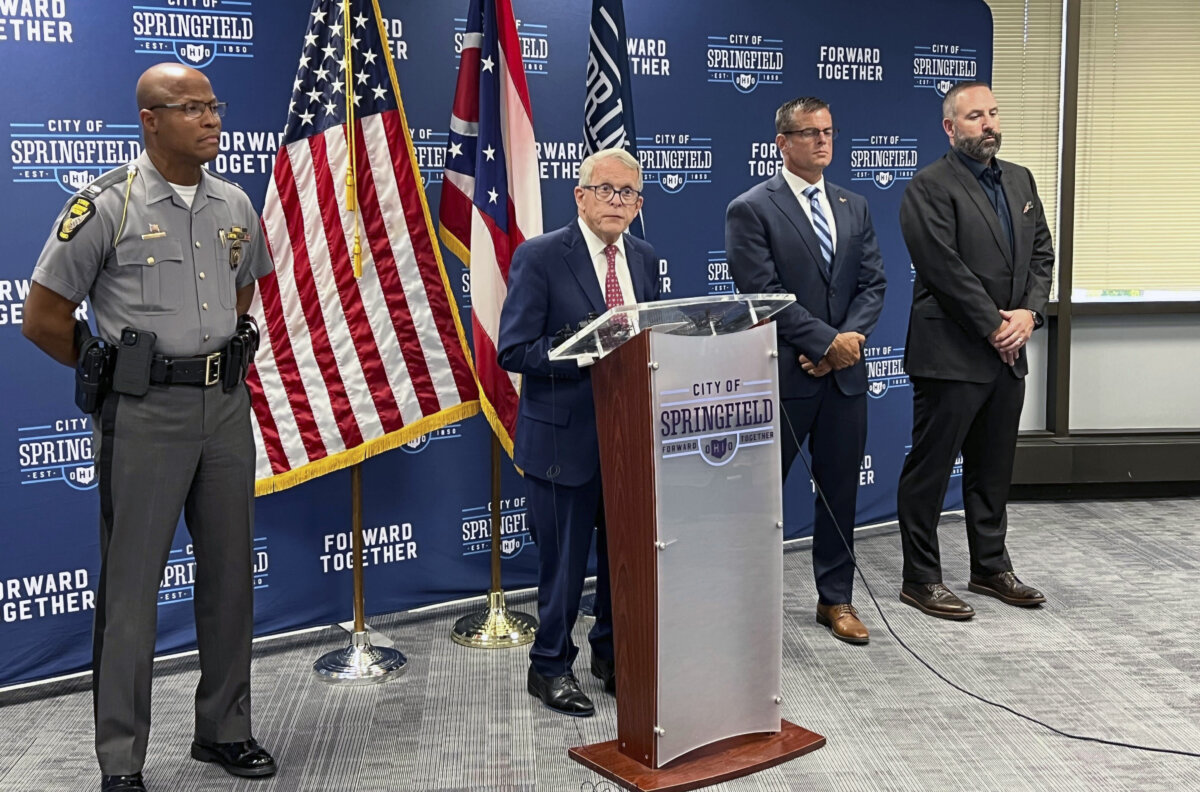
A longtime supporter of the Haitian community, Ohio Gov. Mike DeWine has said that the the end of TPS could damage the region’s economy, place a strain on children’s services if parents are detained, and harm families if they are forced to return to Haiti.
“Some people have been here for decades. All the people have temporary status or are here legally,” DeWine said in a Jan. 27 press conference. “And then one day you say, ‘Well, these all, these people need you to leave,’ I don’t think it’s good for our country.”
At a public appearance on Feb. 3 in central Ohio, DeWine reiterated his support for Haitian immigrants remaining in the country.
“I think it’s a mistake to take away their temporary protected status because what that will mean when that happens is that they no longer can be employed,” DeWine said.
DeWine added that it would be a “blow to the economy” and “a blow to the state” if TPS for Haiti is revoked.
On Feb. 5, Vance told political commentator Megyn Kelly that “we’re gonna appeal” and “we’re gonna win.”
He noted that “judges have tried to stop deporting illegal aliens” and the appeals process has been required.
“It just takes time to do this in the proper way, to do it in a legal way. It’s taken time, especially when the left is fighting us so aggressively.
“But it’s going to keep on happening. The president has been very clear, we’re not going to stop enforcing our immigration policies,” Vance said.
 Friends Read Free
Copy
Facebook
Tweet
Friends Read Free
Copy
Facebook
Tweet