
WASHINGTON—The White House will send Congress a request to claw back $9.4 billion in previously appropriated funds to public media and foreign aid.
A spokesperson for the Office of Management and Budget (OMB) confirmed in a statement to The Epoch Times that the long-expected rescissions package will be sent to Congress for consideration on June 3.
In Washington parlance, a “rescissions package” refers to a request by the president for Congress to withdraw funding previously designated by the legislature for a specific purpose. Such packages are handled under the Impoundment Control Act of 1974, which limits the president’s ability to unilaterally cancel funding appropriated by Congress.
The majority of the forthcoming rescissions package has to do with foreign aid, with the remainder targeting federally funded media outlets. They are meant to codify many of the cuts recommended by the Department of Government Efficiency (DOGE).
A total of $8.3 billion would be cut from the U.S. Agency for International Development (USAID) and the African Development Foundation. The remaining cuts, approximately $1.1 billion, would be rescinded from the Corporation for Public Broadcasting, which oversees state-funded media such as National Public Radio (NPR) and the Public Broadcasting Service (PBS).
Since taking office, President Donald Trump’s administration has targeted these government agencies for downsizing, with some efforts aiming to end USAID entirely and absorb the agency into the State Department, beginning in February.
Meanwhile, the administration has accused the Corporation for Public Broadcasting and its subsidiaries of “biased and partisan news coverage.”
On May 1, Trump signed an executive order directing the Corporation for Public Broadcasting to end all direct funding for the news outlets and ensure that “licensees and permittees of public radio and television stations … do not use federal funds for NPR and PBS.”
The OMB spokesperson raised concerns about NPR and PBS leadership in a statement to The Epoch Times, citing NPR CEO Katherine Maher’s attacks on Trump, in which she called him a “fascist.”
The spokesperson also referenced programming on PBS related to transgender issues, including “Real Boy,” a program about a trans teen, and “Our League,” a program about a trans woman returning home.
The 1974 impoundment law prohibits the president from ending funding without the approval of Congress. When the White House sends the package to the Capitol, lawmakers will have 45 days to approve or reject the cuts.
This process is handled by a simple majority vote of both chambers, as laid out in the Impoundment Control Act. That means that if Republican legislators broadly agree with the proposed cuts, they will not need Democrats’ help to approve them.
The OMB spokesperson provided a detailed overview of the budget items for which the White House is requesting a rescission.
If approved by Congress, the package would codify a flurry of cuts to spending and programs identified by DOGE.
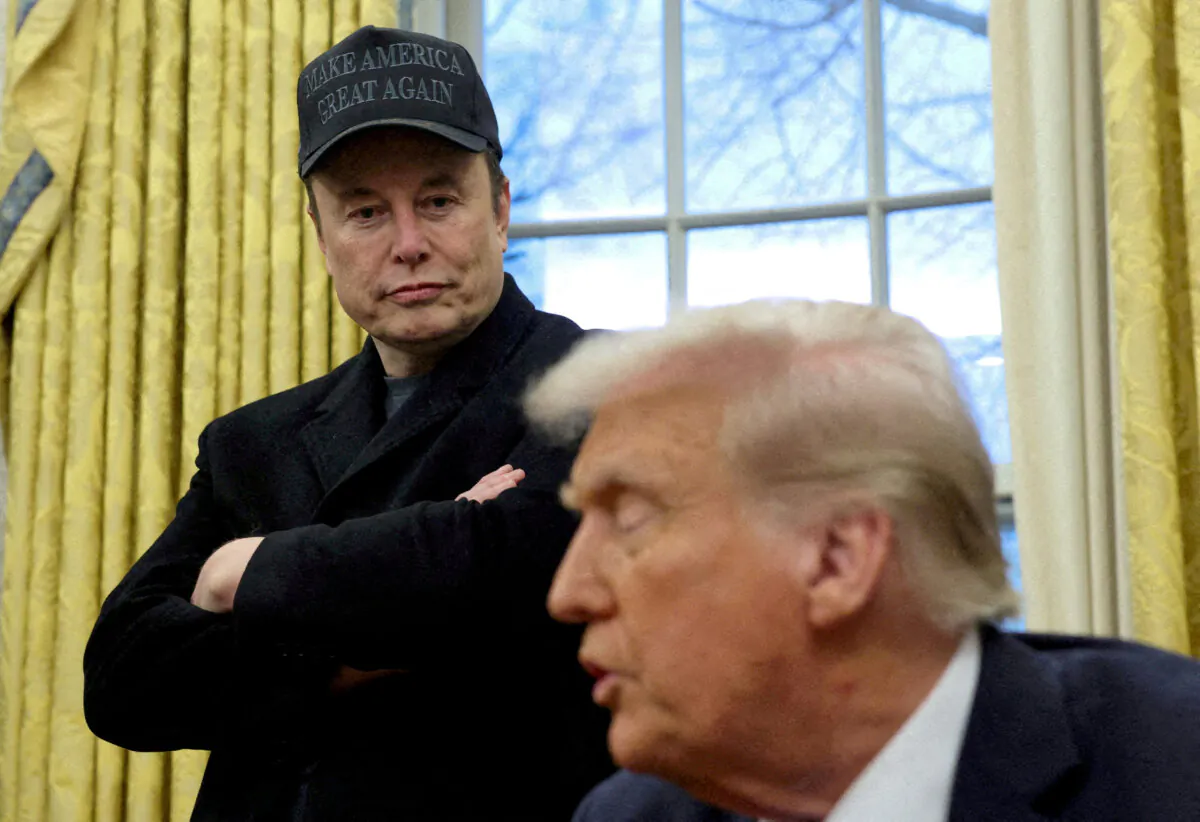
Elon Musk, chief of the cost-cutting body, has recently been critical of the House of Representatives-passed One Big Beautiful Bill Act for failing to impose cuts.
In a response, Stephen Miller, White House deputy chief of staff for policy, said the cuts recommended by Musk and DOGE affect discretionary spending, which is governed by separate rules.
“Under senate budget rules, you cannot cut discretionary spending (only mandatory) in a reconciliation bill,” Miller said in a post on social media platform X. “So DOGE cuts would have to be done through what is known as a rescissions package or an appropriations bill.”
The White House shared details of the forthcoming cuts with The Epoch Times.
At $1.1 billion, the requested funding cuts to the Corporation for Public Broadcasting—whose budget sat at $535 million in 2024—would effectively dismantle PBS and NPR. The cuts would strip most or all of the federal government’s support from these outlets, which could send them scrambling to secure outside funding if Congress approves the cuts.
However, most of the cuts stem from USAID and related foreign aid initiatives.
About $2.24 million of these cuts would affect programs intended to promote LGBT programs in the Caribbean, the Western Balkans, Uganda, and elsewhere.
Several environmental policy items are also included: $5 million for “green transportation and logistics,” $500,000 for electric buses in Rwanda, $6 million for “Net Zero Cities” in Mexico, $2.5 million to teach young children how to make environmentally friendly “reproductive health” decisions, and $614,700 for climate adaptations such as growing coral reefs in the Caribbean.
Several other six-figure budget items are also included: $1 million for voter ID in Haiti, $4 million for “legume systems research,” $3 million for Iraqi Sesame Street, $4 million for “sedentary migrants” in Colombia, $6 million for supporting the media organizations and civic life of Palestinians, and $1.2 million for the “Afrobarometer public opinion survey.”
The White House also requested the rescission of about $9 million in funding from the President’s Emergency Plan for AIDS Relief.
That includes $3 million for circumcisions and contraceptive measures in Zambia; $5.1 million for strengthening LGBT movements globally; and $833,000 to assist transgender people, sex workers, clients, and “sexual networks” in Nepal.
It will ultimately be up to Congress to approve or deny these requests.
Emel Akan contributed to this report.
 Friends Read Free
Copy
Facebook
Tweet
Friends Read Free
Copy
Facebook
Tweet