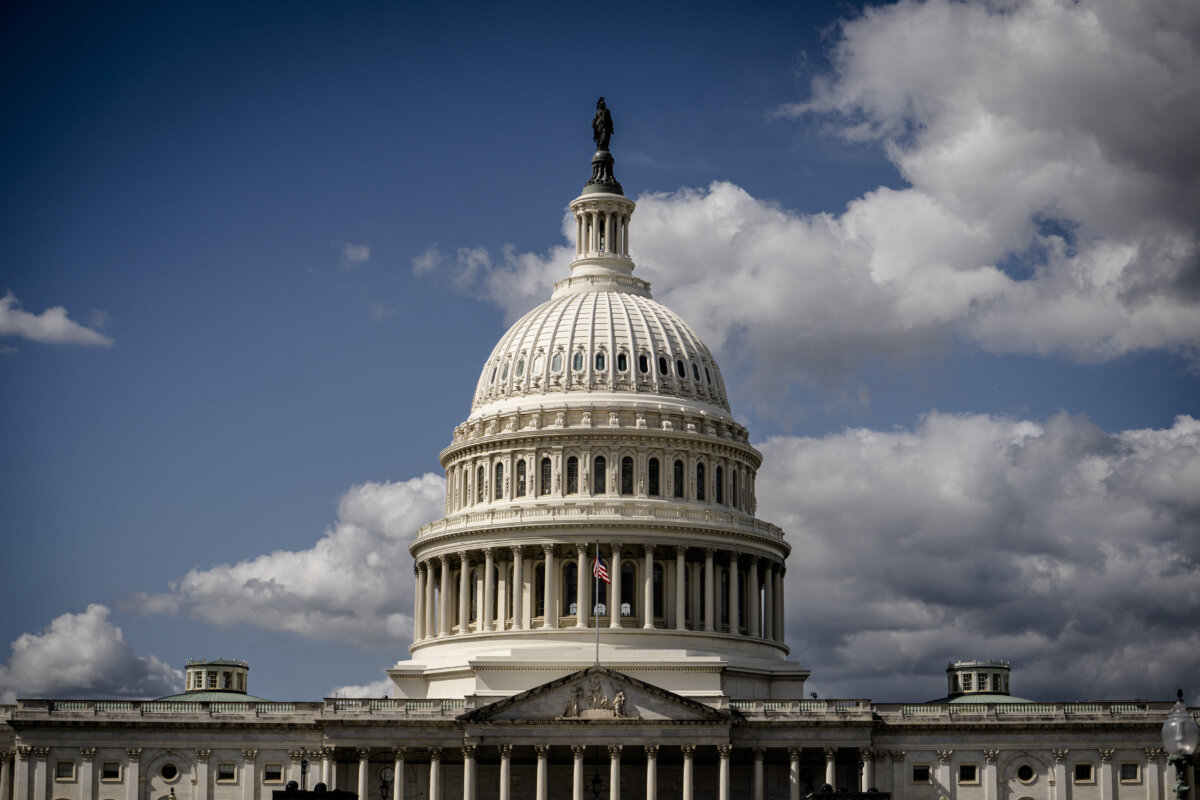

The U.S. federal government shut down on Oct. 1 after the Senate rejected a proposal to continue funding.
But why does this type of shutdown only happen in the United States, whereas it is virtually unheard of in the rest of the world?
Shutdown or Clear Out?
In many other countries, when an impasse like the current one in Washington is reached, rather than a shutdown, it triggers a change in government, through national elections or changes to a coalition.
Both are, essentially, methods to either release political pressure or force a compromise to allow the government to continue peacefully.
However, owing to the U.S. Constitution, calling an early election would not be available to the United States without passing an amendment fundamentally changing the way the federal government works.
This would be a task significantly more politically difficult than the normal passage of a bill.
Parliamentary Versus Presidential
Due to the system of checks and balances in Washington, government branches are frequently controlled by different parties, such as a Republican president working with a Democrat legislature or vice versa.
This system is known as a “presidential” or sometimes “congressional” system.
The American system, in which the U.S. president has wide-ranging executive powers, often results in situations where a bill cannot achieve the necessary number of votes to pass.
Many countries in the West and beyond operate using a parliamentary system, where a government can only stay in power if it commands a majority in the legislature.
Commanding a majority is either achieved by a political party securing an outright majority, as most commonly occurs in the United Kingdom, or by forming a coalition with a selection of parties that will agree to back the government’s plans.
This is more often than not the situation in European nations such as Germany, the Netherlands, and Denmark.
This feature means that budgetary bills generally pass through the legislature, as failure often results in an election.
Indeed, in the UK, Australia, and Canada, governments are almost always expected to resign if they cannot pass a budget.
Fixed Versus Flexible Elections
In the United States, elections to the presidency, the House of Representatives, and the Senate are held on a strict schedule, whereas in most other nations, there are facilities for them to be called early.
This means that the chance of individual politicians losing either their post in government or seat in the legislature is much higher overseas than it is in the United States if a government cannot pass a budget, as it will likely lead to a new election.
As a result, compromise across political divides in the case of a coalition, or strict party discipline within the single governing party in a majority government, is more likely if the country could go to the polls at any moment.
A recent example of a country unexpectedly being forced into an early election is the Netherlands, which is set to go to the polls on Oct. 29, after Geert Wilders, leader of the Party for Freedom (PVV), withdrew his support from a coalition that included three other parties in June, causing the government to collapse.
A similar fate befell the coalition government of former German Chancellor Olaf Scholz in 2024, after his three-party coalition collapsed, and he lost a confidence vote, eventually leading to elections and Friedrich Merz taking over the post with a new coalition in early 2025.
In the United States, politicians may face consequences at the ballot box, but they do so on a fixed schedule and are not at risk of them being suddenly thrust upon them.
Filibuster Rule
Another feature peculiar to the United States is the “filibuster rule” in the Senate, whereby a senator may time a bill out by speaking unless 60 votes are achieved to force them to stop.
However, in most other countries, all that is required to pass legislation is a simple majority, other than in certain exceptional situations, such as constitutional changes.
The US Anti-Deficiency Act
Even in the United States, these shutdowns are a relatively recent phenomenon, only becoming a common feature of American politics in the past four decades.
Under the American system, the different branches of government have to reach an agreement on spending plans before they become law, but in times gone by, there was more leeway to allow spending while a bill worked its way through.
However, in 1980, Attorney General Benjamin Civiletti, under President Jimmy Carter, issued a new and narrow interpretation of the 1884 Anti-Deficiency Act, which stated that: “On its face, the plain and unambiguous language of the Anti-Deficiency Act prohibits an agency from incurring pay obligations once its authority to expend appropriations lapses.”
This decision meant that if no budget could be passed, there would be no spending, revising the previous interpretation, which held that if there was a gap in budgets, the government could allow some necessary spending to continue.
As a result, only essential services, such as national security, air traffic control, law enforcement, and federal courts, carry on without a continuing resolution (CR) to allow federal funding to persist, while other federal staff face being furloughed or going without pay.
Since the change in 1980, there have been 11 government shutdowns, which have led to staff furloughs.
The United States is the only country that operates its spending plans in this fashion.
 Friends Read Free
Copy
Facebook
Tweet
Friends Read Free
Copy
Facebook
Tweet