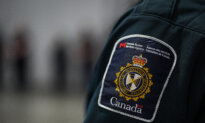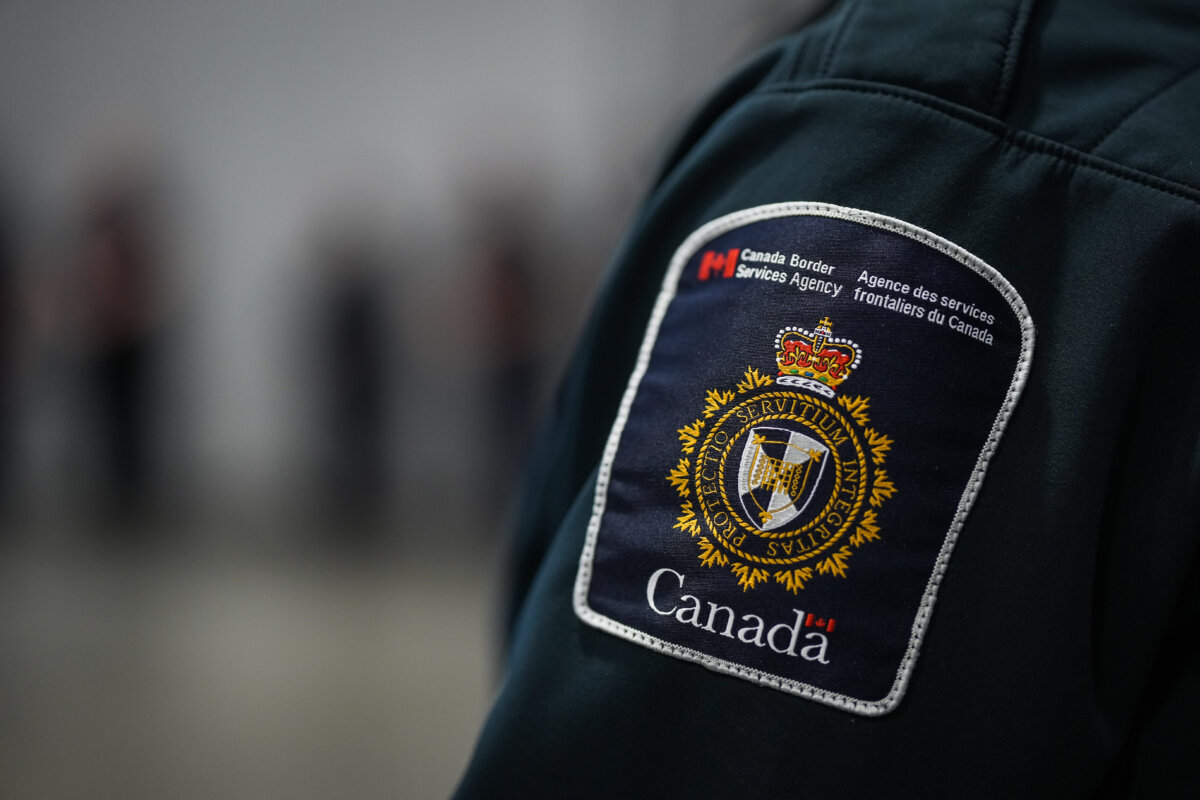

The Canada Border Services Agency has confirmed that 12 individuals who participated in a three-week international student protest in Calgary have been flagged as “possibly inadmissible” under Canada’s immigration and refugee law.
Police on Aug. 12 requested that CBSA check the status of four individuals who were taking part in a student protest at Saddletown Circle NE in Calgary, CBSA spokesperson Karine Martel told The Epoch Times in an email on Aug. 16.
CBSA officers found two of the four individuals inadmissible to Canada under the Immigration and Refugee Protection Act, and proceeded to check other persons of potential interest at the protest for their compliance with the act, Martel said.
Investigators checked 20 individuals in total, with 12 people who were identified as possibly inadmissible asked to visit the CBSA office later that day for a follow-up interview.
Martel said no further details about the individuals would be provided due to privacy legislation.
She said the agency receives information from various sources about cases where a person’s legal status in Canada needs to be clarified, or when an immigration warrant has been issued for a foreign national in Canada.
“Inland investigations are an important tool to identify those who should not be in the country and are critical to ensuring compliance with the law,” Martel said. “When the CBSA becomes aware of foreign nationals who may be inadmissible to Canada, CBSA officers will investigate and take appropriate action.”
Anyone who is subject to immigration enforcement action, including those ordered to be removed from Canada, has access to due process. They may appeal through the Immigration and Refugee Board of Canada or seek a judicial review through the Federal Court of Canada, Martel said.
The students began protesting after some graduates of certain non-credit programs at Portage College had their post-graduation work permit (PGWP) applications rejected by Immigration, Refugees and Citizenship Canada (IRCC), including applications supported by letters issued by the college.
In a July 14 update on its website, the college said that it is continuing to seek clarification from government and sector contacts about how PGWP requirements apply to graduates of the affected programs, and that it would post any confirmed information relevant to students on its website.
An update the following day said the college had received legal advice indicating that support letters from the college would not be relevant to the assessment of PGWP applications and that it would no longer be issuing those letters.
In an update on Aug. 6, the college advised the affected graduates to seek assistance from “certified immigration specialists.”
The Calgary Police Service says it recognizes people’s Charter rights to peaceful assembly and freedom of expression while adding that protesters must comply with applicable laws and bylaws. Protesters cannot, among other things, block or obstruct roadways, cause disturbances, trespass on private property, impede parades, harm others, or possess weapons.
The police service says its role is to work with all parties to ensure public and officer safety and to maintain peace and orderly conduct. It says officers will work to minimize disruptions and respond appropriately to unlawful activity while respecting protesters’ lawful rights.
 Friends Read Free
Copy
Facebook
Tweet
Friends Read Free
Copy
Facebook
Tweet