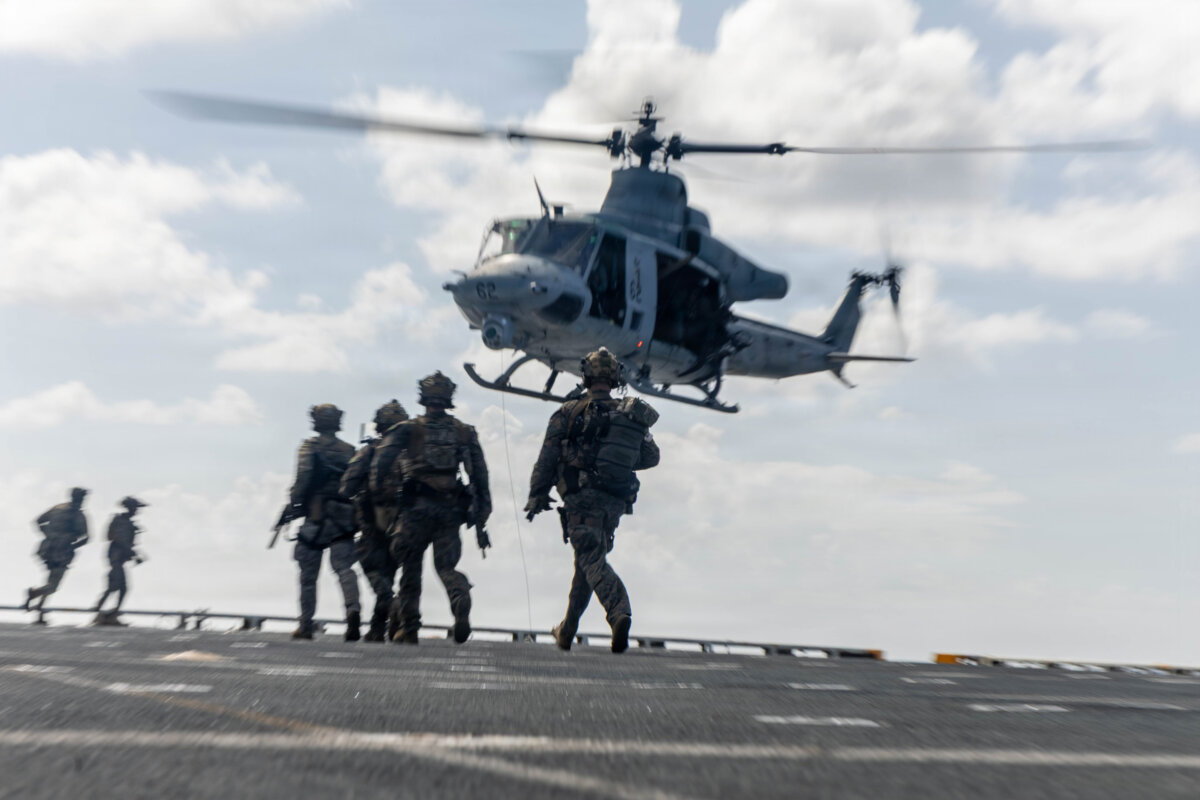

A force of about 1,300 U.S. Marines and sailors has begun operating in the Caribbean Sea, joining a larger U.S. force presence in the area.
The deployment expands on existing U.S. military operations in the region and comes at a period of rising U.S. diplomatic pressure on Cuba.
In a May 29 statement, the U.S. Marine Corps announced that the formation of around 1,300 troops, known as Littoral Combat Force-24, “has officially assumed the mission as the premier tactical force-in-readiness within the U.S. Southern Command Area of Responsibility.”
The Marine Corps described Littoral Combat Force-24 as a component of the 24th Marine Expeditionary Unit. The troops will join the elements of the 22nd Marine Expeditionary Unit and the aircraft carrier USS Nimitz already operating in the region.
The Marine Corps said Littoral Combat Force-24 will serve as the crisis response component of the larger Marine Air-Ground Task Force assigned to the region. The service said this 1,300-troop formation can serve as a force for conducting maritime interdictions and that the overall Marine Air-Ground Task Force is equipped for a wide array of rapid-response missions, including reinforcing embassies and recovering downed air crews.
“Littoral Combat Force-24 provides the exact combination of precision capability and interoperability we need. They are not just a crisis response force; they provide options to the Combatant Commander and serve as a tool for building partner capacity and securing the advantage across all domains,” Marine Corps Lt. Gen. Calvert L. Worth, commanding general of II Marine Expeditionary Force, said.
The Marine Corps also said, “The presence of LCF-24 serves as a powerful deterrent against malign state actors and reinforces the security of the homeland.”
The U.S. military has maintained a heightened presence in the region since last summer. This force build-up preceded an ongoing campaign of lethal strikes and boarding actions targeting suspected drug traffickers in the region.
In January, U.S. forces in the region also carried out a mission to capture then-Venezuelan President Nicolás Maduro and his wife, Cilia Flores, and bring them to the United States to face criminal prosecution on drug trafficking and terrorism-related charges. Maduro and his wife deny all charges.
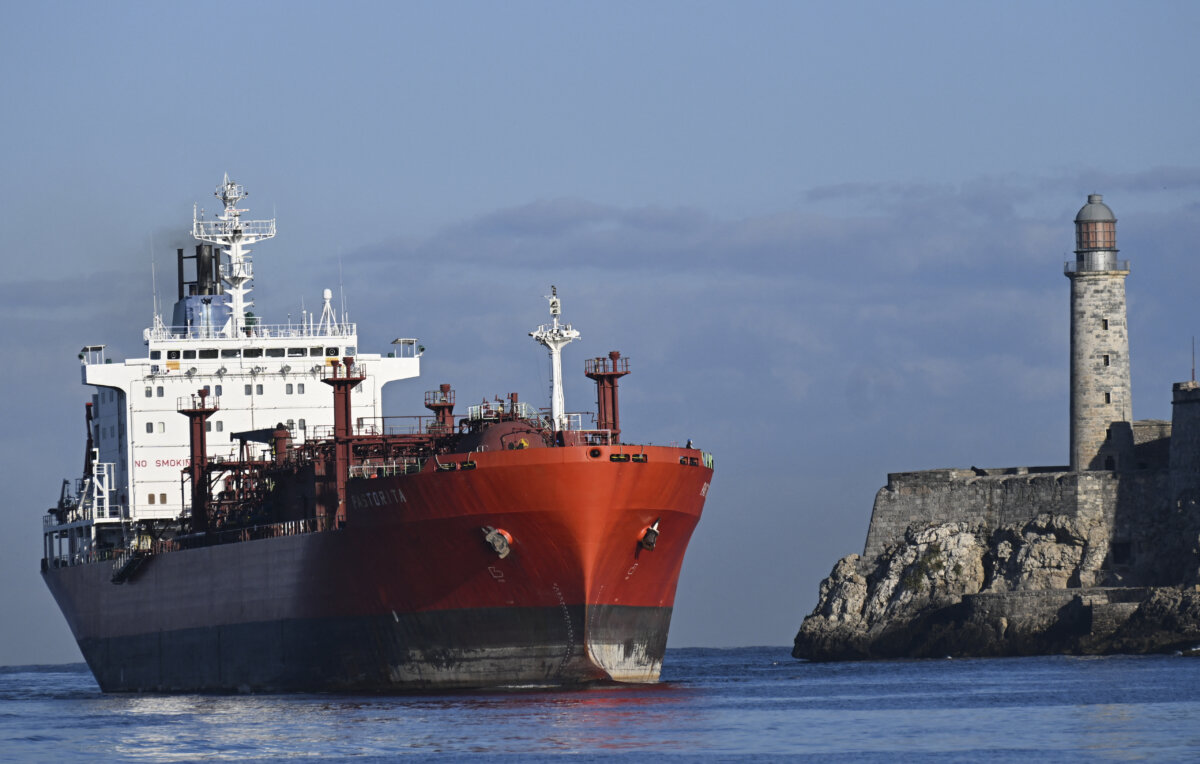
Following the Maduro raid, President Donald Trump began raising pressure on Havana, including by signing an executive order authorizing tariffs on countries attempting to provide oil to Cuba. More recently, the U.S. government has imposed multiple rounds of economic sanctions on Cuban officials and entities.
In May, the U.S. Department of Justice also announced criminal indictments against former Cuban leader Raúl Castro and other officials for the 1996 shootdown of a pair of planes operated by a Cuban exile group.
 Friends Read Free
Copy
Facebook
Tweet
Friends Read Free
Copy
Facebook
Tweet