
Two oil tankers and a liquefied natural gas (LNG) ship appear to have made it through the Strait of Hormuz on April 3, according to reports from marine tracking apps.
In a post on X, TankerTrackers.com said the ships were the Dhalkut, carrying 2 million barrels of Saudi oil; the Habrut, laden with 2 million barrels of crude from the United Arab Emirates; and the Sohar LNG, traveling from the UAE.
The VesselFinder website reported that all three vessels had made it through the Strait of Hormuz and were stationed off the coast of Oman, not far from the capital, Muscat, on April 3.
At least one of the ships is owned by an Omani shipping company. Iranian state-owned news agency IRNA cited the Iranian deputy minister of legal and international affairs, Kazem Gharibabadi, as saying that Iran and Oman were drafting a protocol to monitor ships transiting through the Strait of Hormuz.
The Dhalkut and the Habrut are flying the flag of the Marshall Islands, while the Sohar LNG is Panama-flagged. The Habrut is owned by a shipping company based in the Omani capital, Muscat, according to the Equasis marine database.
“Omani ships are attempting to sail out of the Middle East Gulf, and if successful, will be the first vessels in nearly three weeks to transit the chokepoint without sailing via the ‘Tehran-approved’ corridor,” shipping news outlet Lloyd’s List wrote in an April 2 post on X.
In another post, Lloyd’s List said two very large crude carriers (VLCCs), which were both laden according to their Automatic Identification System (AIS) data, and an empty LNG carrier were “tracking close to the Omani coastline.”
“All three vessels are indicating they are heading to ports in Oman,” wrote Lloyd’s List.
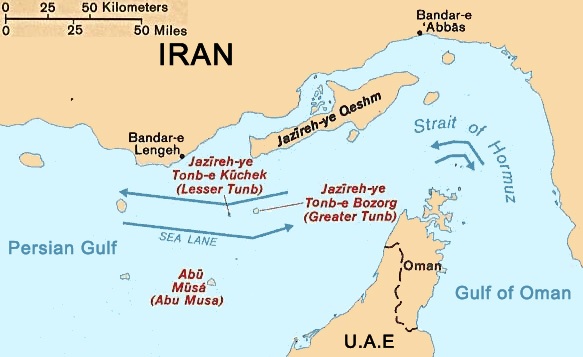
In another post on X, TankerTrackers.com said the three ships were not using the so-called Iranian tollbooth lane, which is between the islands of Larak and Qeshm.
‘Not a Conventional Shipping Lane’
“Instead, they are hugging the northern Omani coastline of the Musandam governorate. It’s not a conventional shipping lane,” TankerTrackers.com posted.
The Musandam governorate is an Omani exclave at the tip of an eponymous peninsula that extends into the Strait of Hormuz.
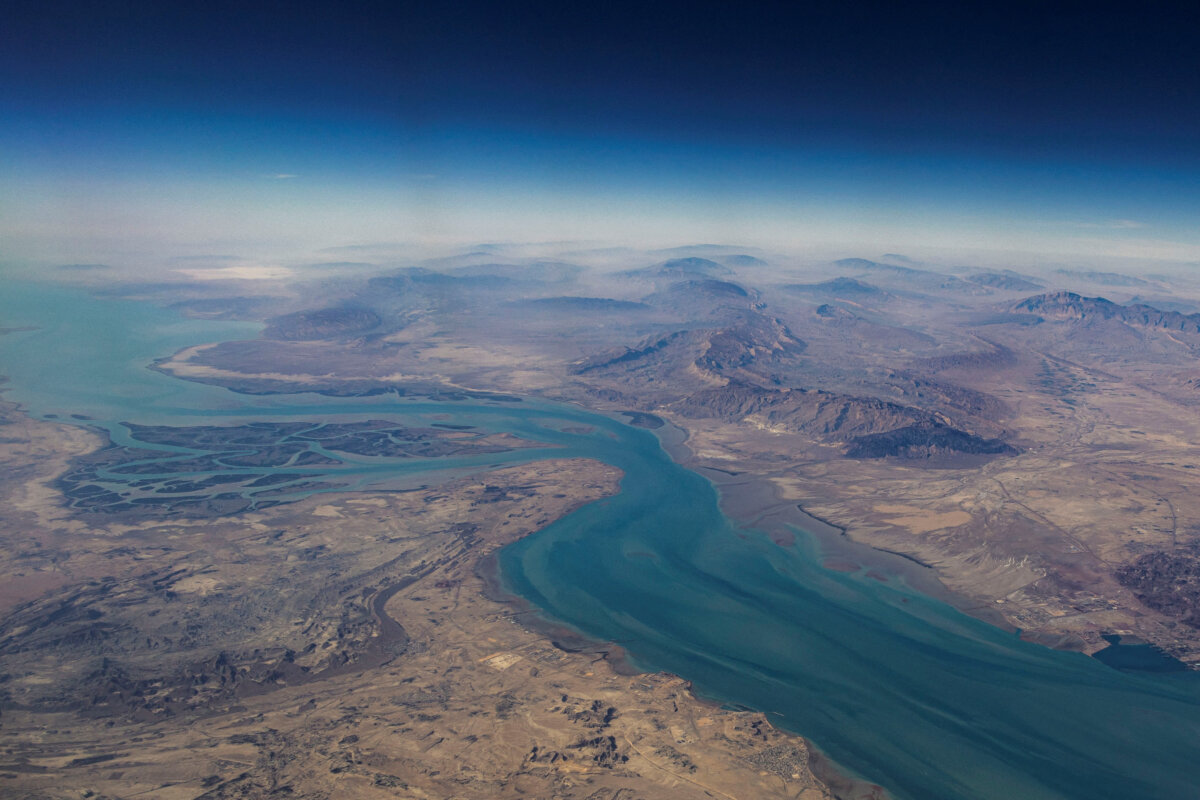
In peacetime, vessels use a two-lane shipping channel in the middle of the Strait of Hormuz, but due to the war, ships are currently forced to take a diversion to the north, around Larak Island, placing them in Iranian territorial waters so they effectively pass through a “tollbooth.”
Lloyd’s List Intelligence says vessel owners contact “approved intermediaries” of the Islamic Revolutionary Guard Corps (IRGC), receive a code, and are escorted by an IRGC vessel.
“While not all ships are paying a direct toll, at least two vessels have, and the payment is settled in [Chinese] yuan,” Lloyd’s List said.
It is unclear whether Iran has received any payment to allow the three ships, which did not pass through the “tollbooth” lane, through on April 2 and 3. If so, there may be the threat of U.S. financial sanctions.
Nicholas Mulder, a history professor at Cornell University and author of “The Economic Weapon: The Rise of Sanctions as a Tool of Modern War,” told the Breaking Points podcast that Iran has built the infrastructure to accept cryptocurrency payments, enabling certain ships to pass through the strait.
“As this energy crisis gets worse, I think we will see more and more countries trying to run the risk of being entangled in U.S. financial sanctions … because ultimately what countries need more is energy, fertilizer, all the things that are passing through the Strait of Hormuz,” Mulder said.
The U.N. Security Council is set to meet on April 4 to discuss Tehran’s hold over the Strait of Hormuz, a vital oil shipping route that has become a flashpoint in the conflict.
The Iranian threat to shipping in the Strait of Hormuz—through which 20 percent of the world’s oil and natural gas passes—has driven up oil and gas prices, affecting the economies of many nations.
Ships passing through the Strait of Hormuz can be tracked through their AIS transponders.
But there has been a significant increase in GPS spoofing and jamming attacks in recent years, aimed at interfering with Global Navigation Satellite System (GNSS) data, especially in the Middle East.
GPS jamming was blamed for a collision in the Gulf of Oman in June 2025 between the Liberia-flagged tanker Front Eagle and the Adalynn, which has been identified by shipping industry resource Lloyd’s List as a “dark fleet” vessel.
Last year, Nir Ayalon, founder and CEO of Cydome, a maritime cybersecurity firm based in Israel, told The Epoch Times that GPS spoofing is sometimes carried out by ship operators to disguise their location or identity, but that it is also carried out as a hostile act.
 Friends Read Free
Copy
Facebook
Tweet
Friends Read Free
Copy
Facebook
Tweet