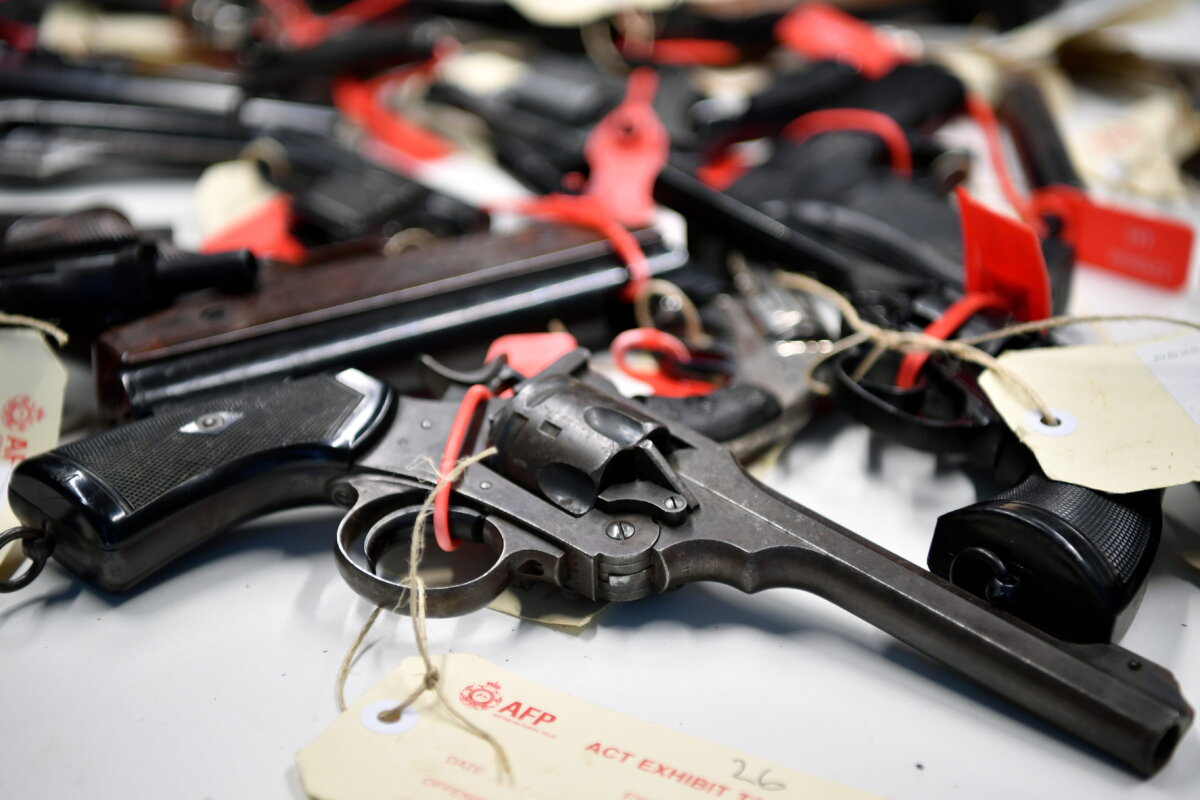

Australian gun clubs and associations are opposing the Labor government’s proposed changes to the nation’s firearms laws following the Bondi terror attack that killed 15 people.
The proposed laws include a national buy-back scheme, strengthened background checks, bans on certain firearm types, and new offences relating to accessing information about firearms, ammunition, and accessories.
These wholesale changes have been packaged with new anti-Semitism and hate speech laws under the rushed Combating Anti-Semitism, Hate, and Extremism Bill 2026.
Many legal gun owners and groups feel they have been unfairly targeted and have sent several submissions to the parliamentary website examining the new bill.
1. Concerns Gun Owners Forced to Sell Under Market Value
Firearm Owners United (FOU) said any compensation under a proposed buyback scheme must reflect genuine market value, or else the program would amount to “a compulsory acquisition at a discount.”
The group said firearms most likely to be handed back would include new sporting and hunting weapons, high-end target and competition rifles, and collectible or historically significant guns.
“These categories command substantially higher market values than generic averages often assumed in public discourse,” the submission said.
FOU estimated a value of around $2,000 per firearm, which could push the buyback cost to $1.6 billion.
2. Criminals Already Have Access to Weapons
Oz Fish and Game described the proposed laws as a form of “collective punishment.”
Representative Luke Eyles said people intent on commit illegal acts already had multiple channels for obtaining weapons on the black market.
“Licensed firearm owners are among the most heavily vetted and regulated citizens in Australia, yet the bill treats them as a risk category rather than citizens entitled to equal protection under the law,” he said in his submission.
While firearms trader Thornton Hunting and Outdoors claims the government needs to focus on its own regulatory failures rather than legal firearms owners.
“The evidence (around criminal shootings) overwhelmingly indicates that public safety failures arise from intelligence gaps, insufficient resourcing of firearms registries, and failures to act on known domestic violence or criminal histories,” their statement said.
3. Sharing Firearm Information Online Could Be An Offence
The Gympie Pistol Club raised concerns about Part 7 of Schedule 4 of the bill, which creates a new offence for using a carriage service to access information related to firearms or explosives manufacture.
Under the proposal, sharing online instructions on the manufacture or modification of firearm parts, including accessories and magazines, would be an offence.
“Reloading data and technical guidance are essential to ensure ammunition operates within safe pressure limits and to maintain firearm reliability,” the statement said.
“Criminalising access to authoritative information discourages safe practice and paradoxically increases risk.
“The provisions assume malicious intent from mere access to information, reversing the presumption of innocence and ignoring licence status, compliance history, and lawful purpose.”
The Labor government says the measures are intended to prevent the spread of digital plans or instructions that could allow people to make firearms. However, opponents say the proposed legislation is too loose to protect innocent behaviour.
4. Gun Control Should Not Be Bundled With Hate Speech Laws
The Prosperity Institute called for new gun control regimen to be split into a separate bill, rather than bundled in with new hate speech laws.
Like the majority of submissions, the Institute raised concerns about overly broad definitions in the proposed laws and says greater procedural fairness was required.
5. Target the Illicit Arms Trade, Not Everyone
The Sporting Shooters’ Association of Australia Sydney branch said if the objective of the legislation was to combat violent extremism, then the laws should directly target that threat.
The association called for a crackdown on illicit firearms trafficking and organised crime networks.
“These approaches address genuine threats without burdening lawful communities,” Association President Joseph Mete said.
6. Risk to National Sporting Achievements
The ACT Pistol Association pointed to one proposal that would limit the number of firearms that a person can own, cautioning that it could put Australia’s sporting prowess in jeopardy.
“Many Australians engaged in the sport of shooting took the sport up for recreation, interaction with other members of the community, and enjoyment at club level,” president Stephen Fettell wrote.
“Others in the sport are excelling in the competition aspect.”
Fettell said limiting the type and number of firearms a competitor could stop Australia from maintaining gold-medal performances at the Olympics, Paralympics, Commonwealth Games, world championships, and World Cups.
7. Support for Amendments
In contrast, the Alannah & Madeline Foundation supported the proposed reforms.
The foundation was formed by Walter Mikac, whose wife Nanette and two daughters Alannah, 6, and Madeleine, 3, were killed in the 1996 Port Arthur shooting, which led to sweeping gun reform and the first major national gun buyback scheme.
The organisation said it backs a second national buyback, stronger background checks, tougher customs regulations, a new public safety test for weapons imports, treating gel blasters as firearms upon import, and disruption to the 3D-printing of firearms.
It also asked for the creation of a National Firearms Safety Council, the restoration of firearms research as a national priority, a ban on political donations from the firearms industry, and more transparency and accountability around political influence.
“The courageous and decisive bipartisan approach taken in 1996 set a strong precedent and has underpinned Australia’s world-leading record on firearm safety,” the foundation said.
“Today we call on all political leaders to honour that legacy and the lives lost to firearms violence by putting community safety above all else.”
 Friends Read Free
Copy
Facebook
Tweet
Friends Read Free
Copy
Facebook
Tweet