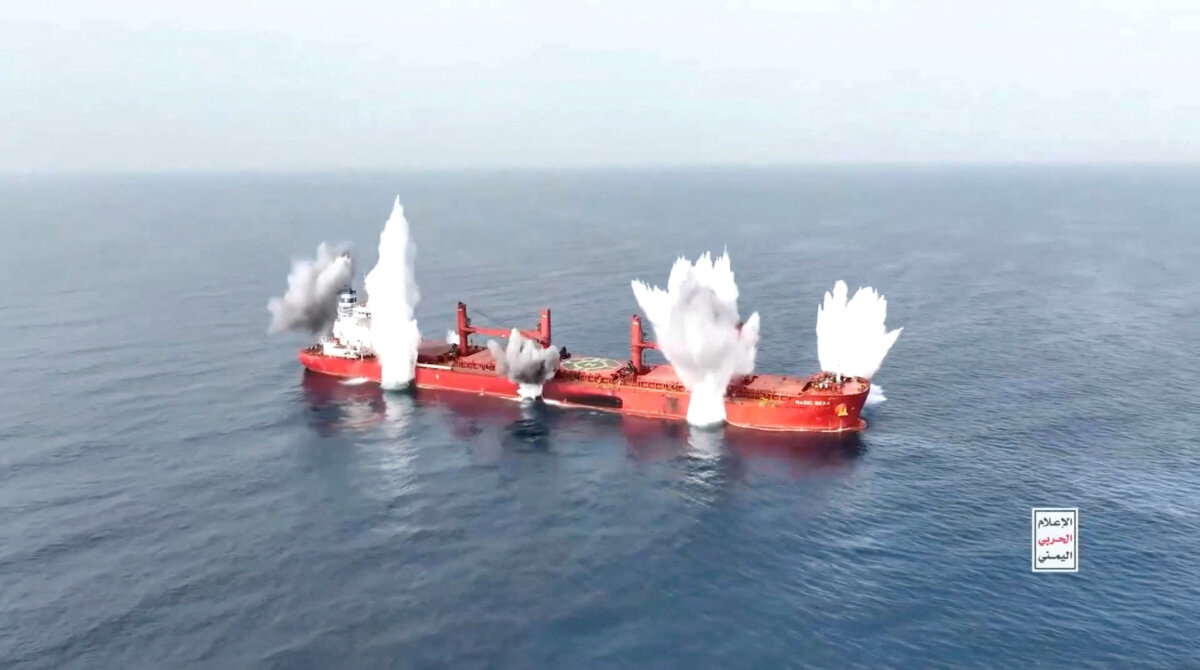

Yemen’s Iran-aligned Houthi terrorists on June 8 declared a ban on Israeli shipping in the Red Sea, warning that any Israeli-linked vessel would be considered a military target.
The announcement, reported by Iran’s state-aligned Mehr News Agency, came as Israel and Iran exchanged fresh strikes and threats in the latest Middle East conflict escalation.
“We consider all enemy movements to be legitimate military targets for our armed forces,” the Houthis said in a statement.
Brig. Gen. Yahya Saree, spokesperson for what the Houthis call the Yemeni Armed Forces, also said, according to Mehr, that the group had launched missiles at targets in the Jaffa area near Tel Aviv.
Saree said the missiles struck their intended targets but did not provide evidence or details about damage.
The Israeli military confirmed early on June 8 that it had detected a missile launch from Yemen toward Israeli territory and activated air defense systems.
Saree said the Houthis would continue military operations and respond to escalation with further escalation.
“We affirm the right of our people and free peoples to confront US-Israeli aggression,” he said, according to Mehr.
The announcement came as Iran launched missiles toward Israel on June 7, the first time Tehran has directly launched missiles toward the country since a fragile ceasefire took effect in April.
Tehran had warned of retaliation after Israel struck Beirut’s southern suburbs earlier on June 7 in defiance of Washington’s request days ago to stand down. Israel said projectiles were fired from Lebanon toward northern Israel earlier in the day.
The Israeli military carried out strikes inside Iran on June 8, including what it described as attacks on military targets and a petrochemical facility in the country’s southwest. Iran’s Islamic Revolutionary Guard Corps (IRGC) said it retaliated with a strike aimed at a similar Israeli facility in the city of Haifa.
Strategic Waterways Under Pressure
The Houthis have been firing at Israel and targeting shipping in the Red Sea since the start of the 2023 conflict between Israel and Hamas in Gaza, in what they describe as solidarity with the Palestinians.
Previous attacks have included missile and drone strikes on commercial vessels and the seizure of the cargo ship Galaxy Leader in November 2023.
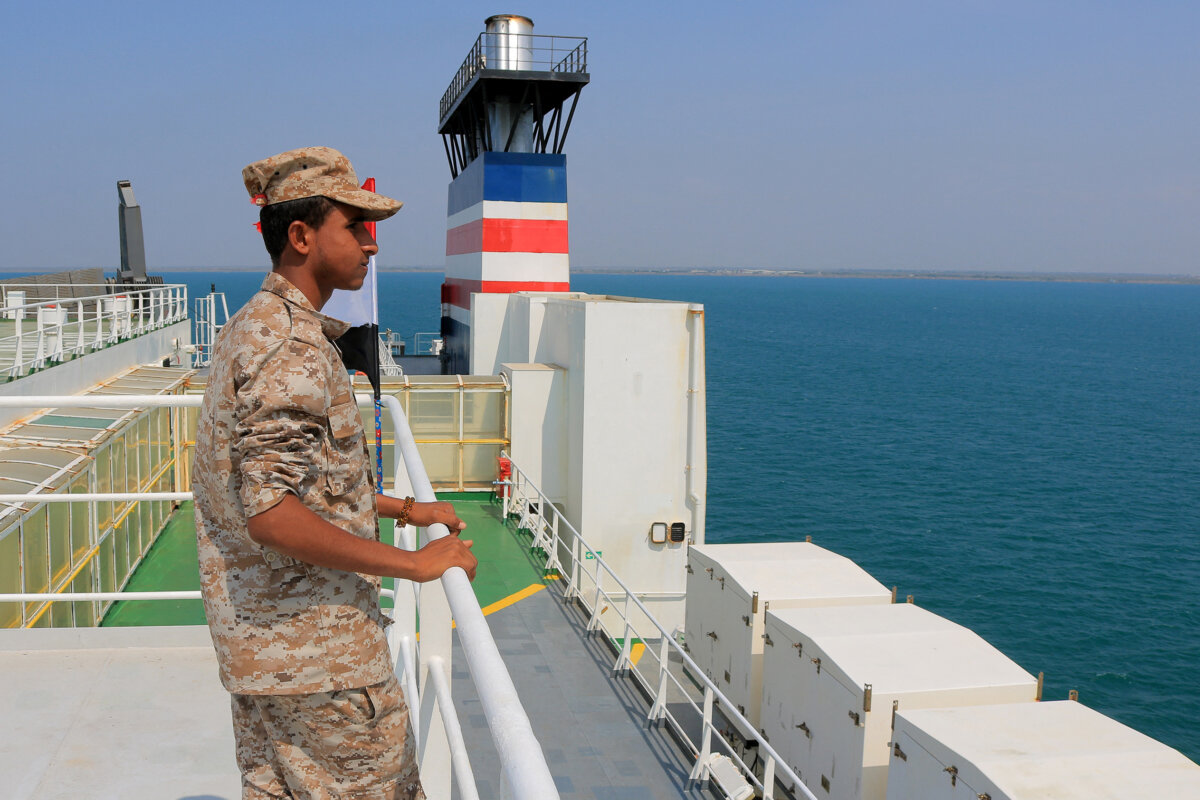
The ongoing Middle East conflict has already affected another crucial shipping route, the Strait of Hormuz. The wider confrontation has severely disrupted energy shipments since fighting intensified earlier this year.
Iran’s ambassador to Russia, Kazem Jalali, said the Strait of Hormuz would remain open but under new conditions to be determined by Iran and Oman, including transit fees for vessels using the waterway.
“Of course, this strait will be open, but with new conditions to be determined by the Iranian and Omani authorities,” Jalali told Russian newspaper Izvestia in an interview released on June 8.
The proposal has drawn opposition from Washington. U.S. President Donald Trump last month warned against Oman’s involvement and efforts to impose tolls on international shipping through the strait.
U.S. Treasury Secretary Scott Bessent said on May 28 that Oman had assured Washington it would not support efforts to impose tolls on ships transiting the Strait of Hormuz.
Iran, Israel Exchange Strikes
Although Washington and Tehran have both indicated that negotiations over shipping routes and broader security arrangements are progressing, missile attacks and military operations have continued.
Israeli Ambassador to the United States Yechiel Leiter said Iran fired 11 ballistic missiles at Israel on June 8.
“Each one of those missiles can level an entire neighborhood and kill hundreds,” Leiter said on X.
Leiter said Israel was targeting Iranian missile launch sites and infrastructure facilities and warned Hezbollah against entering the conflict.
Iran has accused Israel of repeatedly violating regional ceasefire arrangements.
In a statement published on June 7, the Iranian Foreign Ministry said that any aggression against Iran or Lebanon would be met with what it called a “crushing and comprehensive response” from Iran’s armed forces.
The latest exchange of missile strikes between Iran and Israel on June 8 came just hours after President Donald Trump urged Israeli Prime Minister Benjamin Netanyahu not to retaliate following the barrage of Iranian missiles launched late on June 7.
Senior officials in Jerusalem told Epoch Magazine Israel that a select group of senior ministers from Israel’s security cabinet was expected to meet on June 8 to discuss the latest escalation and determine the government’s next steps.
Reuters contributed to this report.
 Friends Read Free
Copy
Facebook
Tweet
Friends Read Free
Copy
Facebook
Tweet