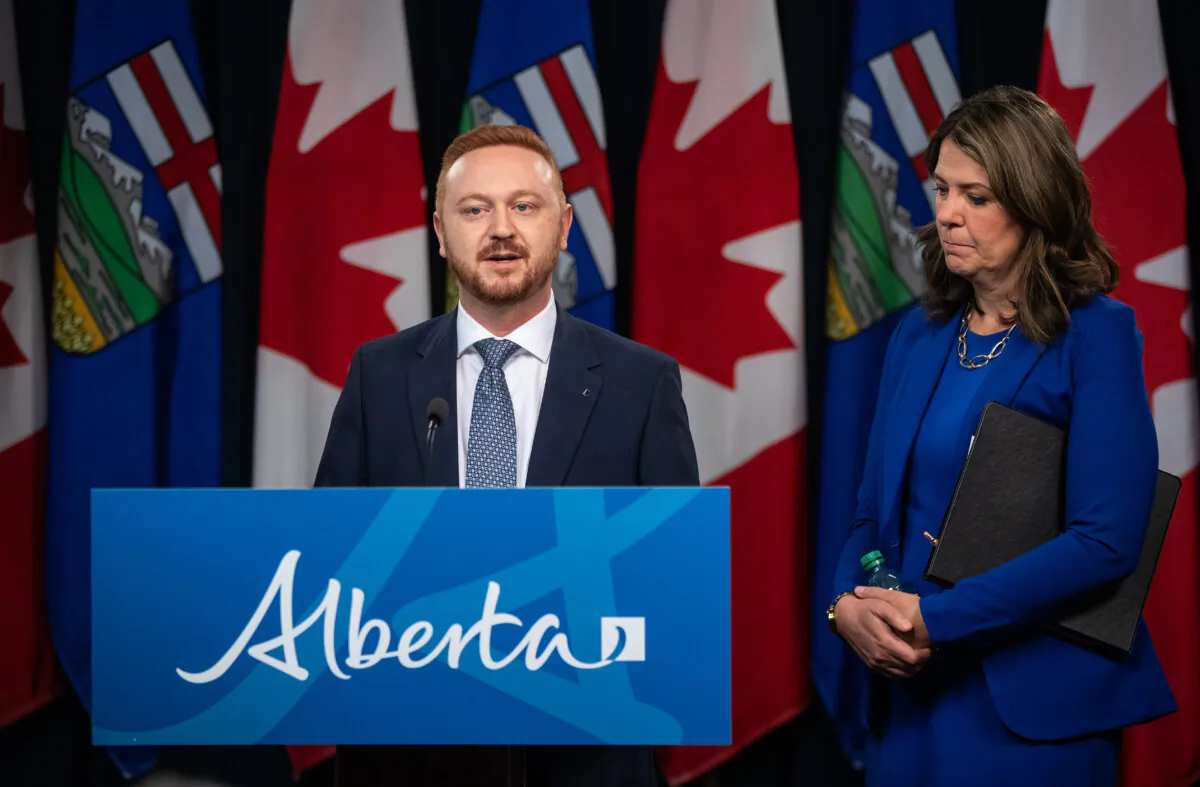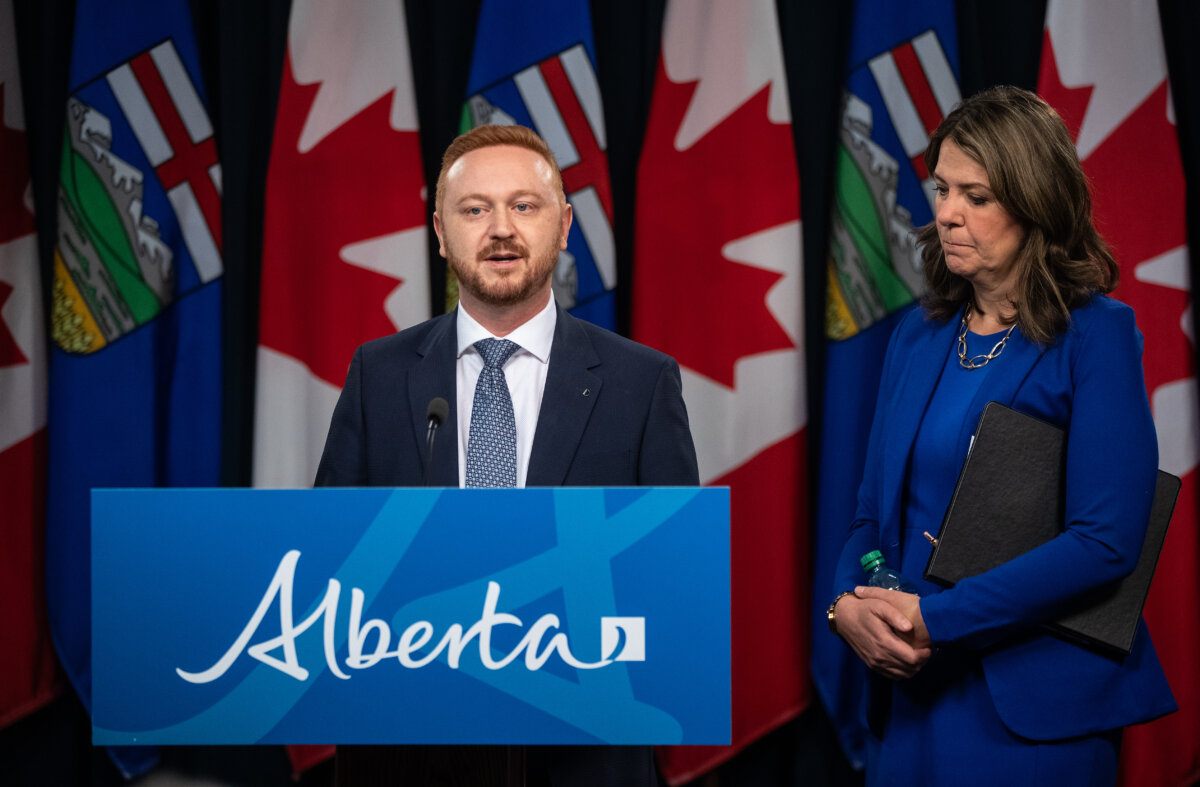

The Alberta government has pledged to defend its position in court after two advocacy groups filed a constitutional challenge against the province’s pronoun law, which requires parental consent before students under 16 can change their names or pronouns.
Heather Jenkins, press secretary to Alberta’s Justice Minister Mickey Amery, says the province will respond to a legal challenge filed on Sept. 2 by LGBT advocacy groups Egale Canada and Skipping Stone. The organizations argue the legislation, which took effect on Sept. 1, infringes on the constitutional rights of “gender-diverse youth.”
“Alberta’s government will vigorously defend our position in court,” Jenkins told The Epoch Times in a Sept. 9 statement.
She added that the purpose of the legislation that introduced the pronoun regulations is to “strengthen ties between parents and their child’s education by providing more transparency, clarity [and] consistency in their education and school community so students can continue to learn and grow.”
The pronoun legislation was part of a series of amendments to the Education Act the province introduced in October 2024 related to gender identity and sexual education. Premier Danielle Smith said at the time the proposed changes “put students first while supporting the important parent-child relationship.”
The amendments include a requirement for parental consent for students aged 15 and under to change their names or pronouns, and notifying parents if a student aged 16 or 17 asks to be referred to by a different gender-related name or pronoun.
If parental notification is “reasonably expected” to result in psychological or emotional harm to the student, school authorities must ensure students are provided with counselling or other assistance prior to notifying parents or at the student’s request, according to the guidelines.
The measures also require schools to notify parents about the content of sexual education instruction and give them the option to opt their children in, rather than opt them out, of the lessons. In addition, teaching resources and external presenters for topics related to gender identity, sexual orientation, or human sexuality would have to be approved by the education minister.
The Education Amendment Act, 2024, formerly Bill 27, received Royal Assent on Dec. 5, 2024.
Egale Canada and Skipping Stone argue the pronoun law violates a number of sections of the Charter of Rights and Freedoms, including Section 7, the right to security of the person; Section 12, the right to be free from cruel and unusual treatment; and Section 15, the right to equal protection and equal benefit of the law without discrimination.
“For gender-diverse youth, especially for those with difficult family situations, having the support of an affirming teacher and school environment can be critical,” Egale Canada says in its description of the legal case.
“Schools are often the first, and sometimes the only, setting where these young people can safely express their gender identity,” it adds. “Bill 27 removes that protection.”
Egale Canada has been involved in legal action against similar provincial legislation or policy in Saskatchewan and New Brunswick.
Meanwhile, the Alberta Parents’ Union, a parental rights advocacy group, has expressed support for the legislation, saying it indicates that parents “have been heard.”
“Bill 27 includes parents more in their children’s education by including us more in the decisions that schools have been excluding parents from,” the organization said after the bill was introduced to the legislature last October.
“This legislation is important,” it added. “It is a win for parents and children.”
 Friends Read Free
Copy
Facebook
Tweet
Friends Read Free
Copy
Facebook
Tweet