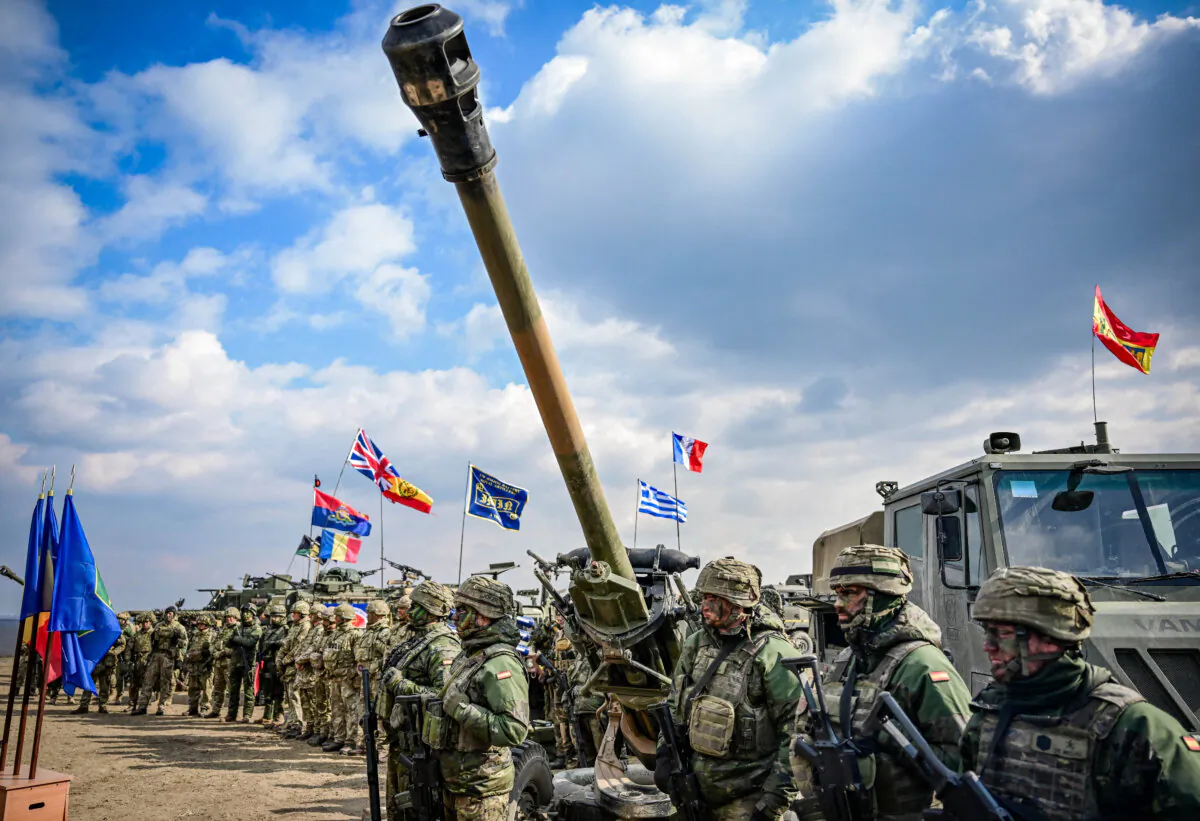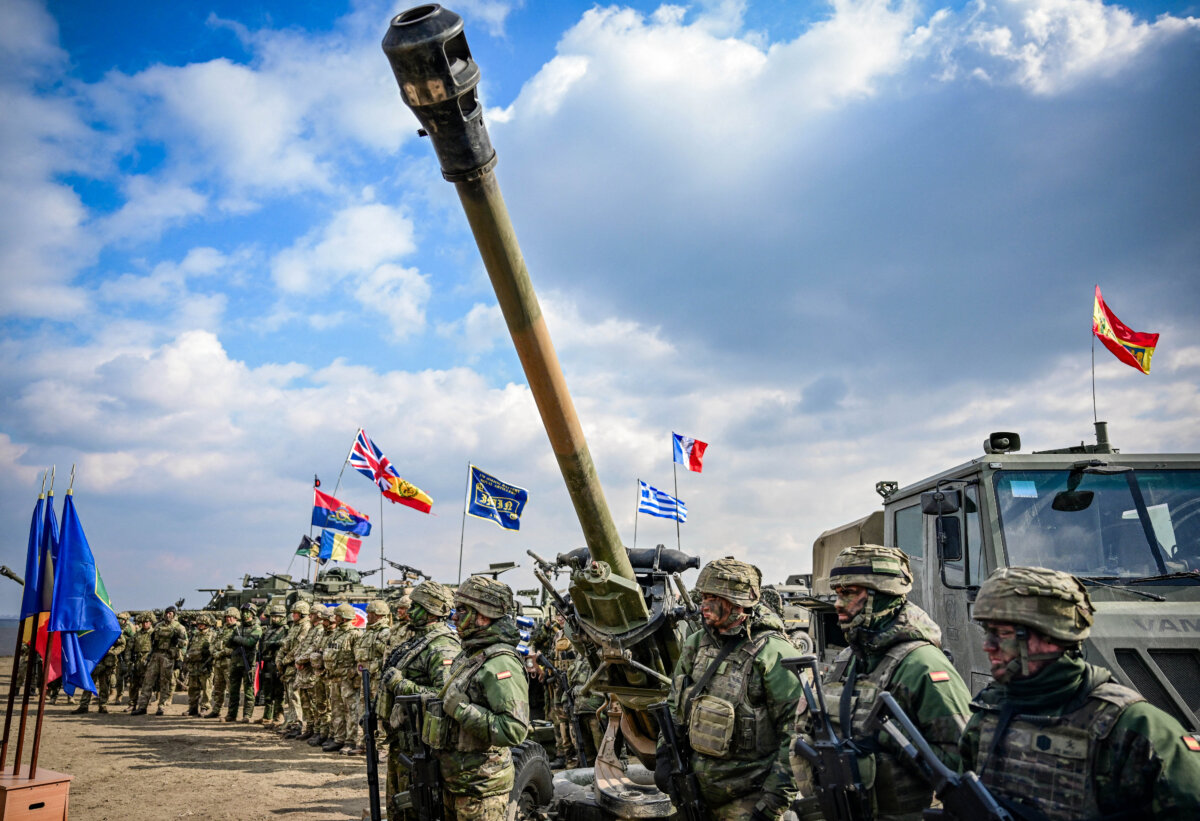

All members of NATO are on track to commit 2 percent of their annual gross domestic product (GDP) to military and defense spending, the alliance announced on Aug. 27.
It is the first time all alliance members appear on track to meet the 2 percent GDP spending goal since NATO set that target in 2014. In the first year after the goal was set, just three members of the alliance met the commitment.
During his first term in office and on the 2024 campaign trail, President Donald Trump routinely called on other NATO member nations to meet the 2 percent spending goal and at times referred to nations that were not meeting it as “delinquent.”
Alliance members continued to lag behind their defense spending goal until recently. NATO figures for 2023 showed that just 10 of the 32 NATO members were meeting the 2 percent target.
The majority of alliance members only reached the 2 percent target in the past year. NATO’s 2024 numbers showed that all but eight of the alliance members had met the spending commitment. The sharp uptick in spending comes as Russia’s war with Ukraine rages in its fourth year.
Just as the alliance members now appear on track to meet the 11-year-old goal, NATO’s military spending goal is set to increase.
In June, the alliance members endorsed a new plan—known as the Hague Summit Declaration—for members to commit 5 percent of their GDP to military and defense spending by 2035.
To fulfill this new 5 percent spending target, NATO members are expected to spend 3.5 percent of their GDP on core defense items such as troops, weapons, and equipment.
Another 1.5 percent of their GDP is to go to defending and making infrastructure accessible to their military forces, expanding their military production capabilities, and protecting critical assets such as fuel pipelines and undersea cables.
Spanish Prime Minister Pedro Sánchez, whose country was among the last to reach the 2 percent target, raised doubts in June about whether his country would fulfill its commitment to the new 5 percent spending target.
Spain ultimately signed onto the Hague Summit Declaration, but Spanish Economy Minister Carlos Cuerpo suggested at about the same time that he believed Spain could meet its defense spending targets while earmarking just 2.1 percent of its GDP.
“It’s just a different estimation on how much it will cost for Spain to make good on commitments covering the capabilities of NATO to protect itself,” Cuerpo told Bloomberg TV in June.
Asked in June about Spain’s commitment to future defense spending targets, NATO Secretary-General Mark Rutte said, “NATO has no opt-out, and NATO doesn’t do side deals.”
Rutte also said alliance members “have the sovereign right, and also the flexibility, to determine their paths for delivering on the NATO commitments.”
Chris Summers contributed to this report.
 Friends Read Free
Copy
Facebook
Tweet
Friends Read Free
Copy
Facebook
Tweet