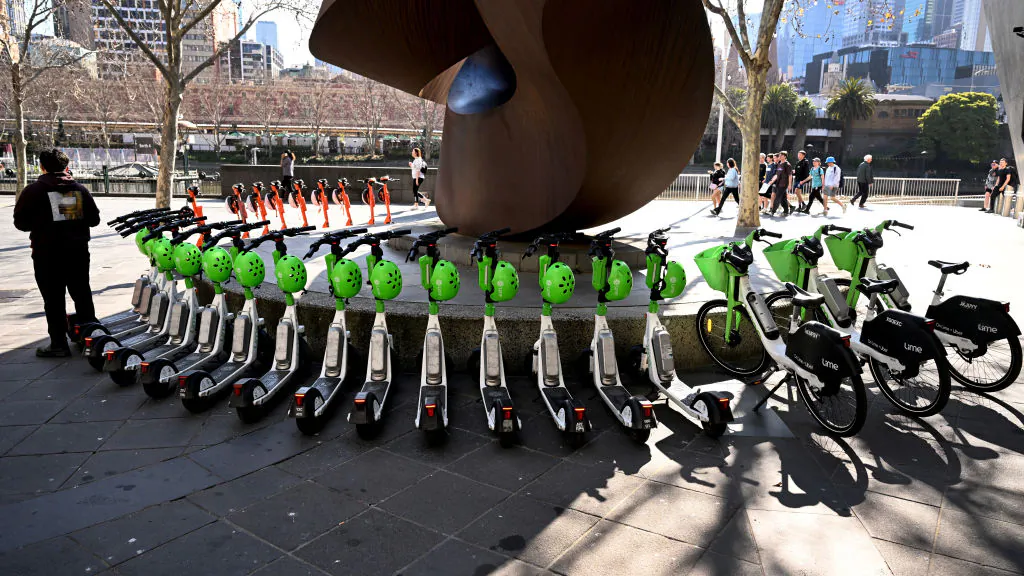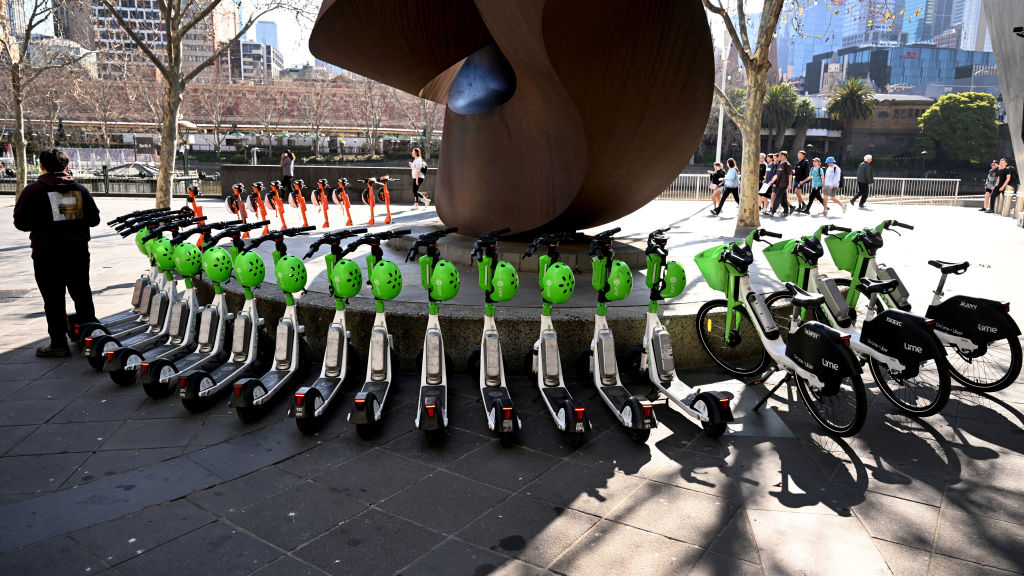

Victorian firefighters are warning about the dangers of lithium batteries in e-bikes and e-scooters following a recent Melbourne fire.
Fire Rescue Victoria revealed they are regularly being called out to fires caused by lithium-ion batteries.
“Fire Rescue Victoria firefighters are responding to almost one fire each day caused by rechargeable lithium-ion batteries,” the agency told The Epoch Times in a statement.
“The reasons rechargeable lithium-ion batteries can catch fire include: Overcharging or use of non-compatible charging equipment, overheating, physical damage including crushing, piercing or vibrations, short-circuiting, battery cell malfunctions or system faults.”
In a recent incident, emergency crews were dispatched to an apartment in South Melbourne following the activation of an automatic fire alarm. When they arrived at the scene, they were confronted with an e-scooter that they said sparked the fire.
“Firefighters arrived at the Dorcas Street scene, donning breathing apparatus to enter the apartment tower and located the cause of the fire, an e-scooter in an apartment on the 12th floor,” Fire and Rescue Victoria said.
“Crews attacked the flames and quickly evacuated all residents from the 12th floor of the apartment safely, ventilating the property and assisting residents as required. The scene was declared under control at 6:31 a.m.”
Energy Safe Victoria Investigating Fire
One individual was left with major burns to their feet and legs, while another suffered from smoke inhalation as a result of the fire. Energy Safe Victoria said the fire was “sparked by unsafe e-scooter charging.”
“Firefighters extinguished the 12th-story fire around 6:30 a.m. on Tuesday, 20 May, before discovering at least three e-scooters and e-bikes inside the property, including one connected to the incompatible charger identified as the cause of the fire,” Energy Safe Victoria said.
Energy Safe Victoria warned residents to get rid of incompatible e-ride chargers.
“While thankfully no one was seriously injured in this incident, it is a timely reminder of just how quickly a house fire can ignite when owners use incompatible battery chargers for their e-rides,” CEO Leanne Hughson said.
In addition, Energy Safe Victoria highlighted that e-bikes and e-scooters usually use rechargeable lithium-ion batteries.
These batteries contain technology that communicates with the charger to monitor charging and stop it when the battery is full.
However, if a charger that doesn’t match the battery, the battery can’t give that message, leading to thermal runaway.
“Compatibility is crucial for safe charging and to reduce the risk of sparking a lithium-ion battery fire,” Hughson added.
Watching Out for ‘Popping or Hissing’
Energy Safe Victoria is sending out a warning to the public to raise awareness of the need to use compatible chargers provided by the manufacturer.
The independent safety regulator advised to stop using lithium-ion batteries if one notices any “popping or hissing,” strong odours, leaking or extreme heat.
“Purchase products from reputable suppliers and only use chargers supplied or recommended by the manufacturer. Don’t buy from cheap, unknown online sources,” Energy Safe Victoria said.
“Monitor devices while charging and unplug when the battery is fully charged. Charge batteries on non-flammable surfaces and keep them away from bedrooms and exits.”
Meanwhile, Fire and Rescue Victoria also provided The Epoch Times with some recommendations to avoid lithium battery fires.
It suggested avoiding charging on soft locations, including couches, beds, and carpets.
Further, the fire service issued a warning against using any batteries showing signs of overheating, leaking, bulging or mechanical damage.
It also warned only to use chargers and cords supplied with that device to avoid incorrect power delivery that could damage the battery.
“Items are charged in rooms with smoke alarms and charged away from doors and escape routes so you can safely exit a property if your product catches alight,” Fire and Rescue Victoria said.
Similarly, Fire and Rescue New South Wales describes lithium-ion batteries as the fastest-growing fire risk in the state.
The agency notes that lithium-ion batteries are very energy-dense and are made up of highly flammable electrolytes.
“When lithium-ion batteries fail, they can undergo thermal runaway. This involves violent bursting of one or multiple battery cells, hissing and release of toxic, flammable and explosive gases, and an intense, self-sustaining fire that can be difficult to extinguish,” Fire and Rescue NSW said.
 Friends Read Free
Copy
Facebook
Tweet
Friends Read Free
Copy
Facebook
Tweet