
News Analysis
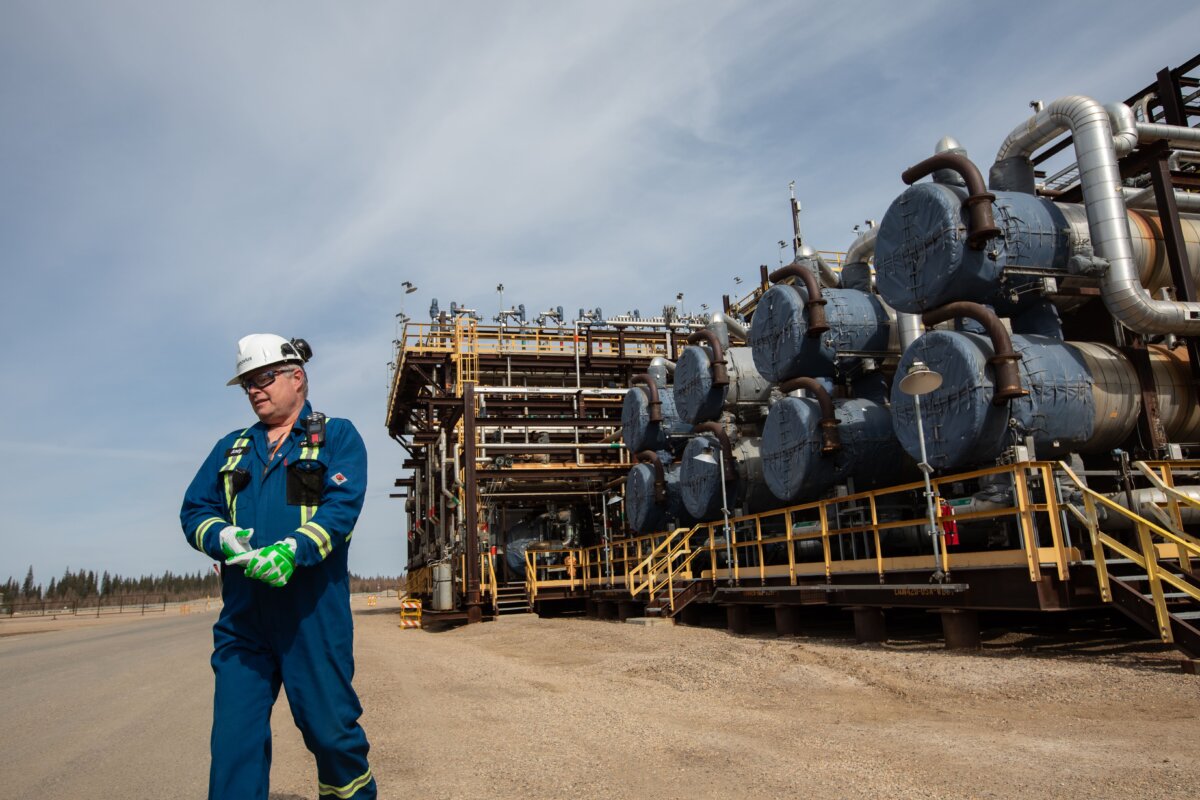
Announcements by the federal government at the recent Canada Investment Summit in Toronto were the latest in a series of measures aimed at drawing more investment into Canada and boosting the economy, including a major tax overhaul and earlier initiatives to fast-track certain major projects.
The measures have been welcomed by many in the business community as a reversal of Trudeau-era restrictions, but several observers are pointing out that the government is maintaining a heavy presence in the economy, leading to questions of whether the government could tip the scales or run the risk of changing those policies at any time.
“You’re changing and potentially altering the role of the government to be picking winners and losers,” David Leis, president of the Winnipeg-based think tank Frontier Centre for Public Policy, said in an interview.
Concerns about selective policies are also echoed by corporate tax expert Kim Moody, who viewed the recent reduction of the marginal effective tax rate on major investments positively but noted that certain sectors are excluded.
The State’s Hand
The Major Projects Office (MPO), launched in August 2025, considers projects of national importance for approval within two years, while Prime Minister Mark Carney announced on Sept. 15 at the Toronto summit that his government will be tabling new legislation to cut approval times for non-major projects and supply chains to one year.
The projects considered for fast approval are subject to selection by the government, and Ottawa is maintaining legislation such as the Impact Assessment Act while selectively relaxing the rules.
The Carney government has also rolled back or relaxed several other Trudeau-era regulations, including temporarily pausing implementation of the planned oil and gas emissions cap and suspending the Clean Electricity Regulations in Alberta as a new arrangement is developed.
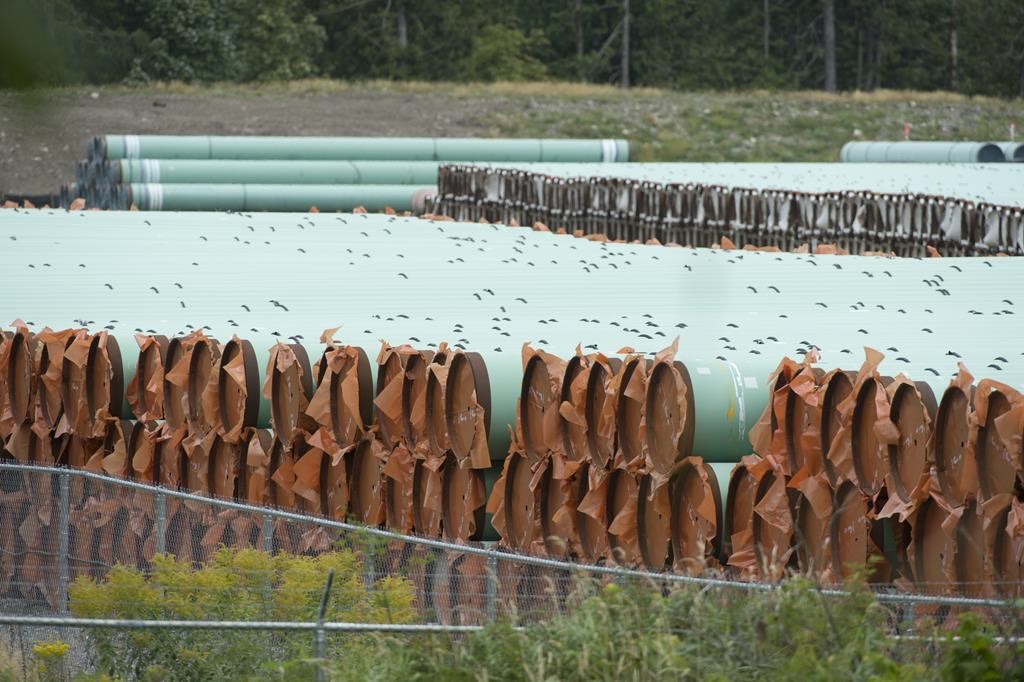
Ottawa has also begun working toward equivalency agreements with Alberta regarding industrial carbon pricing and methane emissions reduction, while a Nov. 27, 2025, memorandum of understanding between Ottawa and Alberta put forth a broader agreement that included proposing a new crude oil pipeline to the B.C. coast.
The agreement was followed by a May 15, 2026, implementation agreement and a July 2 trilateral memorandum of understanding between Alberta, Ottawa, and the Oil Sands Alliance pertaining to the proposed West Coast pipeline and the Pathways carbon capture project, a requirement to allow the construction and operation of the potential oil pipeline at a cost of billions of dollars.
While Alberta Premier Danielle Smith has welcomed the rollback and relaxation of some of what she referred to as the “nine bad laws,” Leis noted that many of the changes could potentially be reversed or reapplied in the future, particularly if economic conditions improve.
Franco Terrazzano, federal director of the Canadian Taxpayers Federation, said a preferable alternative to the government selecting which projects to fast-track would be for Ottawa to just “cut taxes and cut regulations for everyone” so that business can flourish, rather than deciding “which projects they deem in the national interest.”
Corporate Subsidies
The federal government provides subsidies and incentives to various industries and sectors in Canada, including via loan guarantees, direct grants, tax credits, equity stakes, and specialized financing programs.
A 2024 Fraser Institute study estimated total business subsidies across federal, provincial, and municipal governments at $52 billion in 2022, including $11.2 billion federally.
Another 2024 research paper by economist John Lester noted that federal business subsidies went up by 140 percent over the nine-year period between fiscal years 2014–15 and 2023–24, compared to 17 percent over the previous nine years. Climate measures were the major contributor to growth, rising by $7 billion, wrote the research fellow with the University of Calgary’s School of Public Policy
Jack Mintz, president’s fellow at University of Calgary’s School of Public Policy, said selecting certain industries to receive incentives can distort the market.
“If we give breaks to one industry, but it’s really a declining industry, well, other industries end up paying more, and they’re the ones that are important for your competitiveness,” he said.
Mintz added that areas like national defence and basic public infrastructure are exceptions, but he said commercial sectors should be allowed to compete on an even playing field, without the government tipping the scales.
Summit Announcements
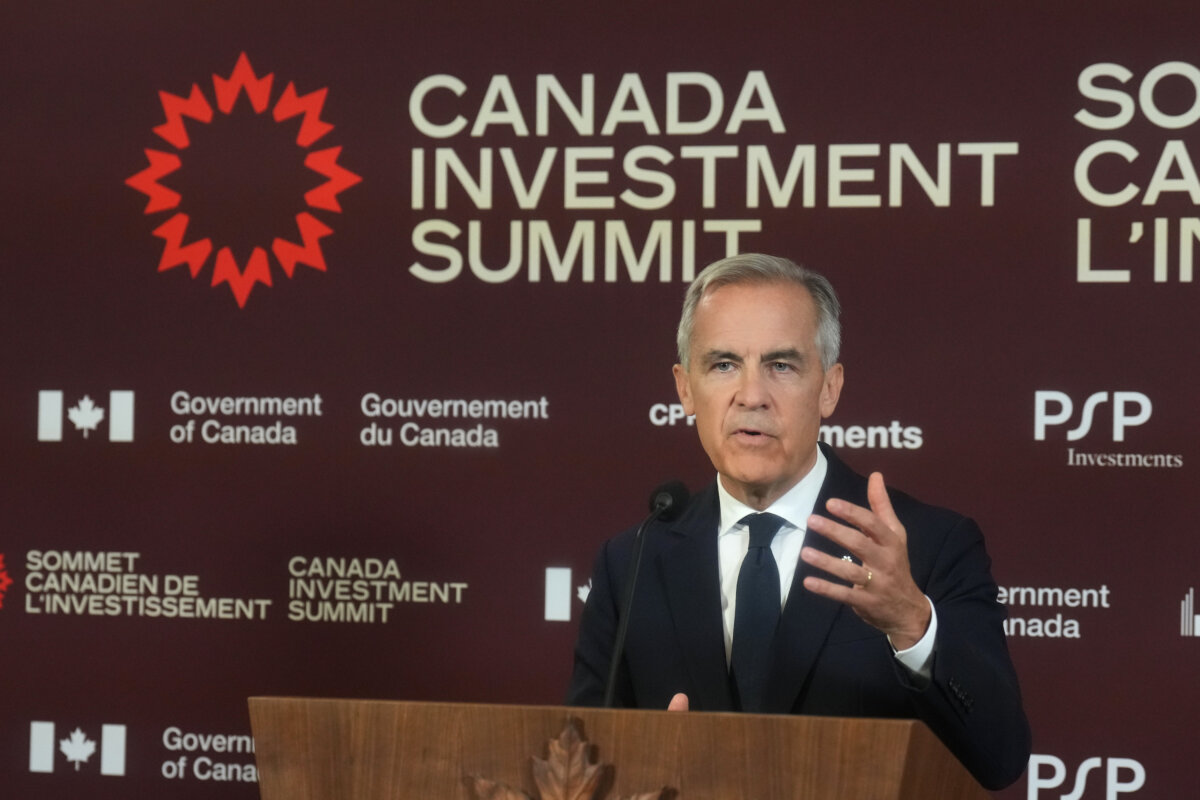
At the Toronto investment summit, which ran from Sept. 14 to 15, the government announced that it is opening Canada’s four largest airports to private investment via long-term concession agreements, using the capital raised to fund other infrastructure projects. Ottawa also proposed what it terms the “Productivity Mega Deduction” tax policy.
The policy builds on the Productivity Super-Deduction announced in Budget 2025 in November 2025, which allows businesses to immediately deduct the full cost of eligible new investments in machinery, equipment, and technology, instead of deducting the cost of the depreciable property over time. Ottawa said a much wider range of assets and expenses will be eligible under the new “mega” tax incentive.
The government also said the new policy cuts the marginal effective tax rate (METR) on new business investment from 13 percent to 6.4 percent, the lowest among the G7 countries.
In addition, Ottawa said the summit resulted in nearly $500 billion in new investment commitments.
Moody said the tax measure is a “good thing for bigger capital-intensive businesses.” However, “it’s not going to make a material business” for service-based businesses that do not have major assets.
Welfare State and Industrial Policy
Canada made the transition to a welfare state during the Great Depression of the 1930s, similar to the United States, introducing large social programs to meet the challenge of widespread unemployment and other measures over the years. These include expanded family allowances legislated in 1944 and initiated the following year, and Old Age Security put in place in 1952.
Postwar Canada saw a further expansion of the welfare state, with government assuming an even bigger role in health care, income security, and economic management, following a similar trends as in the United States.
But south of the border, leading up to the 1970s and 1980s, ongoing inflation, weak growth, and other factors led to a more neoliberal economic approach that put more focus on deregulation, lower marginal tax rates, privatization, and free markets. However, the market-oriented shift saw continued government subsidization of select corporations and industries, including preferential tax treatment, loan guarantees, and trade protections, which were also followed in Canada.
Leis says he is seeing the government in Canada increasingly using this approach, bringing the government’s power of the purse to bear on the free market and mobilizing private capital into government-incentivized sectors. He says this is increasingly resembling an industrial policy approach, which involves efforts to mould the economy in a certain direction by offering special support and incentives to specific sectors and industries.
Who Pays?
As the government is providing incentives and subsidies to spur economic action while providing selective tax cuts, the question is where the money will come from if the books are to be eventually balanced and for Canada not to fall further into debt.
The government says Canada is on track to balance the operating budget next year, one year ahead of schedule, and that it is reducing the size of the civil service by 10 percent, cutting spending on consultants by 20 percent, and reducing annual growth in operating spending from more than 8 percent in the previous decade to less than 2 percent.
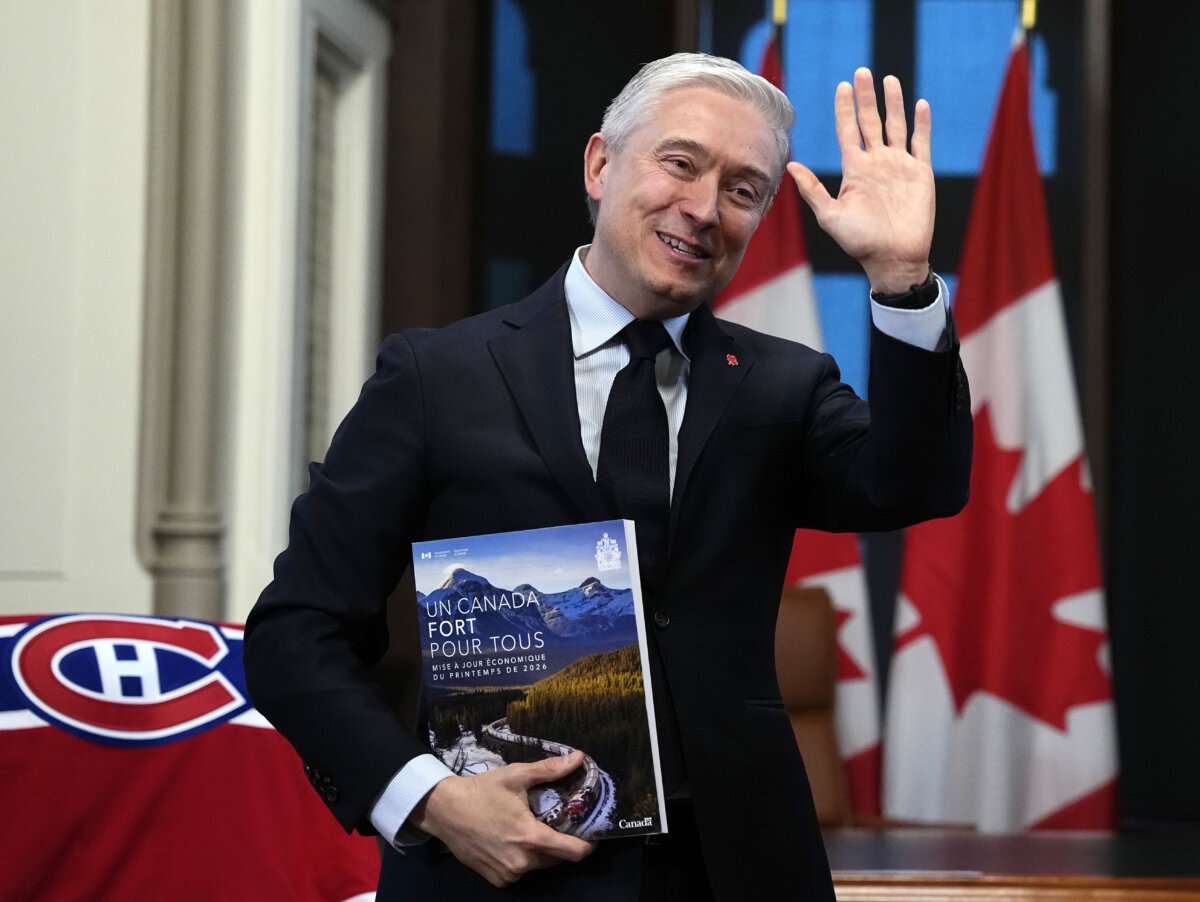
The government says the distinction between operating and capital spending allows it to preserve social programs while directing fiscal capacity toward expenditures intended to boost economic growth. Ottawa says its investment strategy is intended to attract private capital, increase productivity, and strengthen the economy over the long term.
Moody says this could still lead to deficits that taxpayers need to bear.
“All you need to do is define capital in such a broad fashion so that you can move items from the operating column into the capital column,” he said.
“The bottom line is what’s the overall deficit,” Moody added. “The taxpayers will bear that cost, and eventually it’s got to be repaid, which means that taxes go up or less services.”
He rejected Ottawa’s claims that the government’s capital investments will pay for themselves through increased productivity and investment. He pointed to a Sept. 10 analysis by the Parliamentary Budget Officer concluding that industrial development programs, referring to machinery and equipment, produce the lowest estimated returns for the economy, whereas the largest and most sustained returns are generated by infrastructure and private research and development.
“Government is one of the worst investors of assets ever,” Moody said. “They’re not the market. They can influence the market, but they’re not the market.”
Mintz similarly questioned the government’s statements that its expenditures and subsidization are “de-risking” projects, saying this puts the risk on the taxpayer and “it’s not de-risking for the government or society.”
 Friends Read Free
Copy
Facebook
Tweet
Friends Read Free
Copy
Facebook
Tweet