
Australia is throwing more resources at search and rescue efforts in flood-devastated Nepal, with drone operators and victim identification experts joining the operation.
Australian rescue teams have landed in Nepal to join the search for those still missing after catastrophic floods swamped the country in August.
A 15-person Disaster Assistance Response Team arrived in Kathmandu late on Sept. 4 while additional support, including victim identification specialists, is also on the way upon the request of Nepali authorities.
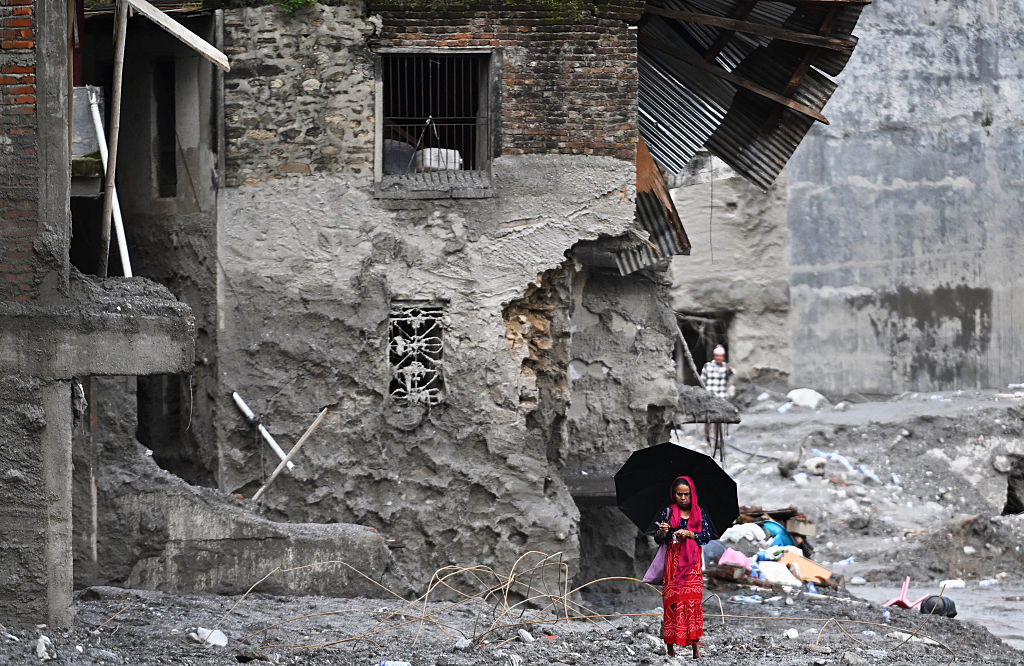
A glacier collapse near Nepal’s border with Tibet on August 26 triggered horrific flooding across towns and valleys.
The death toll in Nepal has passed 1,300, while 4,800 people are still missing including 601 foreign nationals, according to official figures released on Sept 4.
At least 36 Australians remain among the missing.
The death toll rose to 31 on the Tibetan side of the border on Sept. 4, and Reuters reports some 531 people have been reported missing in the region.
Foreign Minister Penny Wong confirmed on Sept. 3 that local authorities would conduct searches in areas where many Australians were believed to have been when the floods hit.
“I can indicate that after our inquiries that Nepali authorities have advised us that searches are being conducted in the locations identified by Australia, including [The Kailash Hotel] and the Royal Himalaya Hotel amongst others,” she told reporters.
The Disaster Assistance Response Team consists of specialists from the Queensland Fire Department and Fire and Rescue New South Wales (NSW).
Fire and Rescue NSW Commissioner Jeremy Fewtrell farewelled six remotely piloted drone operators and four incident management specialists as they travelled to Nepal on Sept. 4.
“I was proud to farewell our team this morning as they began their journey to Nepal to support communities impacted by this disaster,” Fewtrell said.
“Their drones will give search and rescue teams critical information about areas that may be inaccessible or too dangerous to reach from the ground.
“They have an important job ahead of them. I wish them a safe deployment and, most importantly, a safe return home.”
The drone technology they will use has AI capabilities that can help locate victims, including thermal imaging that can be used to identify anyone trapped.
The Foreign Affairs Department is continuing to work with local authorities to establish the whereabouts of Australians affected by the disaster and contact next of kin where necessary.
This includes giving Nepali authorities telecommunication data to help establish the last known location of missing Australians.
The federal government confirmed on Sept. 4 that two more Australians had been found safe, bringing to seven the total number of Australians found since the floods.
Aid supplies aboard a Royal Australian Air Force plane arrived in Kathmandu earlier in the week including more than 1,400 hygiene kits, 2,200 solar lights and phone chargers.
By Allanah Sciberras and Catherine Bouris in Sydney
 Friends Read Free
Copy
Facebook
Tweet
Friends Read Free
Copy
Facebook
Tweet