
The Australian Federal Police (AFP) will significantly boost its commitment to a security initiative in the Pacific region amid the Chinese Communist Party’s (CCP) growing efforts to expand its police presence in the area.
Following a recent agreement with Papua New Guinea to provide policing support for the country, the AFP has announced a major expansion of its Pacific Policing Development and Coordination Hub in Pinkenba, Brisbane.
The hub serves as a support centre for the Pacific Policing Initiative (PPI), a locally led, Australian-backed partnership aimed at strengthening regional law enforcement capabilities and disaster-response capacity.
The move came amid growing concerns about the gradual introduction of Chinese police in the Pacific region.
New Expansion to the Pinkenba Hub
Under the expansion plan, the Pinkenba Hub will function as a training centre for the PPI’s Pacific Police Support Group (PPSG), which has been deployed to major regional events and emergencies, including the 2025 Pacific Mini Games in Palau and Vanuatu’s post-earthquake recovery efforts.
For this purpose, a number of new facilities will be added, including a chapel, sporting fields, a fully functional mess hall, traditional gathering and cooking areas, and expanded training facilities.
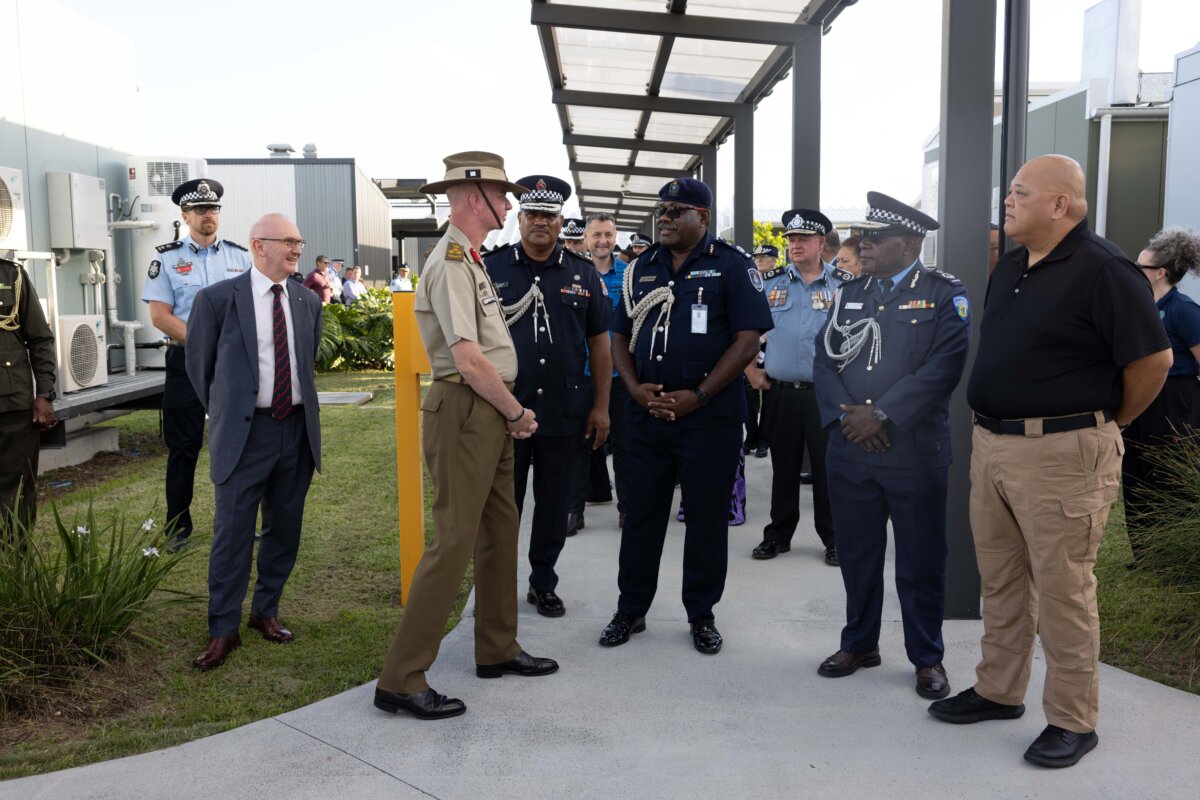
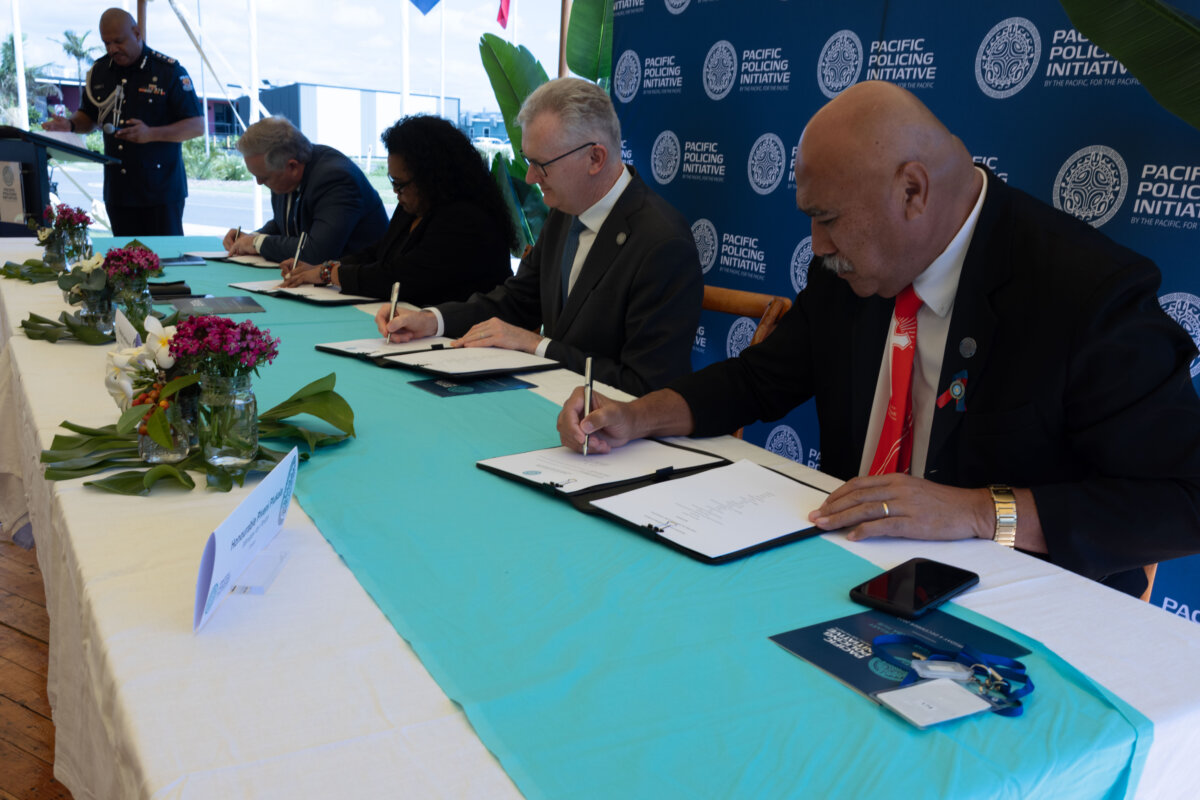
The development plans were announced at the Hub’s first anniversary in early December, when police chiefs, ministers, and dignitaries from Australia and several Pacific countries signed Memorandums of Understanding to establish the PPI’s institutional arrangements and to define how Pacific police deployments will work.
“The PPI is a Pacific-led initiative that is strengthening policing capacity and coordination in the region, for the Pacific, by the Pacific,” AFP Commissioner Krissy Barrett said.
“Since I was appointed Commissioner in October this year, I have met with Pacific leaders in PNG, I have travelled to Fiji for bilateral meetings and had meaningful discussions regarding an enhanced Pacific representation within Interpol.”
This week, Barrett will travel to Vanuatu for further discussions with that country’s police leadership.
“The message from Pacific leaders is clear. As a Pacific bloc, they have the ambition and determination to find solutions for our shared security challenges,” she said.
“Together we will continue to build our resilience because the threats challenging the Pacific are also the threats that challenge Australia.”
CCP’s Police Expansion in the Pacific Region
In 2022, the Solomon Islands—a vocal supporter of the CCP in the region—announced it wanted a permanent Chinese police presence to address what it called “internal threats.”
That has led opposition parliamentarians to claim that the China Police Liaison Team (CPLT) in that country is establishing a village-level surveillance network based on Beijing’s “Fengqiao” model, first established in the 1960s under Mao Zedong and adopted by current CCP leader Xi Jinping.
Originally used by authorities to mobilise community members against reactionary “class enemies,” the model later evolved into a mechanism for resolving disputes locally, without recourse to higher legal institutions.
In 2024, Tonga’s then-Prime Minister Siaosi Sovaleni welcomed the presence of “security personnel” from China at the annual Pacific Islands Forum meeting, despite Australia and New Zealand already providing security assistance.
And earlier this year, Vanuatu expelled New Zealand and Australian police officers from all its government buildings, insisting they carry out their advisory work from their respective consulates.
These developments were alarming as the Australian Strategic Policy Institute (ASPI) warned last year that if Chinese police were allowed into a country, Chinese expatriates there would be more easily controlled, while groups backed by the CCP could act with greater freedom.
“Also, the local population can be surveilled, and the policing emphasis turns away from the community and towards protecting the leadership,” wrote Blake Johnson, an ASPI senior analyst.
The think tank also noted that the CCP police have a history of working with criminal groups around the world to establish illegal police stations in other countries.
“The presence of such establishments was first reported in 2022 by the international NGO Safeguard Defenders, which focuses on transnational repression by China. It counted more than 100 of them in 53 countries,” Johnson wrote.

Beijing has also been known for conducting extraditions of overseas-resident citizens since 2014, prompting Safeguard Defenders to recommend that “all governments thoroughly investigate these ‘overseas police service centres’ and their underpinning United Front networks.”
The United Front is a CCP department tasked with gaining influence over individuals and organisations—both Chinese emigrants and locals—to promote the communist regime’s agenda outside China.
In March 2024, Fiji reviewed its deal with Beijing and said that it would uphold it. But only days after that decision, Prime Minister Sitiveni Rabuka announced that his government had removed all Chinese officers from the country.
 Friends Read Free
Copy
Facebook
Tweet
Friends Read Free
Copy
Facebook
Tweet