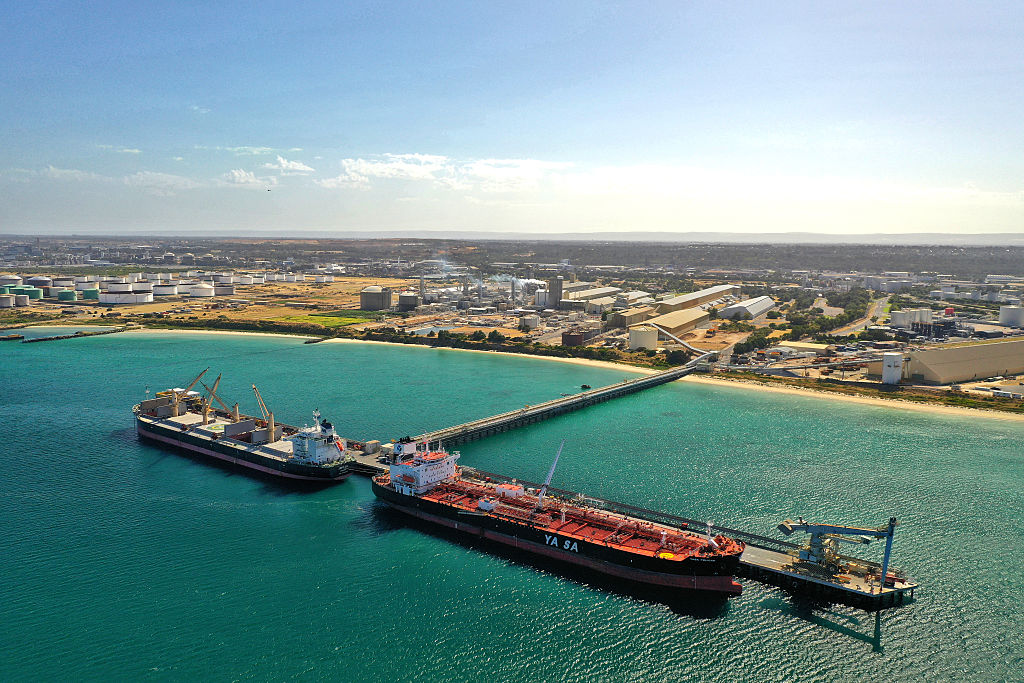

Australia has secured thousands of tonnes of urea from Indonesia, helping the country to cope with delivery disruptions caused by the U.S. and Iranian blockades of the Strait of Hormuz.
This comes as the Labor government has helped brokered a deal between Incitec Pivot Fertilisers and PT Pupuk Indonesia during Prime Minister Anthony Albanese’s visit to the Southeast Asian nation.
The deal is expected to ease pressure on the agricultural sector, which has faced supply issues after a major ammonia production plant in Western Australia was forced to shut down for two months in March due to a technical issue.
Ammonia is a key input used in the production of urea fertiliser, one of the most widely used nitrogen-based fertilisers.
“We understand how critical fertiliser is for Australian farmers, for our food production system and the food security of our region,” Albanese said.
“This deal also shows why it’s critically important that we have strong relationships with our regional partners.”
The government is also establishing a fertiliser supply working group with the industry and has streamlined border processes for imported fertiliser. In addition, it has amended legislation to enable underwriting of private sector fuel and fertiliser purchases.
Agriculture Minister Julie Collins said she had been “working day and night” with the industry to help ensure fertiliser could reach Australian farmers.
“I am very grateful for the cooperation and support of the Indonesian government in finalising this,” she said. “This guarantees supply of fertiliser to Australian farmers at this critical time.
“While this is a commercial deal, the Australian and Indonesian Governments have been working to support this positive outcome.”
Meanwhile, Incitec Pivot Scott Bowman said although more work was needed to ensure farmers’ needs are fully met next season, the deal would significantly boost supplies.
“This additional volume for the period May to December, at prevailing market prices, is another critical plank in servicing the needs of Australian farmers,” he said.
Australia currently imports around 70 per cent of its total fertiliser needs, with key inputs such as urea almost entirely reliant on imports. Moreover, around 60 percent of Australia’s supply of urea travels through the Strait of Hormuz.
 Friends Read Free
Copy
Facebook
Tweet
Friends Read Free
Copy
Facebook
Tweet