The City of Richmond, B.C., is warning homeowners that the title of their property could be compromised by a recent B.C. Supreme Court decision that granted land title rights to a First Nation based on historical ownership.
“In Richmond, homeowners are being told that their properties may be at risk following a decision granting control of land to an Indigenous band,” B.C. Conservative Leader John Rustad said in an Oct. 18 post on X, in which he included a photo of a notice distributed to Richmond residents.
In the letter, the city warns Richmond homeowners that the B.C. Supreme Court decision could “negatively” affect the title of their property. The court has declared aboriginal title to some properties in Richmond, the city said, noting that this may compromise the status and validity of the residents’ homeownership. The city added that this was mandated “without any prior notice to the landowners.”
The city says it will hold an information session at Richmond City Hall on Oct. 28 at 7 p.m. for residents to learn more about the situation, noting the “serious implications” of the court decision.
“Property rights form one of the fundamental pillars of Western society,” Rustad said in his X post. “This decision cannot stand.”
Court Decision
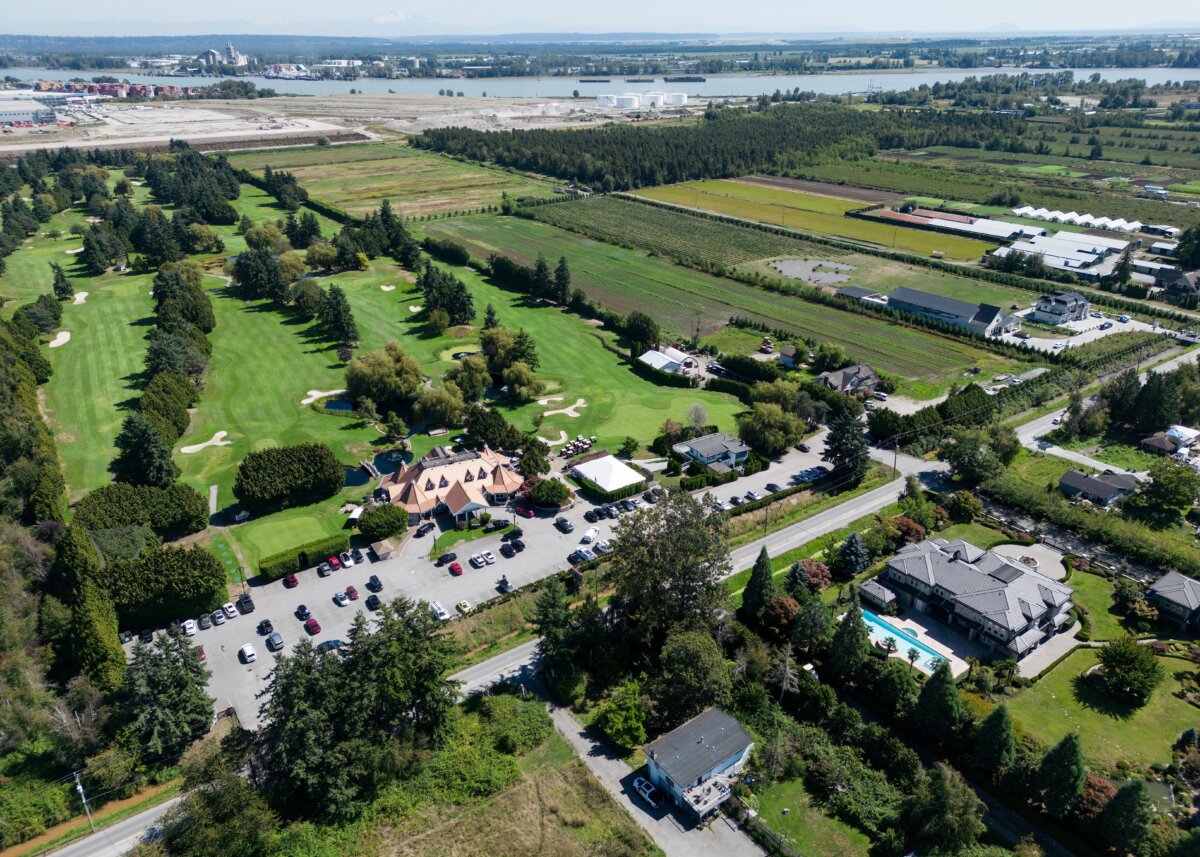
The Aug. 7 decision by B.C. Supreme Court Justice Barbara Young granted the Cowichan Nation title claim over approximately 750 acres in Richmond, including federal and municipal lands.
The lawsuit was originally filed by the Cowichan Tribes in 2019, which argued that parts of the Lower Mainland are part of their historical territory and belong to them. The claims were opposed by the Musqueam and Tsawwassen First Nations, the federal and provincial governments, the City of Richmond, and the Vancouver Fraser Port Authority.
In her written decision, Young called land title grants issued by the federal and provincial governments to others “defective and invalid.” She said the government title grants “unjustifiably infringe the Cowichan Nation Aboriginal title to these lands.”
Young suspended the decision for 18 months to give governments and affected parties time to manage the transition.
The ruling holds that aboriginal title predates and can coexist with Crown and private ownership. Young ruled that fee simple title does not automatically extinguish indigenous rights, even when lands have been sold or managed by governments.
Fee simple ownership is the most common type of real estate ownership in Canada, giving the owner full legal rights to use, sell, or transfer their property.
Appeal
Both the provincial and federal governments have said they are appealing the decision. B.C. Premier David Eby has raised concerns about the ruling’s implications, saying clarity on private property rights is key for economic certainty.
The B.C. NDP government has said it will seek a stay to pause its implementation until the appeal is resolved.
“We disagree strongly with the decision,” B.C. Attorney General and Deputy Premier Niki Sharma said in an Aug. 11 statement. She said the ruling could have “significant unintended consequences” for fee simple private property rights in the province, which “must be reconsidered by a higher court.”
Federal Conservative Leader Pierre Poilievre has said that the court decision undermines property rights and threatens the nation’s economy.
He told reporters in Ottawa on Sept. 29 that if the Cowichan ruling isn’t overturned, it would “devastate our entire economy,” noting people won’t start businesses or buy homes “if they think that their land could be confiscated and given to someone else.”
The Cowichan Tribes said after the court ruling in August that it was a “historic victory.”
“At this time, we raise our hands to the generations of leaders who fought with nuts’a’maat shqwaluwun (one mind, one heart, and one spirit) for the return of our settlement lands at Tl’uqtinus and our fishing rights in the south arm of the ‘Fraser River,’ ever since the Crown began its unauthorized alienation of our lands there in the 1870s,” the First Nation said.
Carolina Avendano, Chandra Philip, and Paul Rowan Brian contributed to this report.
 Friends Read Free
Copy
Facebook
Tweet
Friends Read Free
Copy
Facebook
Tweet