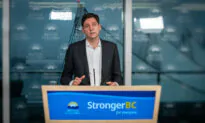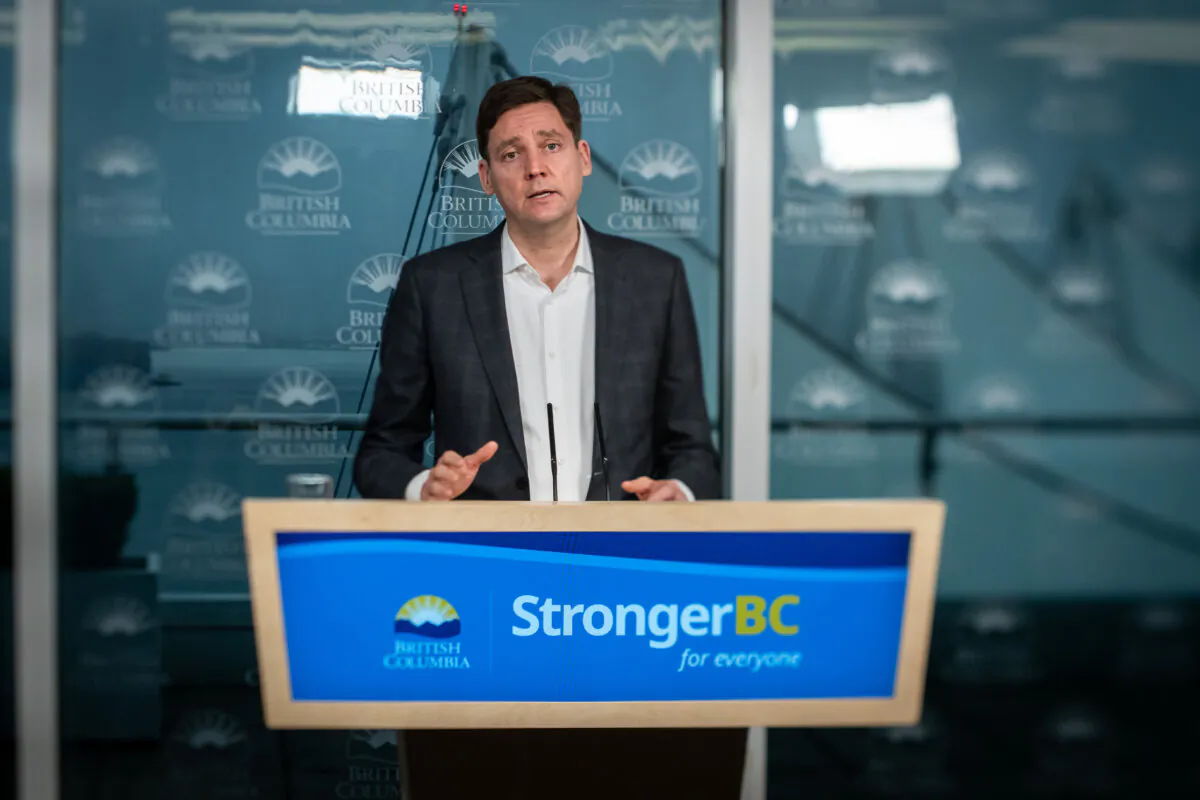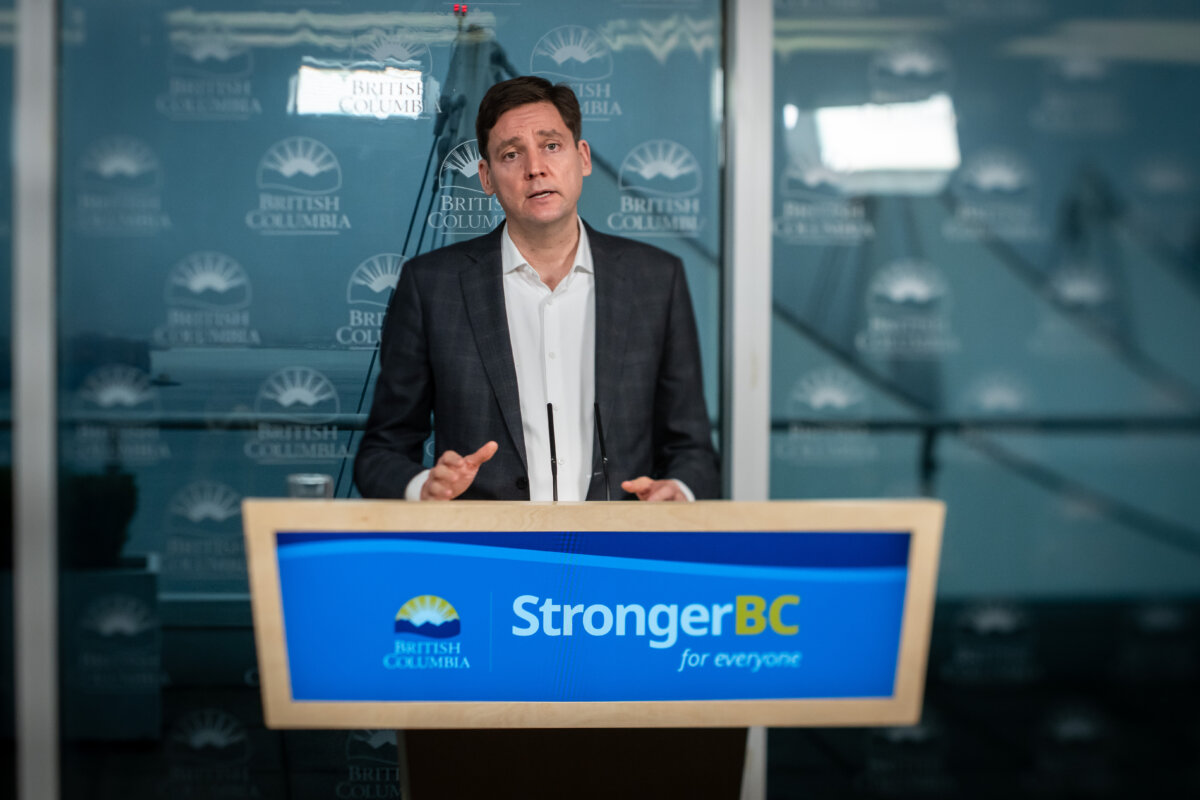
B.C. Premier David Eby says the B.C. Supreme Court’s assurance that the Cowichan aboriginal title case wouldn’t affect private landowners and didn’t require their submissions or inclusion as parties “turned out not to be the case.”
Eby made the comments Nov. 3 during an unrelated press conference amid concerns from the City of Richmond that the Aug. 7 Cowichan ruling may place the “validity” of fee-simple private ownership into question in the affected area of about 7.5 square kilometres around Richmond’s Lulu Island.
“The … court assured us that they would make a decision that didn’t affect landowners in the claim area so they didn’t have to be served, they didn’t have to be told about the case, that it was going ahead in court. Unfortunately, that obviously turned out not to be the case,” Eby said Nov. 3.
“One of the pieces of information that we’re seeking to gather is from property owners in the area, if they’re running into impacts that are related to financing or or other related issues.”
In her Aug. 7 ruling on the Cowichan case, Justice Barbara Young held that the Cowichan Nation has rightful aboriginal title to 7.5 square kilometres of land in Richmond due to its historical use of the land as a seasonal fishing village, stating that title was granted away from the Cowichan in an “invalid” manner.
The Cowichan Tribes and the Stz’uminus First Nation, Penelakut Tribe, and Halalt First Nation — supported by the Lyackson First Nation — were the plaintiffs in the case against the federal and B.C. governments, the City of Richmond, the Vancouver Fraser Port Authority, the Musqueam Indian Band, and the Tsawwassen First Nation.
In her decision, Young suspended the declaration of aboriginal title for 18 months to allow time for the land transfer to the Cowichan to be completed.
B.C. Indigenous Relations Minister Spencer Chandra-Herbert says B.C. “strongly” disagrees with how the case treats private property, and Attorney General Niki Sharma says the province will appeal the decision. The province is asking for a stay of the decision, arguing that aboriginal and fee-simple titles “cannot co-exist” in their full form.
The federal government is also appealing the decision.
In an Oct. 27 press release, the Quw’utsun (Cowichan) Nation, representing the Cowichan Tribes and the Stz’uminus, Penelakut, Halalt, and Lyackson First Nations, said the court case only pertained to federal and Richmond “settlement lands at Tl’uqtinus in Richmond” and that at “erroneous messaging” from Eby and Richmond Mayor Malcolm Brodie are “provoking unnecessary fears” about privately owned land.
Although the Cowichan did not pursue a claim against “fee simple,” or Crown-granted private property ownership, nothing in the ruling prevents the Cowichan from doing so in the future, with Young noting that “so long as the fee simple interests exist, the ability of the Cowichan to exercise the incidents of Aboriginal title are constrained to the extent they conflict with the rights of the private fee simple title holders.”
Richmond residents say they weren’t informed ahead of time about the potential fallout from the Cowichan case prior to the Aug. 7 ruling. The court did not accept submissions from residents who live within the claim area, nor did it include residents as parties to the case, which began in 2019.
Around 125 to 150 Richmond residents received letters from Brodie late last month saying that the Cowichan ruling could affect “the status and validity” of their property ownership.
“None of the affected private landowners were given formal notice of the legal proceedings by the plaintiffs even though the relief sought would adversely affect their fee simple interests,” the letter notes.
In addition to concerns raised by residents, B.C. Conservative Leader John Rustad said on Oct. 29 at a public meeting in Richmond that private property rights are in doubt due to the Cowichan decision.
“In order to be able to have insurance and a mortgage, you need to know what the value of a property is,” Rustad said. “You need to know what your rights to the private property is.”
Vancouver’s real estate sector has raised concerns about uncertainty created by the case, including potentially slower selling times, particularly in the affected area.
Conservative MP Ellis Ross criticized Eby’s Nov. 3 statements in a post on X.
“The court assured BC govt that private property would not be affected which turned out not to be the case. Unusual statement to make! How did the court communicate this to BC govt? Over a cup of coffee? By letter? By email or during the proceedings?” Ellis posted.
 Friends Read Free
Copy
Facebook
Tweet
Friends Read Free
Copy
Facebook
Tweet