British Columbia is introducing legislation to establish safe zones around places of worship to ensure individuals can attend without obstruction, intimidation, or harassment.
The province said in a March 9 news release that it intends to table Bill 13, the Safe Access to Places of Public Worship Act, to create protections for people accessing places of worship, such as mosques, temples, gurdwaras, synagogues, and churches. The concept is similar to the province’s Safe Access to Schools Act that established safe zones around schools.
The provincial government said the new legislation is part of its response to “a rising trend of vandalism and other harmful behaviour” targeting religious buildings and disrupting access to places of worship.
Under the law, places of worship would be allowed to establish 20-metre zones around their properties, where specified disruptive or harmful behaviours would be prohibited. It would also give police the ability to arrest or ticket anyone found impeding access, disrupting, or interfering with these zones, or trying to intimidate anybody within the zones.
The bill includes a sunset clause to reassess the legislation in 2030 to ensure it remains “proportional and necessary.” The legislation would come into effect immediately upon receiving royal assent, the province said.
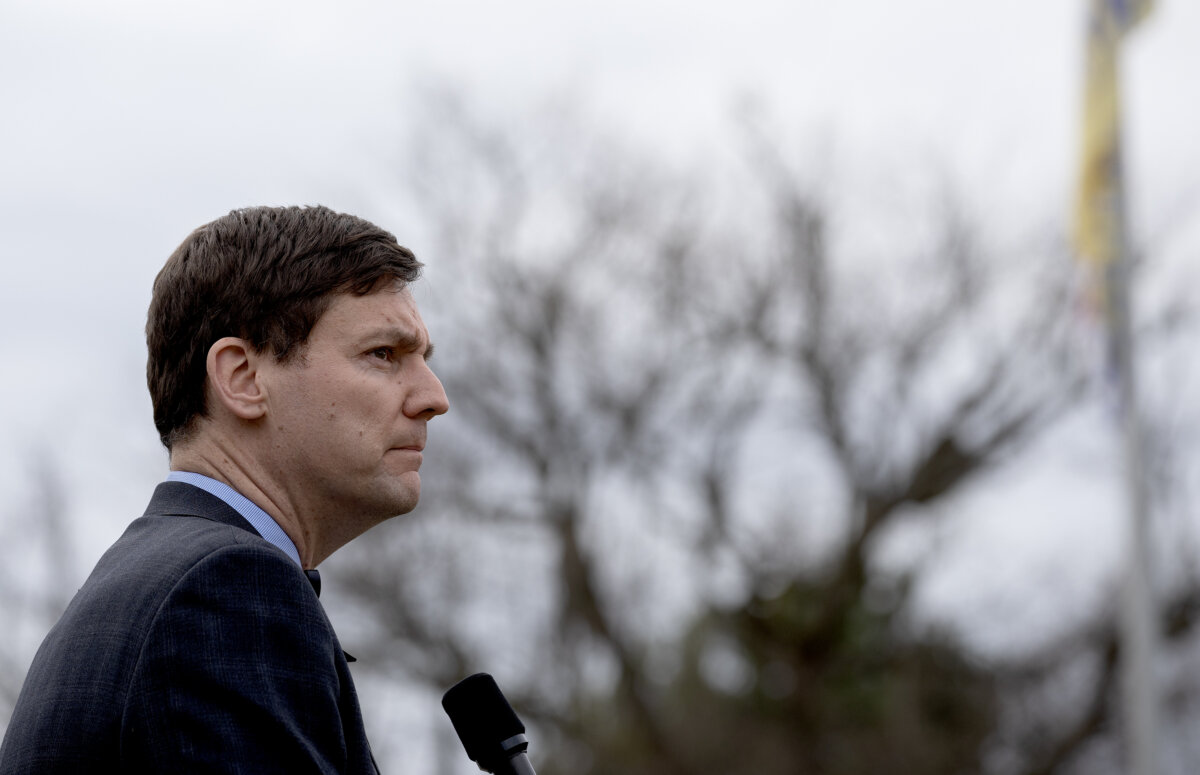
B.C. Premier David Eby announced the proposed legislation at a March 9 press conference while standing in front of a group of religious leaders.
“There is a fundamental requirement here in the province under our government that everybody be able to pray and worship as they wish and to do so without harassment and intimidation,” Eby said. “These are core rights in a free and democratic society.”
B.C. Attorney General Niki Sharma also spoke at the press conference and said the province is seeing a “really worrying trend where some really bad faith actors are crossing lines.”
“We’ve seen incidents where people of faith seeking to access their place of worship, which should be safe, [have faced] intimidation, threats, and hate speech,” Sharma said, adding that it is important to balance freedom of expression with the right to practice religion free of intimidation.
The new legislation would punish behaviours within the zones such as physically obstructing access to a place of worship, attempting to persuade people not to go into the building, or purposefully disrupting activities at the site, such as by playing “unreasonably” loud music, she said.
The new legislation comes after multiple shootings at synagogues in Toronto recently, which Eby said aimed to intimidate the Jewish community in Ontario. He noted B.C. has had similar events targeting a number of different religious communities.
Toronto-area police responded to reports of gunfire at two different synagogues on March 7, after a similar shooting targeting a synagogue on March 2.
Prime Minister Mark Carney said the attacks are “an assault on the rights of Jewish Canadians.” Conservative Leader Pierre Poilievre said he is “appalled” by the shootings, adding that Canada’s Jewish community is “under attack.”
Police in Toronto said they have increased their presence to deter criminal activity amid the Iran war.
The shootings also prompted police in Vancouver and Victoria, B.C., to send additional police resources to Jewish community organizations and places of worship. The police services said there is no known threat to synagogues in British Columbia at this time.
Safe Zones Around Schools
The province of British Columbia also announced it intends to table Bill 12, the Safe Access to Schools Amendment Act, which would extend the province’s Safe Access to Schools Act, passed in 2024.
The law creates 20-metre safe zones around schools where “specified forms of harmful behaviour” are prohibited to ensure students, staff, parents, and caregivers are able to access learning environments without obstruction.
Police are allowed to intervene under the law to curb disruptive behaviour within the buffer zones, not just on school grounds.
“Since 2023, there have been more than 40 protest disruptions outside K-12 schools interrupting students’ learning. In a few cases, police were called to intervene,” the province said.
The initial legislation has a sunset clause that is set to activate on July 1, 2026. The province said Bill 12 would extend the legislation for another two years, to July 1, 2028.
 Friends Read Free
Copy
Facebook
Tweet
Friends Read Free
Copy
Facebook
Tweet