B.C. Minister of Health Josie Osborne says the province won’t ask Health Canada to renew its exemption from Canada’s federal drug laws that was granted in January 2023 and is set to expire at the end of this month.
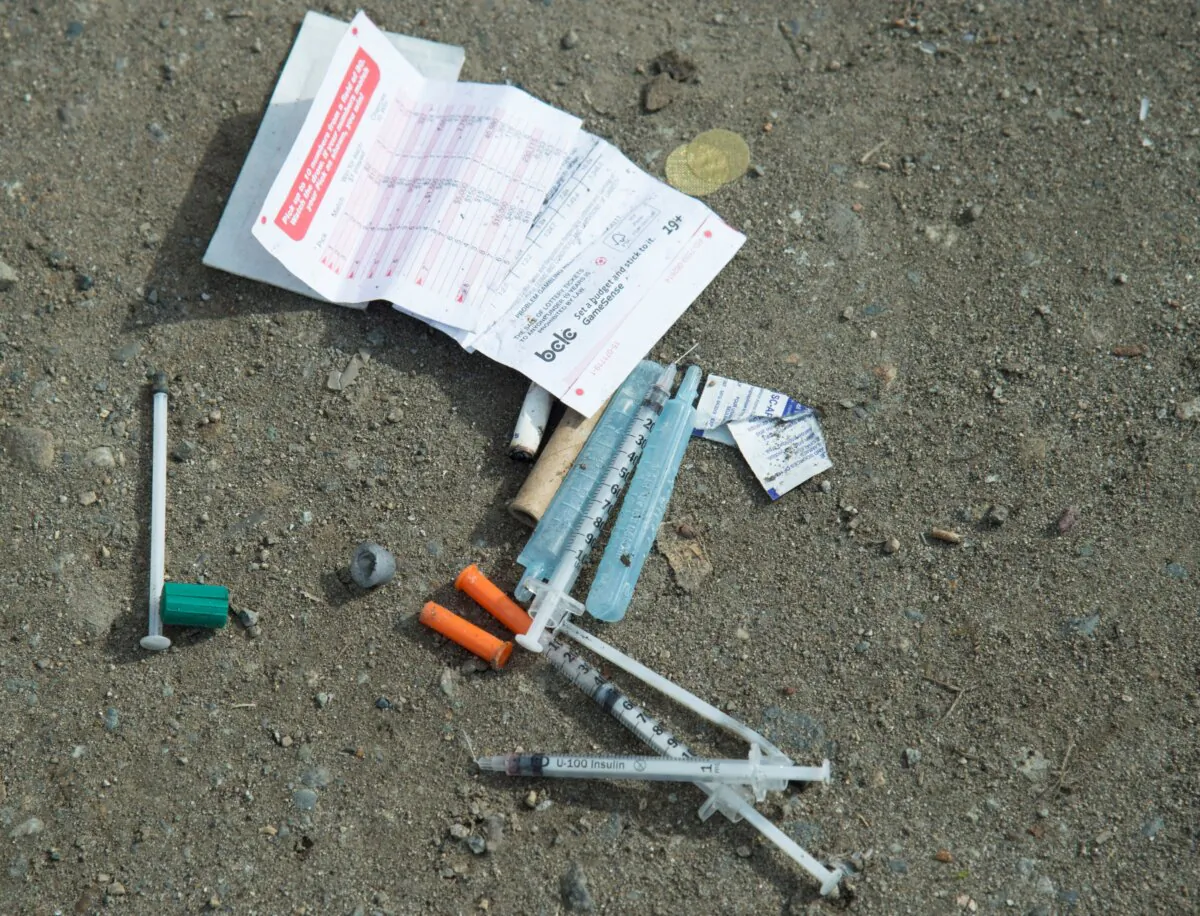
The pilot program decriminalized personal possession and use of 2.5 grams or less of cocaine, methamphetamine, MDMA, and opioids for those over 18 in a move the province said was intended to decrease stigma over drug use and encourage treatment for addicts.
However, public drug use, including in shared hospital rooms, led to widespread pushback, and B.C.’s NDP government walked back the program, getting Ottawa to amend the exemption and recriminalize most public drug use in the spring of 2024.
The decision not to apply for a renewal of B.C.’s exemption now fully brings to an end the province’s short-lived decriminalization experiment.
“From the beginning, this pilot was designed as a time-limited trial with ongoing monitoring built in so we could understand what was working, what wasn’t, and where changes were needed,” Osborne said Jan. 14 at a press conference in Victoria. “However, the pilot hasn’t delivered the results that we hoped for.”
The government also announced the creation of a new phone line to offer resources for addiction support.
B.C. Conservative MLA Claire Rattée, who serves as her party’s critic for mental health and addictions, said the decision not to renew decriminalization is too late to stop the damage that’s been done and doesn’t provide clarity on next steps.
“After three years or disorder and chaos, the NDP government cannot even provide the number of people who were directed to treatment options,” Rattée wrote in a Jan. 14 statement. “British Columbians deserve clarity on how the government will address this crisis moving forward. However, all that was announced today was the expansion of a phone line.”
B.C. Premier David Eby has said that B.C.’s drug decriminalization program didn’t work as intended, saying Jan. 6 that “we are not going back to the old policy of decriminalized public drug use in British Columbia.”
Enforcement
Drug policy researcher and journalist Adam Zivo said it remains to be seen whether the full end of decriminalization will be accompanied by enforcement by authorities.
“The big question now is whether or not existing drug laws will be enforced. Because it’s one thing for open drug use to be illegal. It’s another thing for police to actually do their job and to arrest addicts who are disrupting public spaces,” Zivo said.
B.C.’s Ministry of Public Safety and Solicitor General (PSSG) said that police will be enforcing drug laws and recommending charges, particularly in cases with “public safety concerns.”
“That means that police retain the authority to seize substances and recommend charges, particularly where there are public safety concerns, repeated non-compliance, or other aggravating factors,” a spokesperson for the ministry said in a Jan. 14 statement to The Epoch Times.
However, PSSG noted that simple possession offences should follow section 10.2 of the Controlled Drug and Substances Act and the Public Prosecution Service of Canada’s Guideline 5.13, which considers substance use and possession as first and foremost a health and social issue.
“These amendments require officers to first consider alternatives to criminal charges, including taking no further action, issuing a warning, or—with the individual’s consent—referring them to an appropriate health or social service,” the spokesperson said.
Zivo noted that B.C.’s safer supply program providing drugs and allowing drug use under medical supervision continues to exist in the province, and said it is a harmful program that entrenches and enables addiction instead of working to stop it.
The B.C. Ministry of Housing and Municipal Affairs said that “harm reduction services” will continue to be provided onsite to ensure that people receive the treatment they need.
“Offering harm reduction services onsite reduces the need for emergency health services and provides a minimal-barrier connection to treatment services, which can be especially beneficial to vulnerable populations,” a spokesperson for the ministry wrote in a Jan. 14 statement to the Epoch Times.
“Important, life-saving measures that were in place long before the decriminalization pilot project, such as over-dose prevention sites, will continue to operate, save lives, and connect people with treatment options.”
Drug overdoses have claimed more than 16,047 lives in B.C. since 2016.
B.C. had 2,253 drug deaths in 2024, and preliminary figures show 1,342 drug deaths from February to October of last year.
Zivo noted that drug overdose fatalities last year were down compared to 2024, partly due to U.S. enforcement action against Chinese precursor chemicals used to make fentanyl. In changes announced last month, Health Canada has also tightened rules on the sale and distribution of precursor chemicals used to produce fentanyl and methamphetamine.
 Friends Read Free
Copy
Facebook
Tweet
Friends Read Free
Copy
Facebook
Tweet