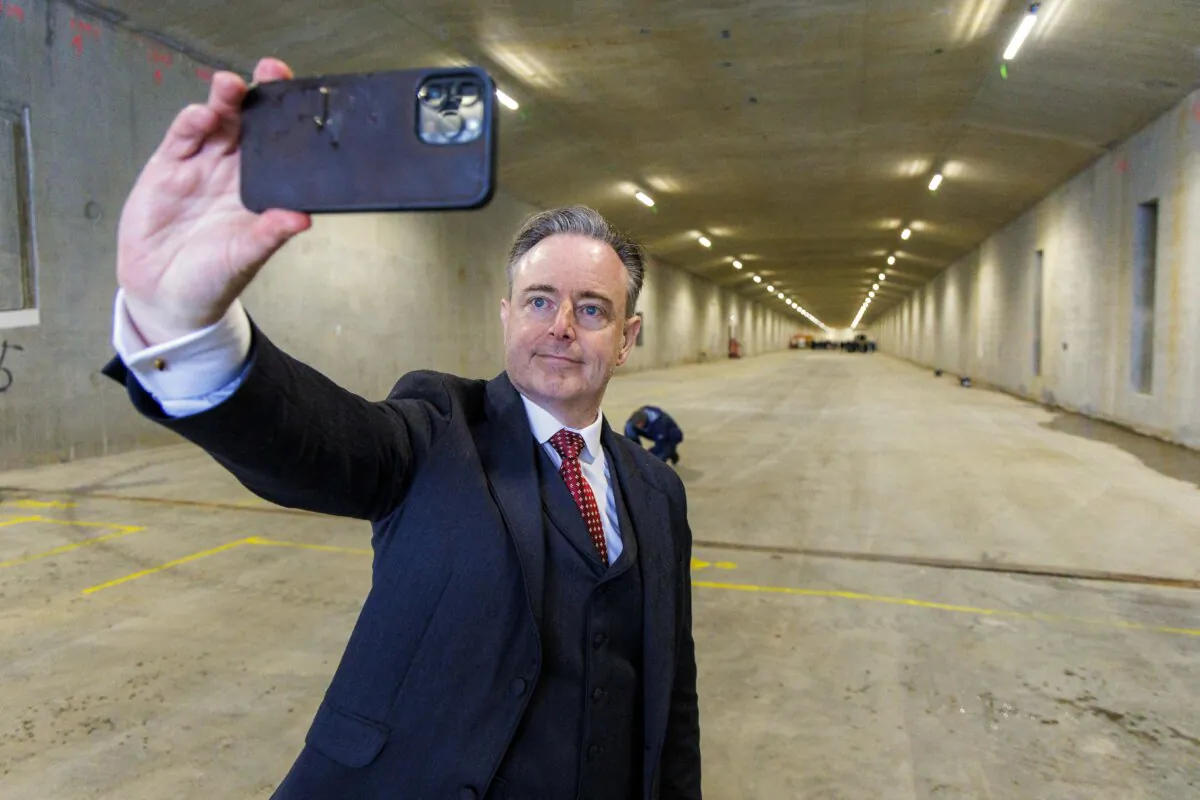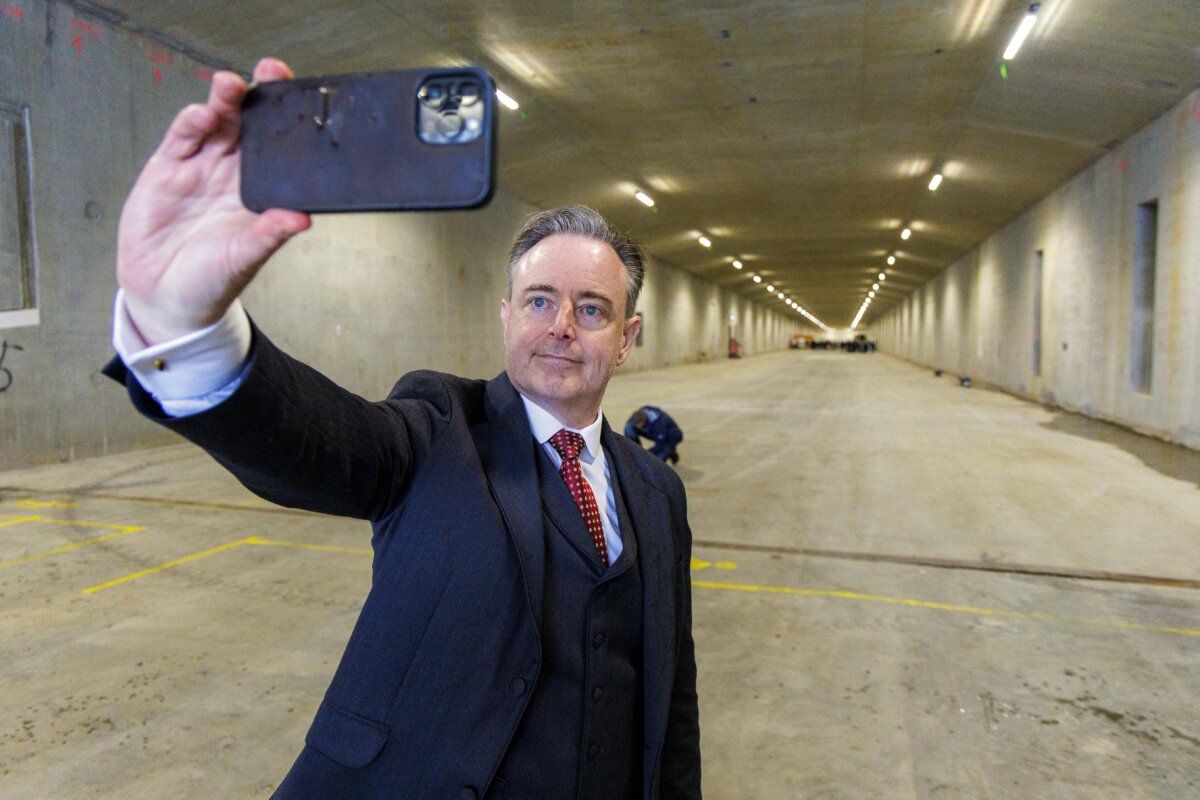

The Belgian government plans to buy the Belgian nuclear assets of French power group Engie—a move Brussels says will help secure the country’s energy supplies.
In an April 30 post on X, Belgian Prime Minister Bart De Wever said that an agreement had been reached with Engie to “define the conditions and initiate the necessary studies” for a “full takeover of the Belgian nuclear park.”
“In the meantime, all decommissioning activities are being halted with immediate effect,” said De Wever, who is the leader of conservative Flemish nationalist party New Flemish Alliance.
“This government chooses safe, affordable, and sustainable energy. With less dependence on fossil imports and more control over our own supply.”
In an April 30 statement, Engie said the talks cover the “full scope” of its Belgian nuclear activities, including the seven-reactor fleet, nuclear staff, subsidiaries, assets, and liabilities.
No binding sale agreement has yet been reached.
According to the World Nuclear Association, an international organization that promotes nuclear power, Belgium has three operable nuclear reactors, and its first began operating in 1974.
However, under the Belgian nuclear phase-out law of 2003, all seven nuclear reactors in Belgium had to be closed by 2025.
According to a 2014 paper by Pierre L. Kunsch in Energy Policy, Belgium produced about 56 percent of its electricity demand from seven nuclear power plants in 2003, second only to France, where nuclear power accounted for about 75 percent of its output.
In March 2022, in light of concerns about security of supply in the context of the energy crisis and the Russia–Ukraine war, the Belgian federal government decided to keep the two newest Belgian nuclear power plants, Doel 4 and Tihange 3, open for an additional 10 years.
In February 2025, the European Commission approved, under European Union state aid rules, a revised Belgian support measure for the lifetime extension of Doel 4 and Tihange 3.
De Wever has been critical of Europe’s green transition and has warned that current EU climate and energy policies are accelerating deindustrialization.
On Jan. 29 at the Conference on the Future of Europe, hosted by Belgian newspapers De Tijd and L’Echo, De Wever said Europe had made a series of “dogmatic choices” on energy and climate that have weakened its industrial base.
De Wever singled out Europe’s resistance to nuclear power as a strategic error, calling it “the stupidity of the century.”
“We made dogmatic choices against nuclear energy,” he said.
“Let’s be very realistic, ladies and gentlemen, the decarbonization of Europe will be a synonym of the deindustrialization of Europe, and it’s already happening.
“We were addicted to cheap fossil fuels flowing in from Russia.
“China is profiteering from the war. They’re getting the cheap oil, the cheap gas. America is no longer supporting Ukraine. They’re selling us the arms, and we are stuck with bills, crazy energy prices.”
De Wever said that he had discussions with steelmakers who told him that Europe is no longer an attractive place to invest without massive public support.
“You cannot be competitive if the artery of your economy, your energy, has to be so heavily subsidized,” he said.
“The petrochemical industry is no longer investing. They’re leaving us. And even the ones who are going to bring sustainable production. … They say, ‘Very nice environment to create in Europe, see you later, going to China.’”
Similar concerns have been voiced by Polish Prime Minister Donald Tusk, who has called for a review of the European Green Deal, warning that high energy prices risk destabilizing democratic governments.
Speaking in Strasbourg, France, on Jan. 22, 2025, Tusk said some EU regulations had led to a situation in which “energy prices are too high,” noting that high energy prices could topple democratic governments.
“High energy prices might bring the downfall of many democratic governments,” he told members of the European Parliament.
 Friends Read Free
Copy
Facebook
Tweet
Friends Read Free
Copy
Facebook
Tweet