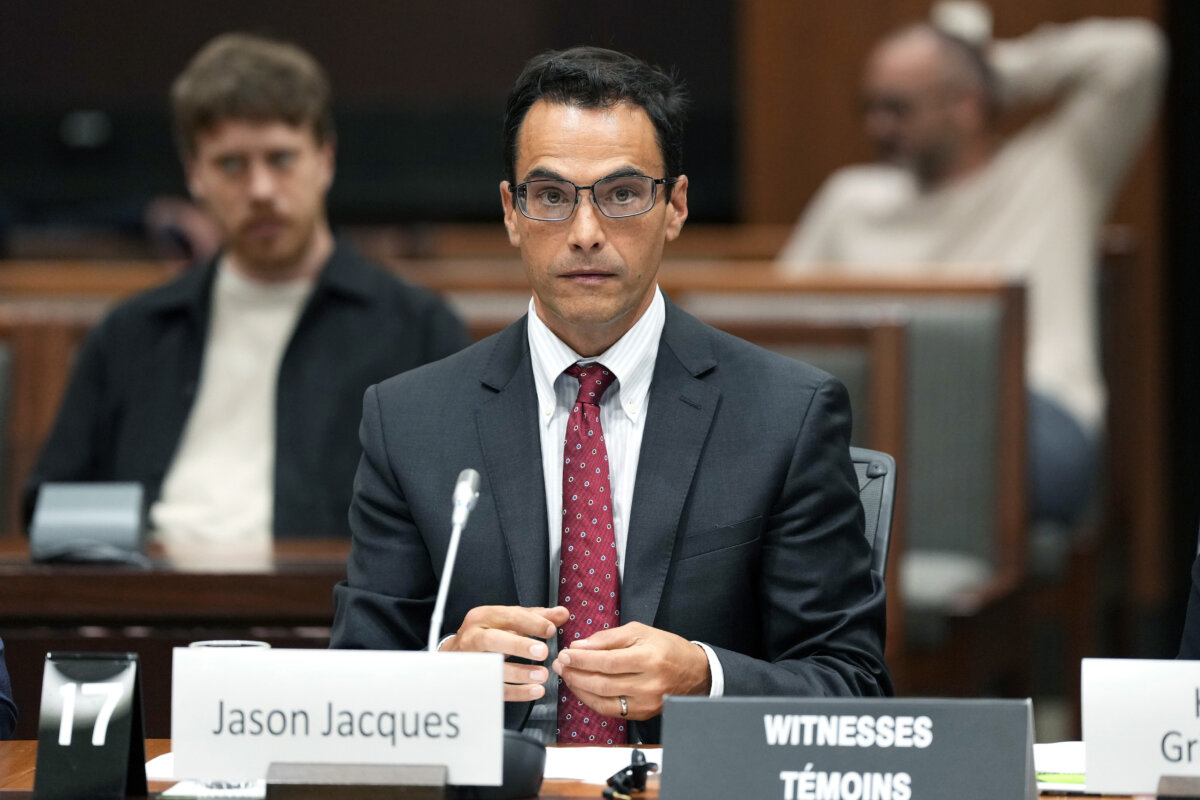

The Liberal government is unlikely to meet the two fiscal anchors outlined in its latest budget, or to have the declining debt-to-GDP ratio promised in previous budgets, the interim Parliamentary Budget Officer (PBO) says.
A fiscal anchor, often referred to as a fiscal guardrail, is designed to steer decisions related to spending, taxation, and borrowing. But interim PBO Jason Jacques told the parliamentary government operations committee on Nov. 20 that analysis by his office found Ottawa has “a low probability of respecting the fiscal anchors” it has set out for itself.
Budget 2025, released on Nov. 4, had the fiscal anchor of balancing operating spending with revenues by 2029, as well as maintaining a declining deficit-to-gross GDP ratio. The 2023 and 2024 budgets mentioned having a declining debt-to-GDP ratio as a fiscal anchor, but Budget 2025 did not.
A budget analysis report released by the PBO on Nov. 14 indicated that after conducting “stress testing,” there was just a 7.5 percent chance the deficit-to-GDP ratio would continue declining every year from 2027 to 2030.
The report said the Liberal government also had an “overly expansive” definition of capital investments that overstates capital spending by $94 billion over the next five years and would be unable to fulfill its promise of balancing operational spending by 2028–29 if it used a stricter definition similar to that employed by nations such as the United Kingdom.
Jacques noted while being questioned by Conservative MP Philip Lawrence that the Liberal Party’s platform in the most recent election referred to the now-abandoned debt-to-GDP fiscal anchor, saying the platform promised ensuring the “government debt-to-GDP decreases over the budget horizon.”
The interim PBO also pointed out that during Question Period in the House of Commons on Sept. 17, Prime Minister Mark Carney said Ottawa was going to “have a declining level of debt” as one of its fiscal anchors.
“For some, there’s a bit of lack of clarity regarding the changes that have occurred to those fiscal anchors since the election campaign,” Jacques said. “But of course, as we and others learned with Budget 2025, the government decided to cut that anchor.”
Liberal MP Vince Gasparro asked if Canada’s debt-to-GDP ratio was sustainable over the long-term and Jacques said that, based on Finance Canada’s numbers, it was. The PBO report said the country’s long-term debt-to-GDP ratio is projected to remain “relatively stable over the next 30 years.” Finance Canada projected the ratio will rise from its initial level of 41.2 percent in 2024–25 to 43.6 percent in 2033–34, but decline to 37.2 percent in 2055–56.
However, Jacques said later in the committee meeting that “when” additional economic shocks occur, the Liberal government will not have as much fiscal room to respond. “Consistent with the [International Monetary Fund] research, the more debt you have and the more debt you’re carrying, the greater the risk to the economy and to your financial management the next time there is a shock,” he said, adding that it would make it harder for the government to borrow money cheaply.
Jacques in September said his office estimated the budget’s projected deficit would be $68.5 billion, adding that Canada’s fiscal trajectory was “unsustainable” and “shocking.” The deficit for 2025 given in the Nov. 4 budget is $78.3 billion.
The Canadian government launched the hiring process for a new PBO earlier this month, stating that the candidate would provide “non-partisan, authoritative analysis” on the state of the nation’s finances, the government’s budget and estimates, and economic trends. It also said the candidate would need to have “tact and discretion,” which is language that a PBO job posting from 2013 also included.
Jacques, who has applied for the permanent position, was asked by Conservative MP Tamara Jansen if he was “concerned” with this language. He said he was not, adding that the PBO needs to have “discretion” and not share private conversations with parliamentarians, and that his role requires “tact to deal with people from all those different backgrounds and meet them where they are.”
 Friends Read Free
Copy
Facebook
Tweet
Friends Read Free
Copy
Facebook
Tweet