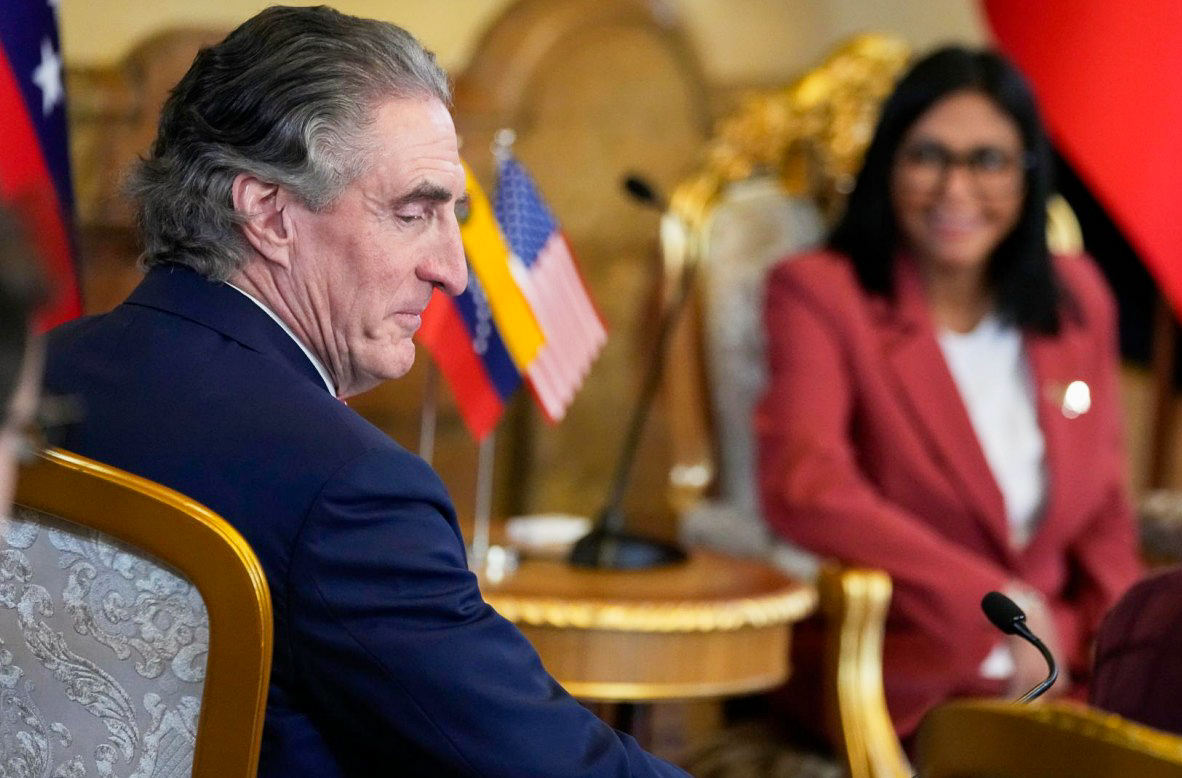
U.S. Secretary of the Interior Doug Burgum met Venezuelan leader Delcy Rodríguez in Caracas, Venezuela, on March 4 to discuss investments to enable better exploitation of the country’s natural resources.
Burgum praised Rodríguez—who has been the country’s acting leader since Nicolás Maduro was captured and ousted on Jan. 3—for her efforts “to cut the red tape and allow capital investment to flow.”
“When we are working together, it can only mean two things, which is prosperity for the people of Venezuela and for the citizens of the United States, and it also brings peace and stability for the world,” Burgum told reporters.
Burgum leads U.S. President Donald Trump’s National Energy Dominance Council, which includes more than 20 mining and mineral companies based in the United States, many of which had previously worked in Venezuela.
He said the companies could potentially bring “billions of dollars in investment and thousands of dollars in high-paying jobs.”
Rodríguez announced plans to introduce a bill to overhaul Venezuela’s mining laws to encourage foreign investment.
She said it would be “a win for the social well-being” of the Venezuelan people.
“May the Venezuelan people also see the good aspects of having good relations with the world and with the United States of America,” Rodríguez told reporters.
Rodríguez was a Maduro loyalist. Since he was captured by U.S. special forces and taken to New York City for indictment on narco-trafficking charges, she has made a swift U-turn and is now encouraging cooperation with Washington.
Trump said in a social media post that she is doing a “great job” and “working with U.S. Representatives very well.”
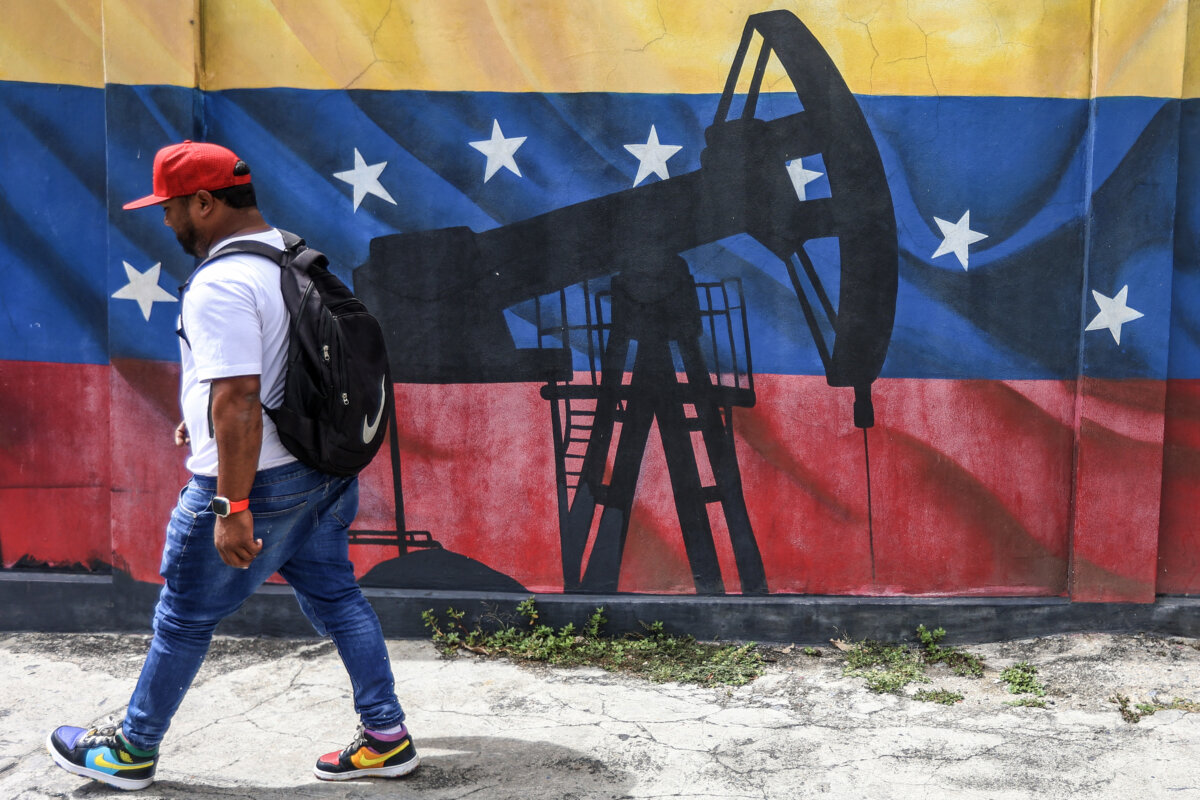
“The Oil is beginning to flow, and the professionalism and dedication between both Countries is a very nice thing to see!” Trump wrote in a March 4 post on Truth Social.
Last month, U.S. Energy Secretary Chris Wright visited Venezuela to discuss the potential of the country’s oil industry, which had been badly mismanaged under Maduro.
Venezuela has the largest proven oil reserves in the world. It is also rich in deposits of gold, diamonds, bauxite, copper, bauxite, and coltan.
Niobium and tantalum—which are crucial for the production of smartphones and electric vehicle batteries—are processed from coltan. Bauxite is a key ingredient in the production of aluminum, which the United States lists as a critical mineral.
Pushing Out China
Burgum is on a two-day visit to Venezuela. The trip comes as the Trump administration seeks to gain access to critical minerals in the Western Hemisphere.
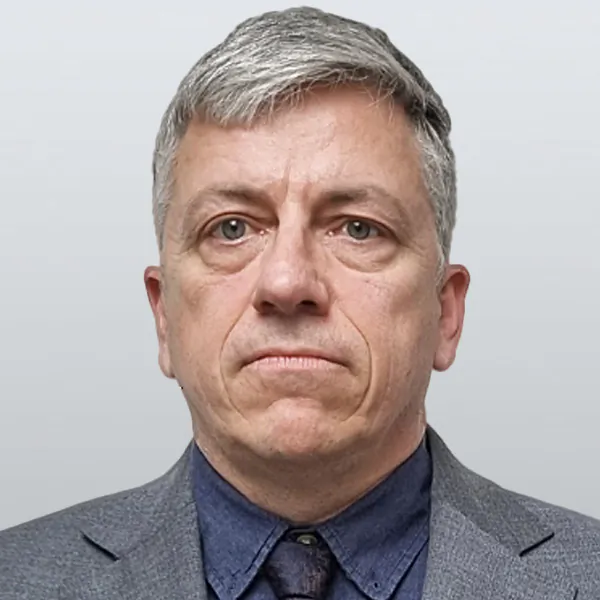
Just hours before his capture, Maduro met with Qiu Xiaoqi, the Chinese regime’s special representative for Latin American affairs, on Jan. 2 to reaffirm the close relationship between Caracas and Beijing.
In 2023, the two nations announced an “all-weather strategic partnership,” a term Beijing uses to describe its most reliable alliances.
Antonio Graceffo, a China economic analyst, told The Epoch Times in January, “China’s lack of any substantive reaction should send a message to all of China’s allies that China is an unreliable partner and that its so-called all-weather strategic partnership with Venezuela, its iron brotherhood with Pakistan, and its no-limits partnership with Russia all have clear limits.”
In an interview on Venezuelan state television on Jan. 1, Maduro claimed that the United States was trying to force regime change in the country to gain access to its vast oil reserves.
“If they want oil, Venezuela is ready for U.S. investment, like with Chevron, whenever they want it, wherever they want it, and however they want it,” Maduro said.
Chevron Corp. has operated in Venezuela for more than 100 years.
The Associated Press contributed to this report.
 Friends Read Free
Copy
Facebook
Tweet
Friends Read Free
Copy
Facebook
Tweet