
Canada’s proposed Alto high-speed rail line promises faster travel, economic growth, and lower emissions, but it’s moving forward against a global track record showing such projects often run years behind schedule and billions of dollars over budget.
The Toronto-Quebec City high-speed corridor was formally announced in February of last year by then-Prime Minister Justin Trudeau. The plan entered the pre-construction phase last month, and Prime Minister Mark Carney now champions it as a nation-building project. It is expected to cost between $60 billion and $90 billion and take at least a decade to build.
Detractors say those estimates are almost certainly optimistic.
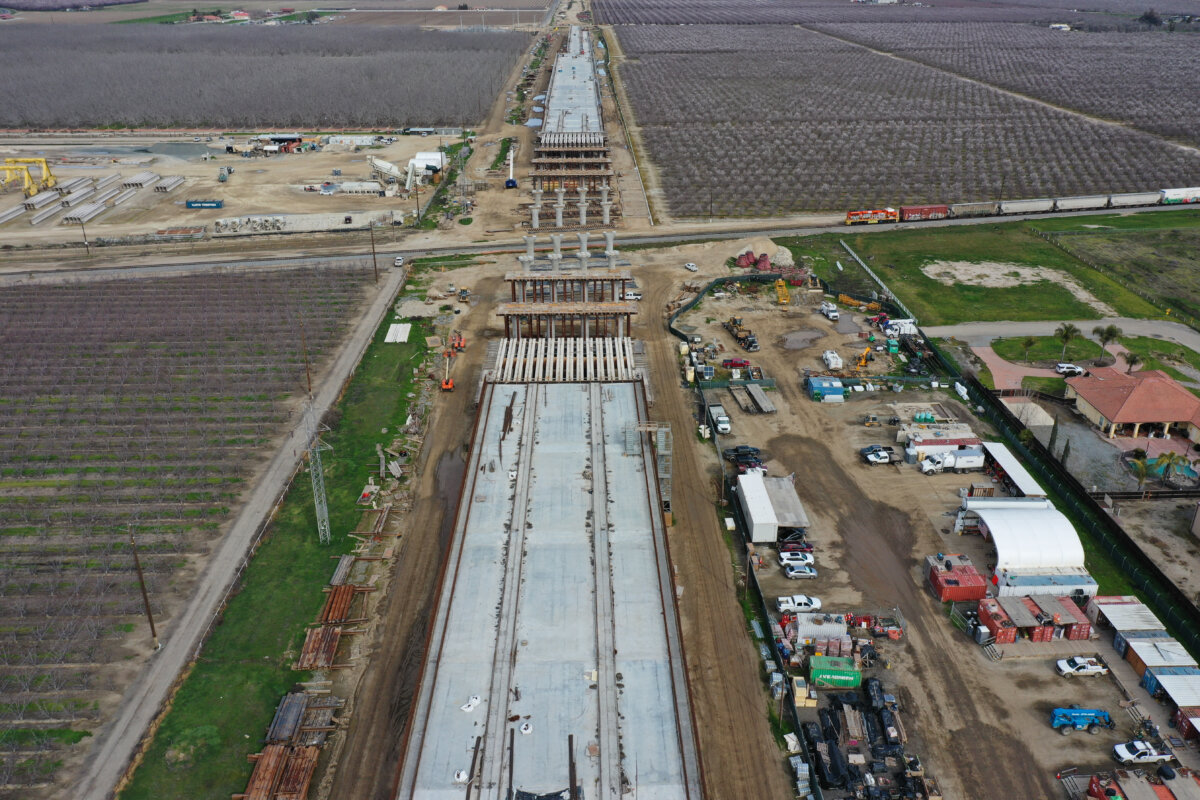
High-speed rail critics often point to California as a cautionary example. Voters there approved a line from Los Angeles to San Francisco at an estimated cost of US$33 billion in 2008. By last July, roughly US$15 billion had been spent and no track had yet been laid despite a completion target of 2020, according to the U.S. Department of Transportation.
The California High-Speed Rail Authority now estimates the first phase will cost between US$106 billion and US$128 billion, in part due to the complexity of building through mountainous terrain.
Similar challenges have affected major rail projects in Europe and Asia.
After early success in building high-speed rail along its densest population corridor, Japan started building multiple lines in areas with lower population densities—and accumulated mounting losses. Japan National Railways was privatized in 1987 with 37.1 trillion yen in long-term debt, or about US$170 billion at the time.
A study from Oxford University’s Saïd Business School in the early 2000s concluded that nine out of 10 large rail projects around the world had been hampered by considerable cost overruns and delays. More recent studies have largely supported the findings.
Costs Balloon Early
Economists say those overruns are often baked in early, as political momentum builds before costs are fully understood, raising questions about whether Canada’s high-speed rail project can avoid the same pitfalls.
Swedish transport economist Jonas Eliasson found in a 2025 study that most cost overruns stem from the design and planning stages as proposals become more complex and politically entrenched.
“Projects are rarely cancelled once they have entered the national investment plan,” Eliasson noted of Swedish major transport initiatives. “The reason that final costs tend to exceed early cost estimates is that project decisions are effectively locked in before projects’ costs and benefits have been thoroughly assessed.”
Looking over large transport projects in Sweden between 2004 and 2022, Eliasson found that costs rose 42 percent on average between the first planning stages and actually breaking ground, but usually only 4 percent after final construction approval.
For some analysts, those recurring cost overruns beg the question of whether high-speed rail projects make economic sense at all.
Randal O’Toole, a policy analyst at the Oregon-based Thoreau Institute, said high-speed rail is usually inferior to available motor vehicle, bus, or air travel.
“High-speed rail is not being compared against the right alternatives,” O’Toole said in an interview with The Epoch Times. “We need to compare it against transportation that is faster, cheaper and doesn’t require a huge amount of new infrastructure.”O’Toole said that cars, planes, and buses all rely on infrastructure that already exists and can be scaled up more affordably.
“Its environmental benefits are questionable at best, especially since both cars and airliners are becoming more fuel-efficient and less polluting every year,” he added.
O’Toole cited the project as an example of “optimism bias,” with early projections on cost, timelines, and ridership proving overly optimistic.
Success in Japan
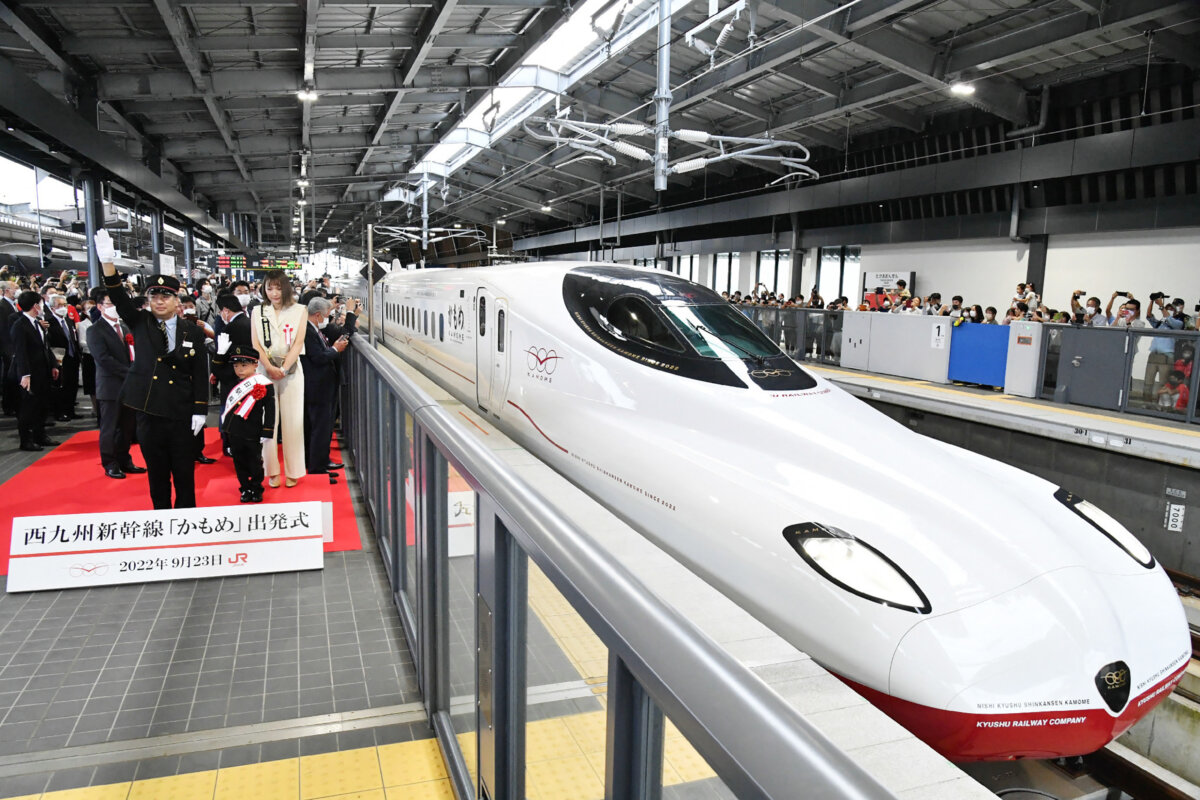
Successful systems in Japan and parts of Europe, though, show high-speed rail can improve connectivity, reduce travel times, and help anchor long-term economic growth along dense urban corridors.
Supporters also argue such systems can shift travellers away from short-haul flights and highways, easing congestion and reducing emissions over time.
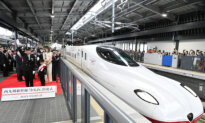
Japan’s Tokaido Shinkansen line is among the most famous successes.
The line runs along one of the world’s densest urban corridors, comprising roughly 50 million people, between Tokyo and Osaka. This includes tens of millions living close to the line itself.
Similarly, France’s TGV network and some Scandinavian rail projects have shown promising results for high-speed rail projects where population density, geography and efficient planning converge.
France’s TGV HSR lines connect large cities such as Paris and Lyon, and the line is now the busiest in Europe.
O’Toole said part of the success of certain high-speed rail in Europe is due to the much higher costs for transport in general.
“In Europe, transit systems cover more than 50 percent of their costs. And in Asia, they cover more than 100 percent of their costs,” he said. “Conditions are different there.”
And unlike the high population densities in Japan and Europe, Alto’s proposed corridor links a dispersed population of 13 to 15 million.
Although Alto has not yet publicly released a final route alignment, engineering design, or detailed land acquisition plan, the Toronto-Quebec City project dates back almost a decade.
It started as the VIA Rail High Frequency Rail proposal in 2016, before transforming into a Crown corporation in 2022 and being rebranded as the Alto HSR proposal in February of last year.
On its website, Alto says the project will “transform how Canadians move between cities, offering a modern, eco-friendly solution that redefines intercity transportation,” framing the project less as a conventional rail upgrade than as long-term national infrastructure boost meant to shift passengers away from vehicle and plane travel over time.

However, Canada faces a unique set of hurdles, according to O’Toole.
“You don’t have the density, you don’t have the population. You don’t need it,” he said, adding, the currently projected cost of $60 billion to $90 billion is unrealistic.
“Nobody should even be seriously considering it at that price, much less at what the final price is actually going to be.”
Complexity
At the local level, Canadian rail projects have encountered significant trouble as well.
Ottawa’s Confederation Line Light Rail Transit, for example, has suffered repeated delays, service disruptions, and cost overruns due to what a 2022 public inquiry described as “unproven technology” as well as “complex contracts and governance failures,” in addition to rushed testing, poor maintenance and repeated mechanical faults.
Adding further complexity, the proposed high-speed route would require coordinating multiple federal, provincial, and municipal jurisdictions, each with its own regulatory framework, land-use rules, and political priorities.
“There are going to be people who aren’t going to want to sell, and there’s going to be court cases,” O’Toole noted.
Already, several municipalities and townships have passed resolutions opposing the proposed routes.
High-speed rail projects also require very high passenger volumes to justify their costs, something analysts say may be difficult to achieve in Canada’s more dispersed corridor.
Alto and the California High-Speed Rail Authority did not respond to a request for comment by time of publication.
 Friends Read Free
Copy
Facebook
Tweet
Friends Read Free
Copy
Facebook
Tweet