
Canada, the United States, and 12 European allies have condemned Iran’s attempts to “kill, kidnap, and harass” people in North America and Europe.
The 14 nations released a July 31 joint statement condemning the “growing number of state threats” from Iranian intelligence services.
“We are united in our opposition to the attempts of Iranian intelligence services to kill, kidnap, and harass people in Europe and North America in clear violation of our sovereignty,” the statement says.
“These services are increasingly collaborating with international criminal organizations to target journalists, dissidents, Jewish citizens, and current and former officials in Europe and North America. This is unacceptable.”
The nations said these types of attacks are “violations of our sovereignty,” no matter the target. The countries say they are committed to working collaboratively to prevent such actions from occurring and are calling on the Iranian authorities to “immediately put an end to such illegal activities.”
The 14 nations that made the joint statement include Canada, the United States, Albania, Austria, Belgium, Czechia, Denmark, Finland, France, Germany, the Netherlands, Spain, Sweden, and the United Kingdom.
The statement does not specify any specific incidents that have triggered the nations to issue the joint statement. The Epoch Times reached out to Global Affairs Canada and the U.S. Department of State for comment but did not immediately hear back.
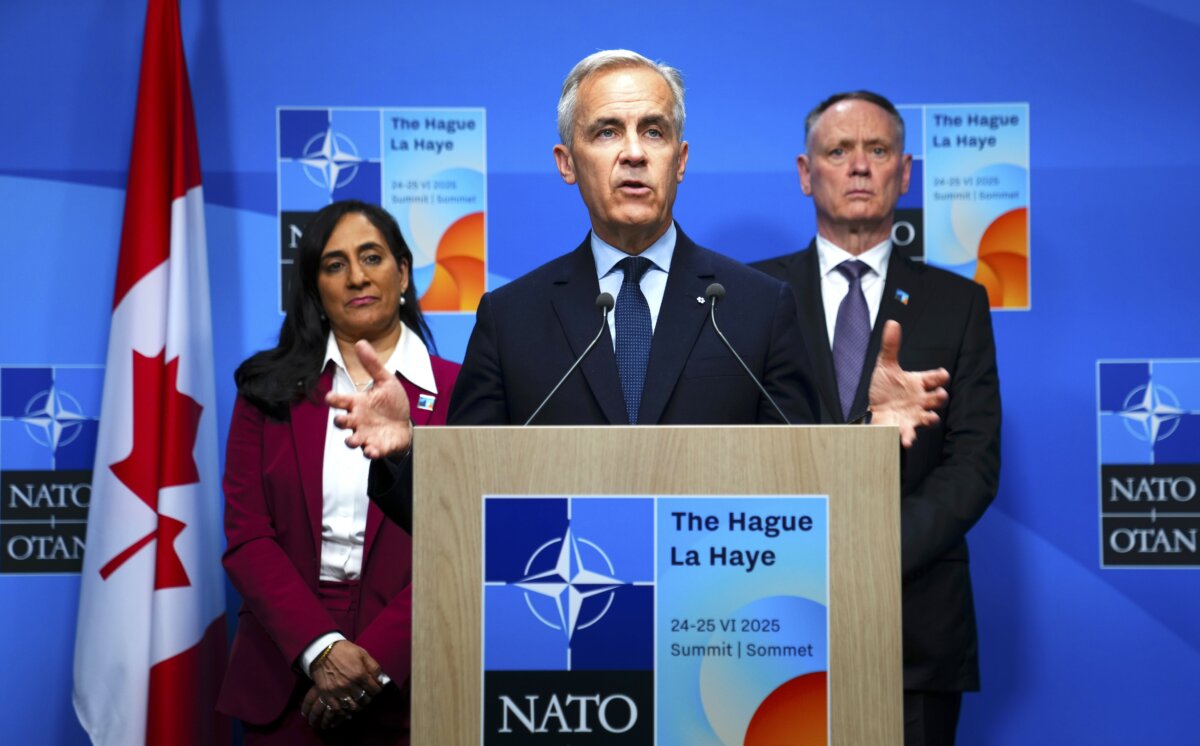
The statement comes one month after Canada and the other G7 foreign ministers issued a joint statement to call for a cease-fire between Israel and Iran following the U.S. strikes on Iran’s nuclear plants on June 22.
Operations Abroad
Canada has expressed concern with Iran denying its citizens their fundamental rights and freedoms, as well as threatening international peace and security.
The Canadian government has also condemned Iran for supporting terrorist groups such as Hamas, Palestinian Islamic Jihad, the Houthis, and Hezbollah.
Canada listed the Islamic Revolutionary Guard Corps, a branch of Iran’s Armed Forces that answers directly to the country’s leader, as a terrorist entity last year.
In 2022, the federal government banned Iranian regime leaders from entering Canada by bringing forward a measure to allow border agents to deny Iranian officials entry to the country. Additionally, it allowed Canadian authorities to investigate any Iranian officials who were already in Canada.
At the time, then-Public Safety Minister Marco Mendicino said the move was a “major step in holding the Iranian regime accountable.”
Last month, the Canadian Border Security Agency reported that three Iranian regime officials who were found to be ineligible to remain in Canada were issued deportation orders, one of whom was removed from the country.
The federal government also warned last month of Iranian cyber threats to Canada in association with the Israel-Iran conflict.
After the United States carried out the June 22 airstrikes on Iranian nuclear facilities, U.S. authorities warned of potential cyber retaliation against critical U.S. infrastructure. While Canada was not a party to the strikes against Iran, the federal government warned that Canada could be an “indirect or collateral victim” of Iranian cyber threat activity.
“In addition, Iran will likely continue to engage in cyber-enabled transnational repression against individuals in Canada that the Iranian regime considers a threat, especially those advocating for regime change in Iran,” the federal government said in a cyber threat bulletin.
The government added that political activists, journalists, and human rights advocates in Canada are likely victims to cyber espionage activity conducted by the Iranian regime.
The Canadian Press contributed to this report.
 Friends Read Free
Copy
Facebook
Tweet
Friends Read Free
Copy
Facebook
Tweet