
Ottawa and New Delhi have taken another step forward in rebuilding their damaged diplomatic ties by agreeing to a joint roadmap for cooperation.
The two countries announced the development as Canadian Foreign Affairs Minister Anita Anand is in India on an official visit from Oct. 12 to 14.
The two sides issued a joint statement on Oct. 13 that outlines the priority areas the two countries will focus on, including bilateral trade, climate action, and energy cooperation.
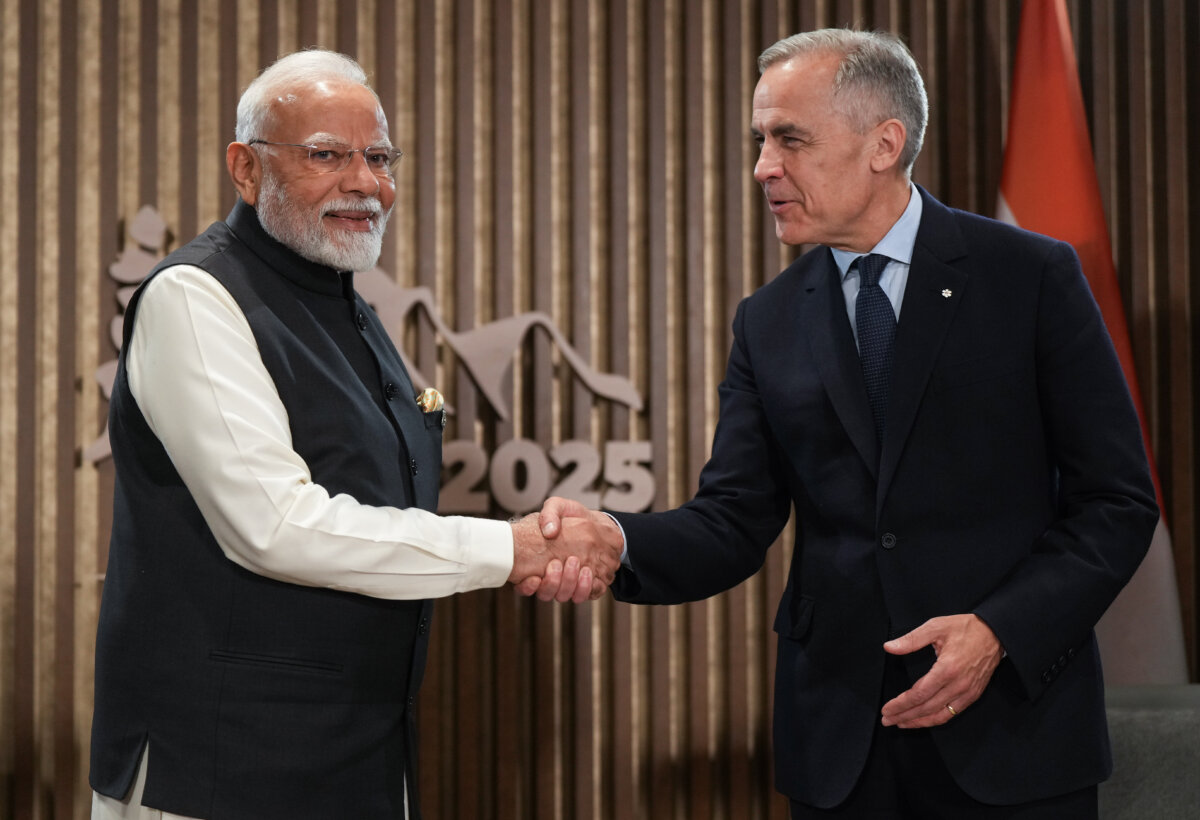
The “New Roadmap for Canada-India Relations” marks an acceleration of the rapprochement that began when Indian Prime Minister Narendra Modi visited Canada in June for the G7 Summit. Since then, the two countries have reappointed high commissioners and held high-level talks, including at the United Nations General Assembly in New York in September.
Canada and India note in their statement that they can benefit from a stronger relationship amid “ongoing global economic uncertainty and rising geopolitical tensions.” Both countries have been hit with U.S. tariffs under the Trump administration.
India has faced a broad 50 percent tariff rate since late August as Trump seeks to pry New Delhi away from Moscow. The United States has accused India of helping fund Russia’s war machine in Ukraine with its purchases of Russian oil and weapons.
Anand’s visit to India is part of a trip that will also take her to Singapore and China, as Ottawa seeks increased trade ties with Asia in efforts to seek diversification.
On trade between Canada and India, the two countries agreed to begin ministerial-level discussions starting “at an early date” and to resume the Canada-India CEO Forum to gather input from business leaders on increasing bilateral trade and investment. Free-trade talks between the two countries had been put on ice by Canada in the summer of 2023.
That was shortly before then-Prime Minister Justin Trudeau in September that year accused India of having a hand in the assassination of pro-Khalistan activist Hardeep Singh Nijjar in B.C. in June 2023. New Delhi denied any involvement.
The second theme of the new roadmap involves increased bilateral cooperation on climate action and environmental protection, including the exchange of information and expertise on renewable energy, decarbonizing heavy industries, and reducing plastic pollution.
The roadmap also calls for increased cooperation in traditional energy and mining, including trade in liquified natural gas (LNG) and liquified petroleum gas (LPG). The two sides also agreed to increase cooperation in technological fields like artificial intelligence and digital infrastructure.
Anand met with Indian Prime Minister Modi on Oct. 13 in New Delhi, saying the meeting built on the “momentum” of Modi’s visit to Canada in June.
“Canada and India are elevating the relationship between our countries, while maintaining our law enforcement and security dialogue and expanding our economic relationship,” Anand said in a social media post after meeting with Modi.
Modi also commented on the meeting, saying the two discussed strengthening cooperation in “trade, technology, energy, agriculture and people-to-people exchanges for mutual growth and prosperity.”
The joint statement was issued by Anand and her counterpart Indian External Affairs Minister Subrahmanyam Jaishankar, who called the roadmap between the two countries “ambitious.”
The two ministers said the development follows guidance they received from their prime ministers about taking a “calibrated” approach to rebuild ties while respecting each other’s “concerns and sensitivities.”
Canada in the last two years has taken an aggressive stance against what it alleges are illegal activities undertaken by agents of India. In October last year, Ottawa expelled six Indian diplomats it said were “persons of interest” in the Nijjar assassination. India responded in kind.
The RCMP at the same time accused Indian government agents of being involved in serious criminal activity in Canada, including homicides and extortion. The federal police said India was leveraging criminal groups like the Bishnoi Gang in this activity. The India-based group was declared a terrorist organization by the Canadian government in late September this year.
Meanwhile, India has long accused Canada of providing a safe haven to Sikh separatists who seek to carve out the state of Khalistan out of India’s Punjab.
The Canadian Security Intelligence Service (CSIS) says in its 2024 annual report says some Canadians are involved in legitimate and peaceful advocacy for Khalistan, while “a small group of individuals are considered Khalistani extremists because they continue to use Canada as a base for the promotion, fundraising, or planning of violence primarily in India.” CSIS says India’s concern about Khalistani militants in Canada is what fuels its foreign interference activities.
The national security advisers to the prime ministers of Canada and India met last month. In a Sept. 20 statement following the meeting, the Canadian side said the two sides had agreed to “non-interference.” The Indian side said the two agreed to “advancing the bilateral relationship including in areas such as counter terrorism, combating transnational organised crime and intelligence exchanges.”
 Friends Read Free
Copy
Facebook
Tweet
Friends Read Free
Copy
Facebook
Tweet