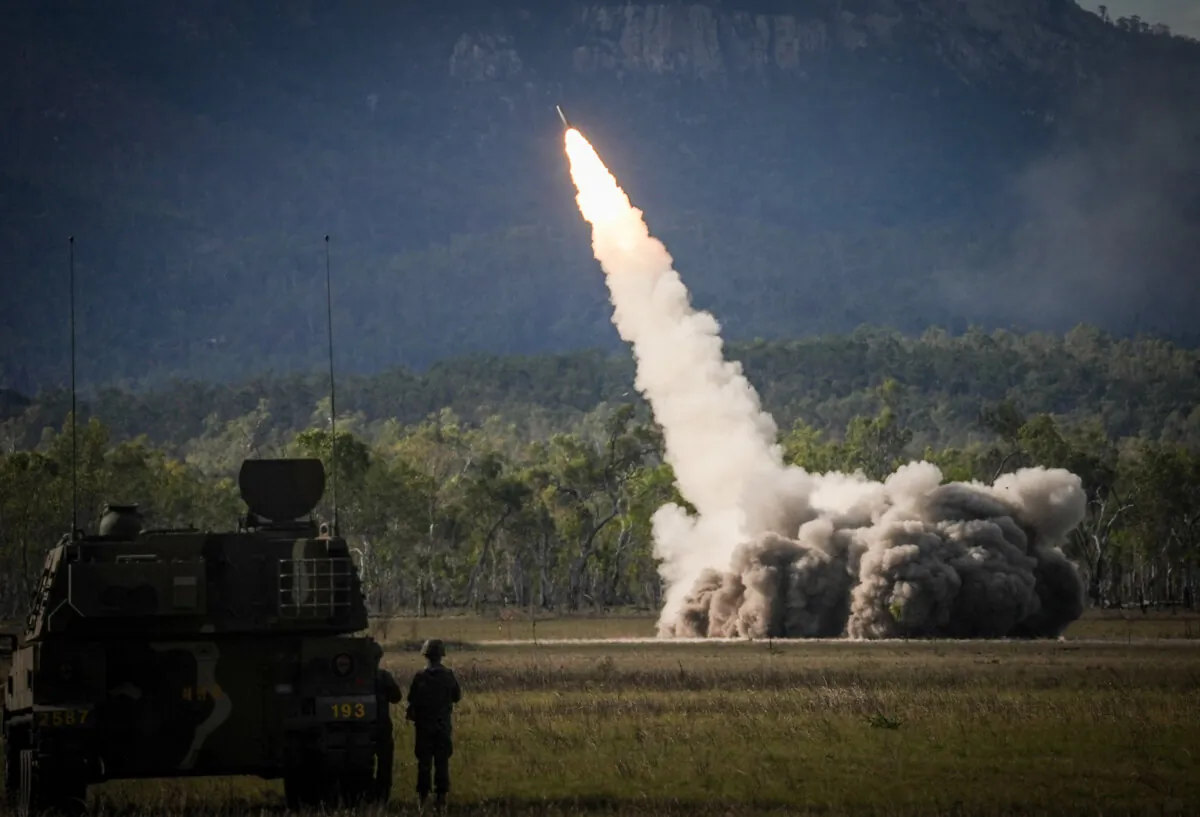

Canada has ordered 26 HIMARS launchers from the United States in a $2.6 billion deal, with the Department of National Defence calling it the “only solution” capable of meeting the military’s needs.
Ottawa and Washington have finalized an agreement under the U.S. Foreign Military Sales program to acquire the launchers, the department said in a June 2 news release. It includes an initial stockpile of munitions, spare parts, training, and support services, with deliveries to begin in 2029.
“Following a rigorous evaluation process, HIMARS was identified as the only solution that best met Canada’s operational and technical requirements,” the department said.
Canada currently does not manufacture HIMARS or associated long-range missile capabilities, which it needs to strengthen its ability to defend its territory and support allied operations, the release says
HIMARS, which stands for High Mobility Artillery Rocket System, will be used with long-range munitions capable of striking targets from a distance of 300 kilometres and would integrate with future land-based anti-ship missiles to defend Canada’s coastline, including in the Arctic.
Lockheed Martin Missiles and Fire Control, which manufactures the HIMARS, would also invest in Canadian industry to support Canada’s defence sector, and facilitate the integration of Canadian companies into global defence supply chains, the release said.
Prime Minister Mark Carney in February announced Canada’s first-ever defence industrial strategy, saying Canada would meet its defence needs through domestic purchases and reduce its dependence on procurements from the United States.
Ottawa said the strategy would generate 125,000 jobs over a 10-year period, “put hundreds of billions of dollars” into strategic sectors of the Canadian economy, and support small and medium-sized Canadian businesses, facilitated through the allocation of $6.6 billion in funding over a five-year period.
In its June 2 announcement, the defence department indicated that its agreement with Lockheed Martin would support that strategy.
“Lockheed Martin plans to integrate Canadian companies into global supply chains, invest in Canadian research and development, and support the development of small and medium-sized businesses,” the release says.
The federal government has also promised to increase defence spending to meet its NATO commitments of 5 percent of GDP by 2035.
 Friends Read Free
Copy
Facebook
Tweet
Friends Read Free
Copy
Facebook
Tweet