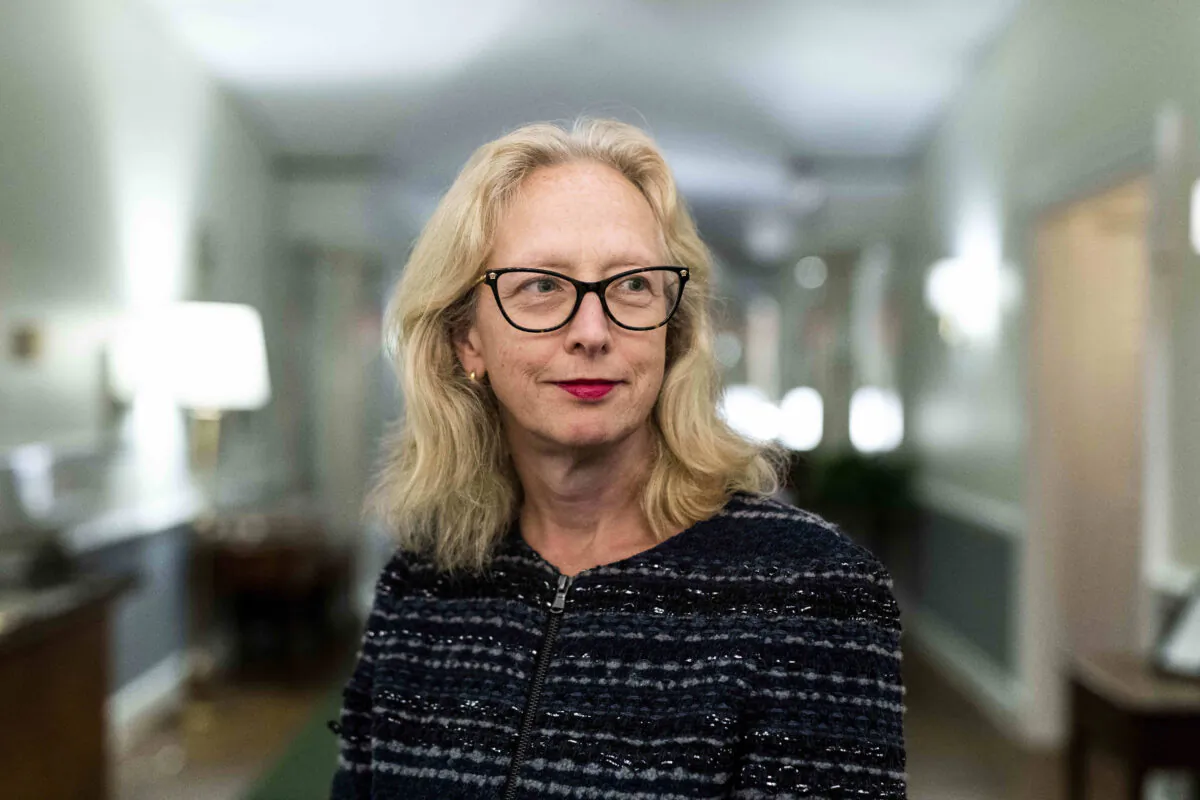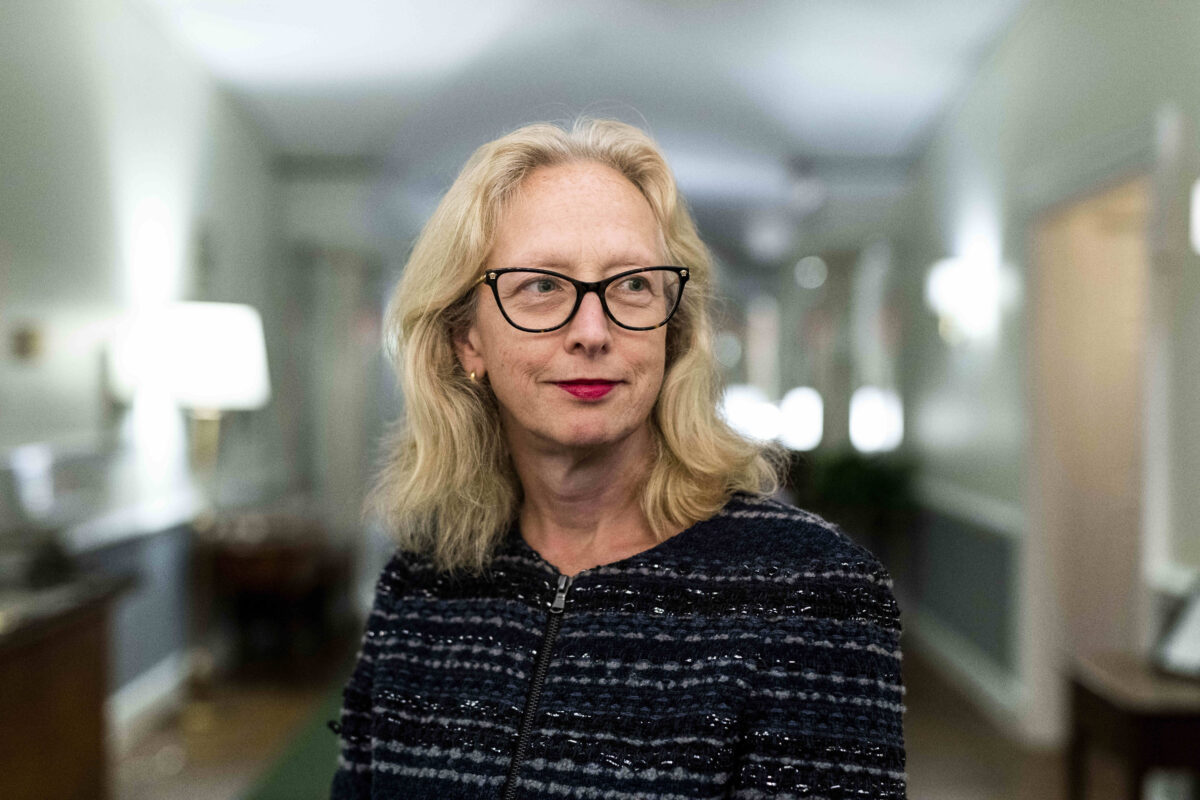

Canada is working to rapidly advance key issues with China and strengthen bilateral ties, Canadian Ambassador to China Jennifer May told a Chinese newspaper.
Speaking at a Nov. 26 reception in Beijing marking the 55th anniversary of the two countries’ diplomatic ties, May added that she looks forward to welcoming Prime Minister Mark Carney to Beijing where he will meet with Chinese leader Xi Jinping, according to a Nov. 27 report by the Chinese state-owned publication China Daily. Carney and Xi had agreed that the Canadian prime minister would visit Beijing at a future date when the two met in South Korea in late October on the sidelines of the Asia-Pacific Economic Cooperation forum.
The Nov. 26 reception in Beijing was co-hosted by the Chinese People’s Association for Friendship With Foreign Countries, a key organization of China’s United Front Work Department, and the Canadian embassy in China. According to the Canadian Security Intelligence Service, the United Front Work Department is a key organization used by the Chinese Communist Party for foreign interference.
After his meeting with Xi on Oct. 31, Carney said Ottawa and China had reached “a turning point” in their relationship, adding that this opens the door to more business opportunities and “creates a path to address current issues.”
It was the first meeting between Canadian and Chinese leaders since former Prime Minister Justin Trudeau visited Beijing in December 2017.
Relations between the two countries broke down in late 2018 when the RCMP arrested Huawei executive Meng Wanzhou in Vancouver on a U.S. extradition request based on fraud charges. In apparent retaliation, China detained Canadian citizens Michael Kovrig and Michael Spavor for more than 1,000 days.
Carney’s tone on China in recent months appears to have shifted from what it was during the election campaign earlier this year, when he said China is the “biggest security threat” facing Canada, a view echoed by Canadian security agencies in recent years. A public inquiry into foreign interference said that China is the most active foreign power meddling in Canada’s affairs.
During Carney’s meeting with Xi, the two acknowledged “the long history of cooperation between Canada and China, rooted in 55 years of diplomatic relations and trade,” an Oct. 31 readout from the Prime Minister’s Office (PMO) said.
Carney and Xi directed their officials to “move quickly to resolve outstanding trade issues and irritants,” and the two discussed solutions to issues including agriculture and agri-food products, like canola, as well as seafood and electric vehicles, the PMO said. They also discussed deepening cooperation across areas including clean and conventional energy, manufacturing, climate, and international finance, the PMO said. China has imposed tariffs on Canadian agricultural products, citing Ottawa’s levies on Chinese electric vehicles and steel and aluminum, which were added in 2024 in lockstep with the United States.
Carney said after his meeting with Xi that he was “very happy” to have received Xi’s invitation to visit China.
Yang Wanming, president of the Chinese People’s Association for Friendship With Foreign Countries, said at the Nov. 26 reception that Beijing highly appreciates “the proactive stance of the new Canadian government in promoting the improvement and development of bilateral relations through pragmatic and constructive means,” according to China Daily.
The report adds that May said that the world is going through “a period of profound global upheaval, an era shaped by shifting geopolitics and economic volatility,” adding that “within this uncertainty, there is also opportunity.”
May reportedly said this is why Carney has committed to double Canada’s non-U.S. exports over the next decade, calling Carney’s commitment an “ambitious goal” that requires “increased engagement” with countries like China.
The Epoch Times contacted Global Affairs Canada about May’s reported comments, but didn’t immediately hear back.
‘Contradictory’
Carney’s meeting with Xi followed Foreign Affairs Minister Anita Anand’s visit to China in mid-October where she met with her Chinese counterpart. After her meeting, she said that Ottawa is in a “strategic partnership” with Beijing.
This declaration was criticized by Conservatives, who said it appeared to contradict Ottawa previously identifying China as the country’s top security threat.
“These two things seem contradictory,” Conservative MP Michael Chong said in the House of Commons on Oct. 23. “Can the minister reconcile these two things, or is this another example of the prime minister saying one thing during the election and doing another after?”
Anand said the public safety and security of Canadians is “always top-of-mind” for her government, and that, at the same time, Canada “will continue to become the strongest economy in the G7” by diversifying its supply chains.
Her comments marked a shift from Ottawa’s 2022 Indo-Pacific strategy, which referred to China as an “increasingly disruptive power” whose interests and values don’t align with those of Canada.
China scholar Charles Burton told MPs while testifying before a House of Commons committee on Nov. 27 that he thought it was “extraordinary” to have a partnership with a country like China since the House has determined that the regime is “engaged in genocide and facilitates third world dictatorships by providing them with Chinese surveillance technologies.”
Carney was asked at a Nov. 1 press conference whether he raised the issues of human rights and foreign interference during his meeting with Xi. He said he discussed foreign interference and said the Chinese side doesn’t appear to “recognize the level of concerns we have about these issues,” but added that Canada has “a structure to manage them.”
Burton said Canada is “essentially saying we’re going to do Canada-China relations in the way that China wants to do it.”
“I don’t feel that Canada should partner up with a regime whose values are so discordant with what makes our country great,” he said.
Noé Chartier, Omid Ghoreishi, and Paul Rowan Brian contributed to this report.
 Friends Read Free
Copy
Facebook
Tweet
Friends Read Free
Copy
Facebook
Tweet