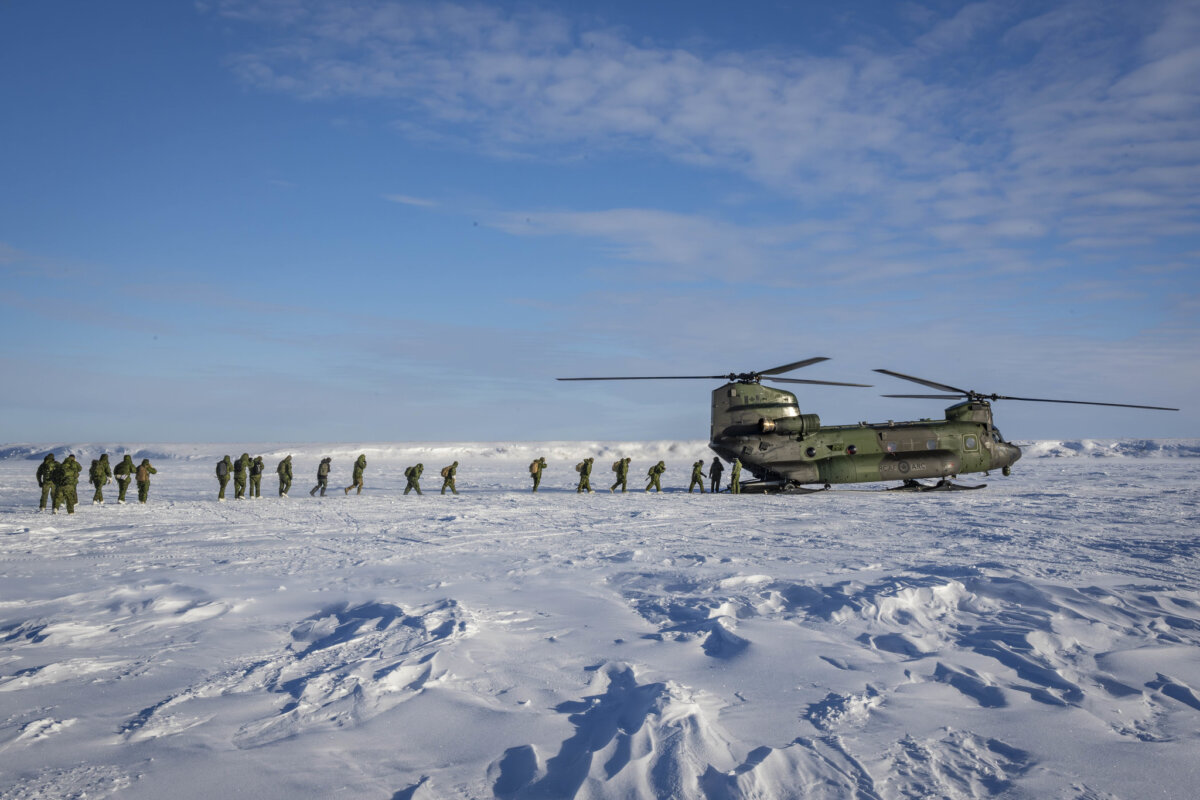

The Canadian Armed Forces (CAF) are taking part in several summer operations in a bid to reinforce sovereignty in the Arctic.
The activities span across the northern region and involve personnel and equipment from the navy, the army, the air force, and special operations. Some of the drills will be conducted jointly with the Canadian Coast Guard and the U.S. military.
Part of the military exercises under the NANOOK series are recurrent. DND describes NANOOK as the CAF’s “signature northern operation” involving different military elements, other government agencies, and foreign partners. It includes subordinate operations aiming to demonstrate a presence in the Arctic and a capability to respond to incidents.
The exercises are taking place this year in a changed political context, as Washington and Ottawa are seeking to redefine their security relationship.
“Ensuring that Canada’s North is well defended is a critical component of maintaining a secure North American homeland,” said Defence Minister David McGuinty in an Aug. 10 statement on the summer operations.
The concept of Canada helping to secure a “North American homeland” was adopted in late 2024, when the Liberal government released its Arctic foreign policy.
The document speaks of Canada working more closely with its closest ally, the United States, to secure the continent.
At the time the policy was released, U.S. President Donald Trump had recently accused Canada of being a source of illegal drugs and migrants, and threatened to impose tariffs related to these border-security concerns. Trump has also criticized Canada for not spending enough on defence, and said Chinese and Russian ships were “sailing all over” the country.
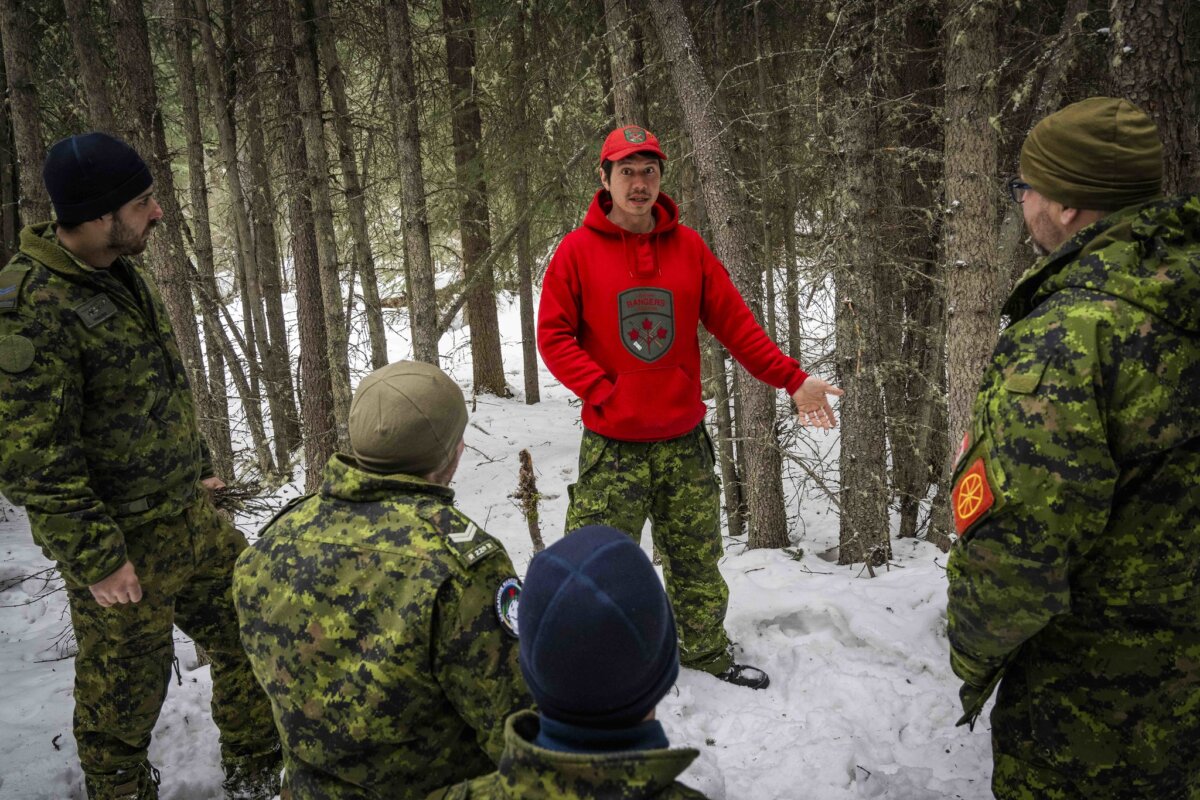
Canada does not maintain a year-round robust presence in the Arctic, with roughly 300 regular armed forces members based in the vast territories, according to figures from the Department of National Defence (DND). Those forces are supplemented by approximately 5,000 lightly-equipped Rangers, a sub-component of the Army Reserve mostly composed of local indigenous people.
Operations
DND has cast the summer Arctic exercises as part of the military’s “core missions” to protect against potential threats.
One deployment will see three Royal Canadian Navy ships travel near Alaska, in part to support the U.S. military’s Northern Edge 25 exercise. An Aurora surveillance plane and a Polaris tanker aircraft from the Royal Canadian Air Force will also be involved.
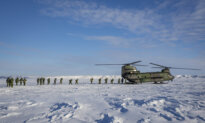
A separate operation will take place on Baffin Island in the Northern Arctic and involve the army and the Rangers. Those elements will be conducting patrols for reconnaissance and will be supported by air force Twin Otter planes and Griffon and Chinook helicopters.
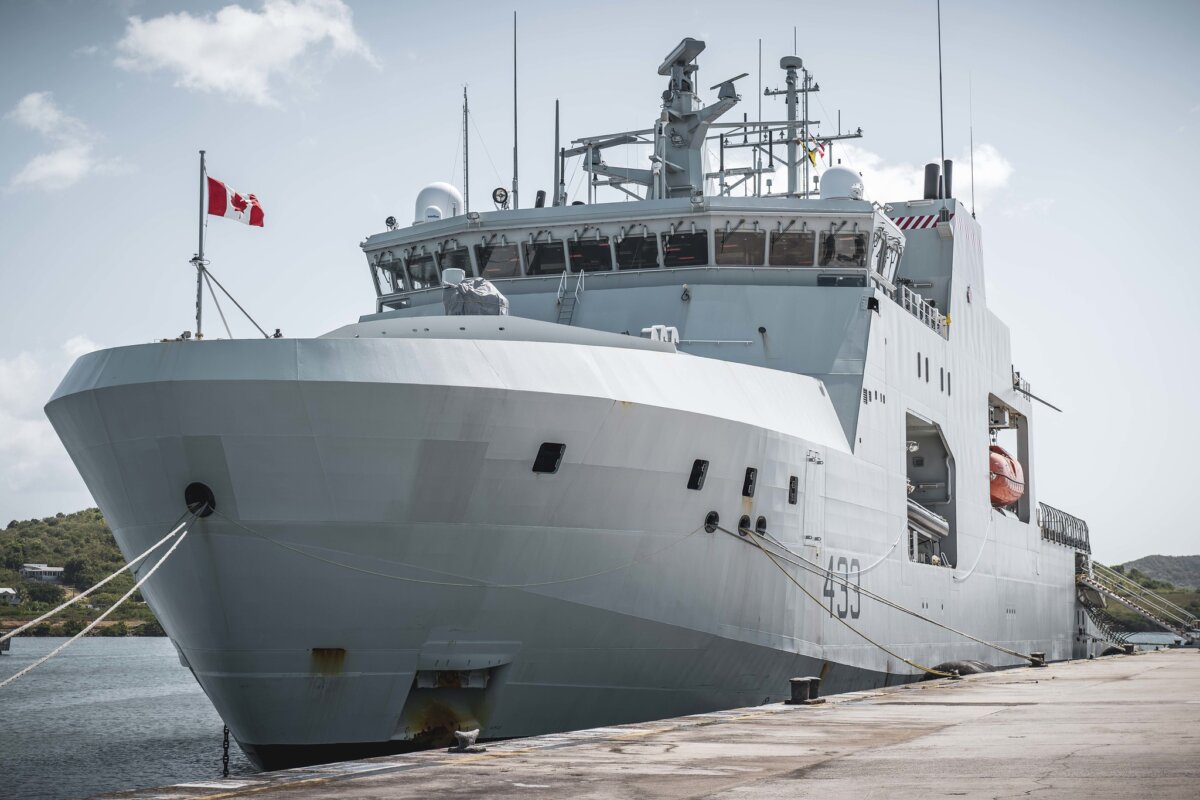
An Arctic patrol vessel will also sail from Halifax through the Northern Passage as part of an operation in the Eastern Arctic. HMCS William Hall will make stops in several communities along the way, DND said.
The involvement of special operations forces command (CANSOFCOM) in these Arctic exercises will include the use of two sophisticated surveillance aircrafts known as the CE-145C Vigilance.
The aircraft represents a relatively new capacity of CANSOFCOM, which had met controversy in February 2022 after it had been tracked doing aerial patterns over the Freedom Convoy protest in Ottawa. DND said the U.S.-registered aircraft was doing training at the time, and not collecting information on protesters.
Canada’s purchase of the CE-145C Vigilance has been touted by the Canadian Embassy in Washington as an example of Canada partnering with the United States on key defence purchases. The plane is described in a March fact sheet as an “airborne intelligence, surveillance, and reconnaissance aircraft, equipped with state-of-the art sensors and secure communications equipment.”
The Liberal government has alternated between taking a hard stance against the Trump administration, especially during the spring election, and highlighting the potential for greater cooperation on defence and security issues. Trump and Carney said Canada is in discussion to join the new U.S. continental defence system dubbed the “Golden Dome.”
Under pressure from President Trump, some NATO allies that spend less on defence, including Canada, have announced in recent months they would reach the NATO spending target of 2 percent of GDP. NATO raised the requirement to reach 5 percent by 2035 at its summit in late June.
As part of this increased spending, Carney announced last week a pay raise of 13 percent for most soldiers.
“Our folks in the Canadian Armed Forces have not had a serious pay increase in decades,” McGuinty said on Aug. 11 while on a tour of Canadian Forces Base Borden. “This is the largest single generational investment that we’ve seen in compensation, and we’re very proud of it.”
 Friends Read Free
Copy
Facebook
Tweet
Friends Read Free
Copy
Facebook
Tweet