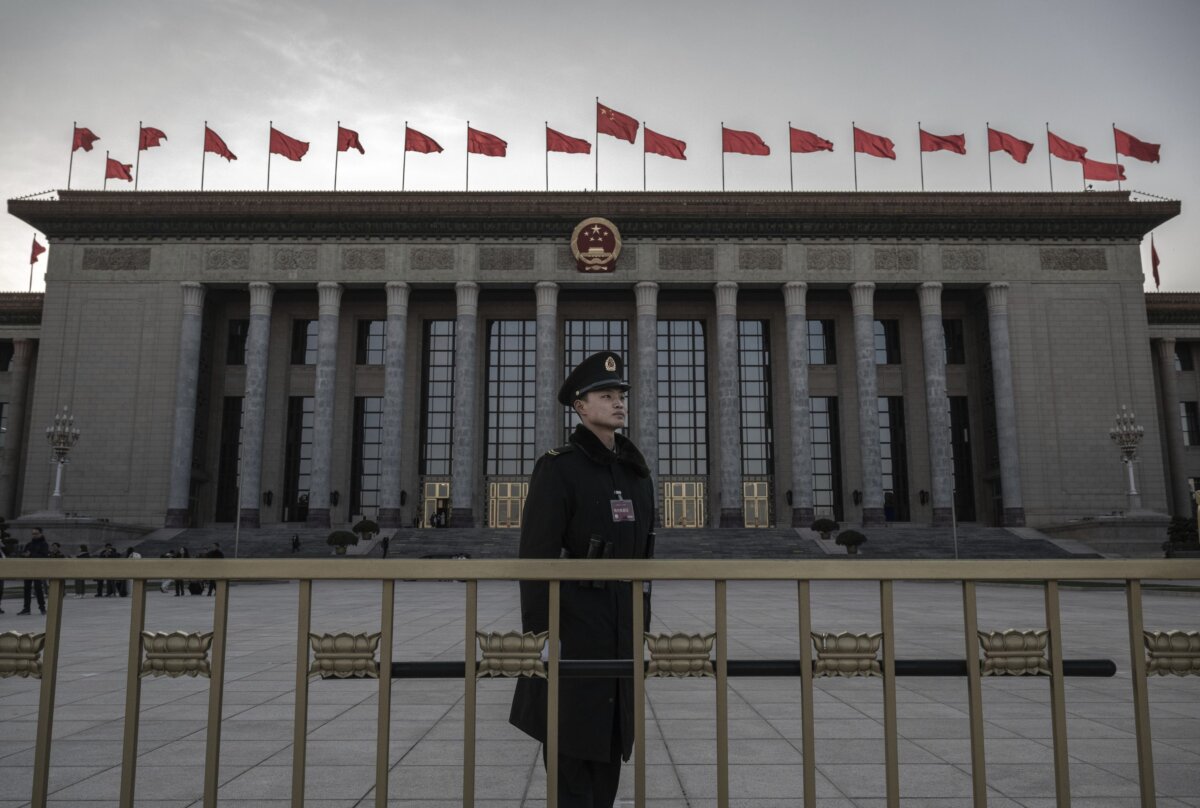

A Montreal-based security think tank is warning that Beijing’s foreign interference operations are deeply embedded across all G7 democracies through tactics that are adaptive, long-term, and difficult to detect.
The Montreal Institute for Global Security (MIGS) released a new report on May 27, titled, “Guarding the G7: Countering Beijing’s Interference Operations,” and presented its findings at a press conference on Parliament Hill the same day.
MIGS researchers say the Chinese Communist Party’s (CCP) United Front Work Department operates across Canada, the United States, the United Kingdom, France, Germany, Italy, and Japan, and are urging these countries to take stronger action to “protect our democracies from Chinese foreign interference and influence.”
“We have seen across all G7 democracies systemic work by the Chinese government and the United Fronts Department to infiltrate, to influence public opinion, to engage in transnational repression,” MIGS executive director and co-author of the report Kyle Matthews told reporters.
China’s United Front Work Department is a CCP agency involved in influence-building abroad, aimed at advancing the party’s political agenda and shaping perceptions internationally. U.S. think tank The Jamestown Foundation said in a Feb. 11 report that the CCP has established a global network of more than 2,000 organizations linked to its United Front system, including at least 575 such groups in Canada.
The new MIGS report says that foreign interference linked to the CCP’s United Front system across G7 countries is “not episodic or isolated,” but rather, “systemic, adaptive, and embedded within the normal functioning of open societies.”
“Rather than relying primarily on overt coercion, these activities operate along a spectrum that blends legitimate engagement with covert, deceptive, or coercive practices,” the report says.
The report identifies several recurring CCP interference tactics across all G7 countries, including political influence and elite co-optation, targeting of diaspora communities, transnational repression, media influence, and the use of economic leverage through business, academic, and civil society networks.
Marie Lamensch, MIGS global affairs director and co-author of the report, said these tactics are adaptive, take place over a long period of time, and can be seen in multiple sectors.
Local Governments ‘Particularly Vulnerable’
The report says the CCP shapes decision-making overseas by cultivating relationships with political, economic, and academic elites, focusing on individuals who influence policy and public discourse rather than targeting institutions directly.
It notes that provincial and municipal governments are “particularly vulnerable” to this type of interference, which it notes China frames as “mutually beneficial cooperation, through trade opportunities, cultural exchanges, or investment, while creating incentives for political alignment or restraint on sensitive issues.”
“It’s very local, it’s very people-to-people relations, and targeting egos, promising trips, promising development, local development,” Lamensch said, noting instances of small cities in various countries suddenly receiving funding and having “special relationships” with large cities in China.
Last week, human rights advocacy groups expressed concern about the implications of a potential partnership, known as a sister city agreement, between the city of Prince George, B.C., and Jiangmen, China. While Jiangmen has a population of more than 4 million, Prince George has roughly 77,000 residents.
Cheuk Kwan, co-chair of the Toronto Association for Democracy in China, told The Epoch Times that while sister city agreements are framed as cultural exchanges, China uses the agreements with foreign municipalities as “an inroad into foreign influence” in exchange for offering municipalities financial benefits.
MIGS is calling for a “more coordinated approach” to the issue, including improved intelligence sharing between G7 countries and local and municipal authorities, with Matthews describing the current situation as “a weakness and a blind spot that must be corrected.”
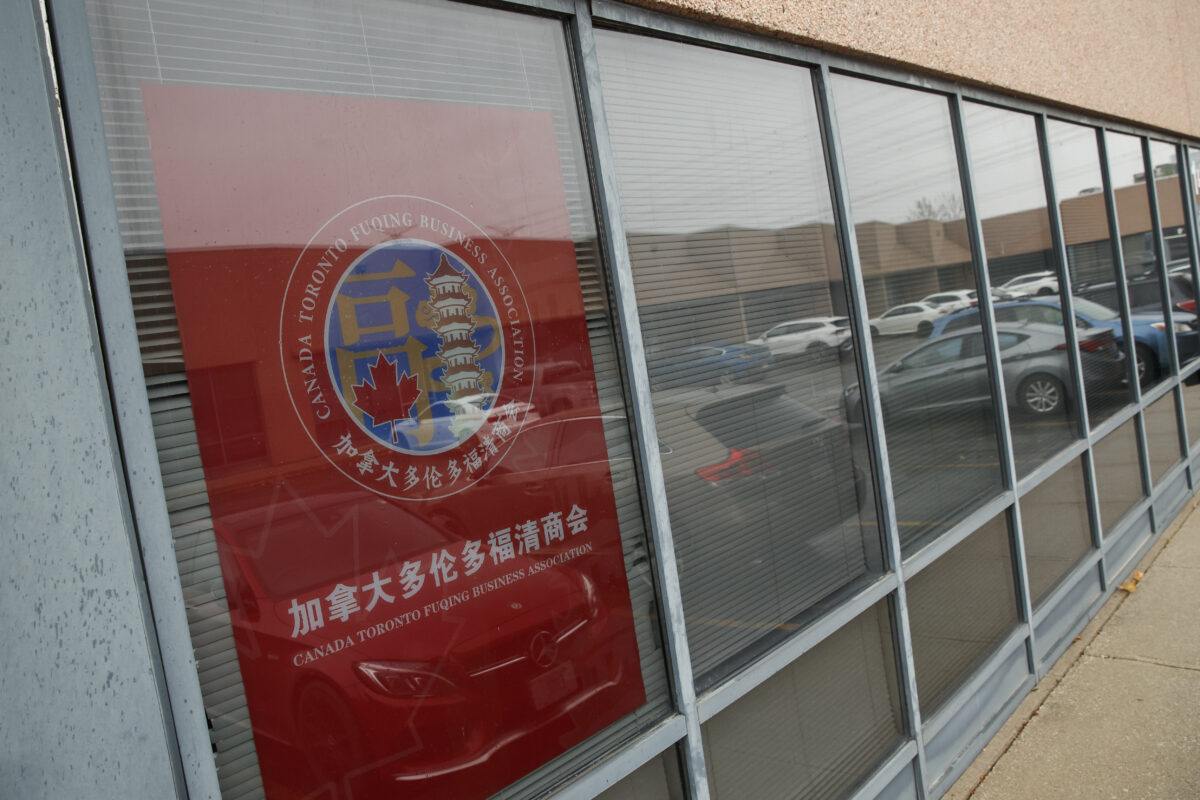
Lamensch noted that MIGS has also identified a wide range of Beijing-linked associations that serve as “important channels” of foreign influence, such as business groups, diaspora groups, student groups at universities, cultural and professional associations, and academic networks.
She also noted that overseas media are often used to shape or influence narratives about China. As an example, she pointed to links between Chinese and Italian media, noting that Italian news outlets are provided with free, ready-to-publish content from China that is “overwhelmingly positive” about the Chinese regime.
Chinese Foreign Minister’s Upcoming Visit
Former Liberal MP John McKay, who also attended the press conference, said he recommends the report to his former colleagues in Parliament who he said are “victims of political interference, directly or indirectly.”
He recalled that when he was a sitting MP, he was informed of an attempted hacking of his emails, as well as the presence of secret Chinese police stations operating just outside of his Toronto-area riding.
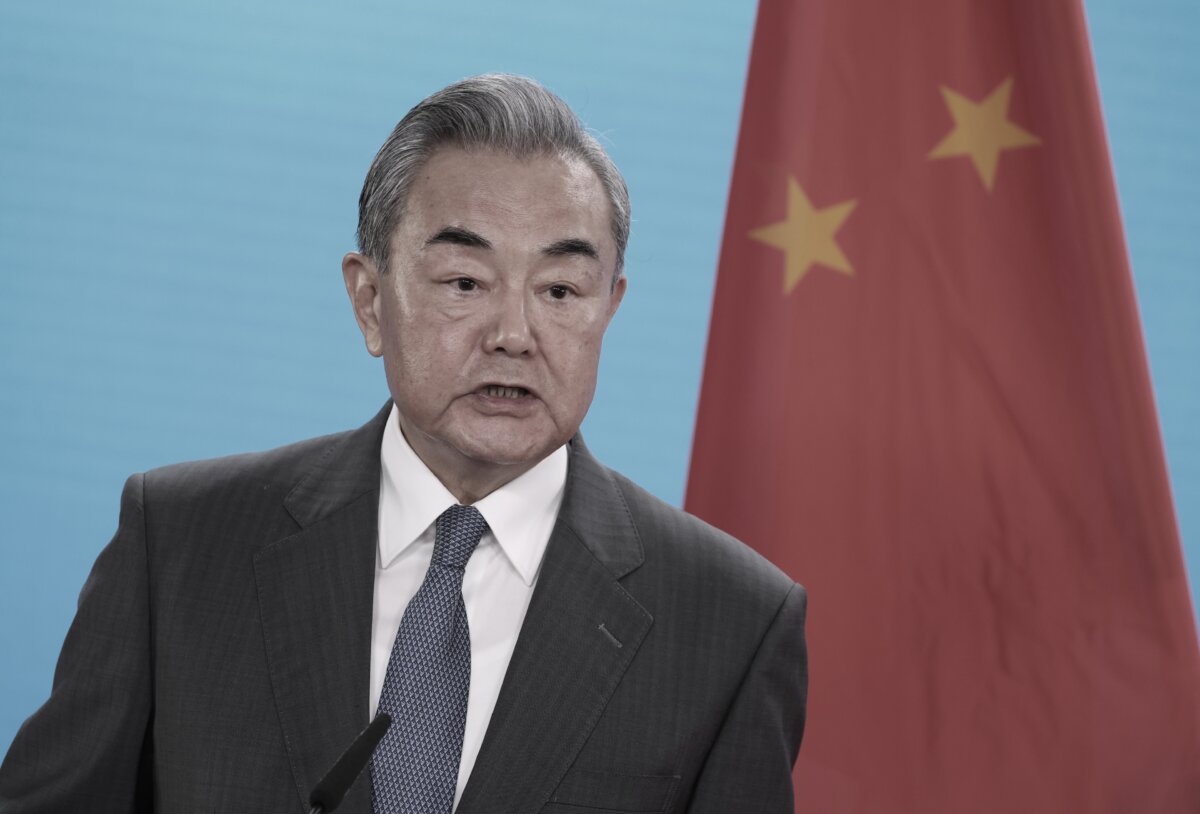
McKay noted the timing of the press conference, coming just ahead of Chinese Foreign Minister Wang Yi’s upcoming visit to Canada on May 28—his first visit to Canada in a decade.
Wang is expected to meet with Canadian Foreign Affairs Minister Anita Anand in Ottawa on May 28 to “advance pragmatic engagement and the implementation of the updated Canada-China Strategic Partnership,” according to Global Affairs Canada.
McKay said Wang’s visit is an opportunity to “reset” relations between Canada and China, and he hopes Wang and Anand will “take the opportunity to operationalize that reset, so that this level of interference ceases.”
Wang is also set to meet with Prime Minister Mark Carney. Carney told reporters on May 27 that he looks forward to Wang’s visit.
“I will have a chance to meet with him. It’ll be a valuable exchange of views, and I appreciate his arrival,” Carney said.
The last time Wang visited Canada in 2016, he drew controversy for lashing out at a Canadian reporter who raised human rights concerns during a joint press conference with then-Foreign Affairs Minister Stéphane Dion.
To counter Beijing’s foreign interference across G7 countries, the MIGS report calls for a “more coordinated G7-wide response,” including the creation of a permanent G7 task force on foreign interference, coordinated responses to cross-border interference targeting multiple G7 states, and the development of a shared foreign influence transparency registry, among other measures.
 Friends Read Free
Copy
Facebook
Tweet
Friends Read Free
Copy
Facebook
Tweet