
Canadians want the government to purchase the best fighter jets for the nation’s air force instead of prioritizing the option that generates the highest number of jobs, a new study suggests.
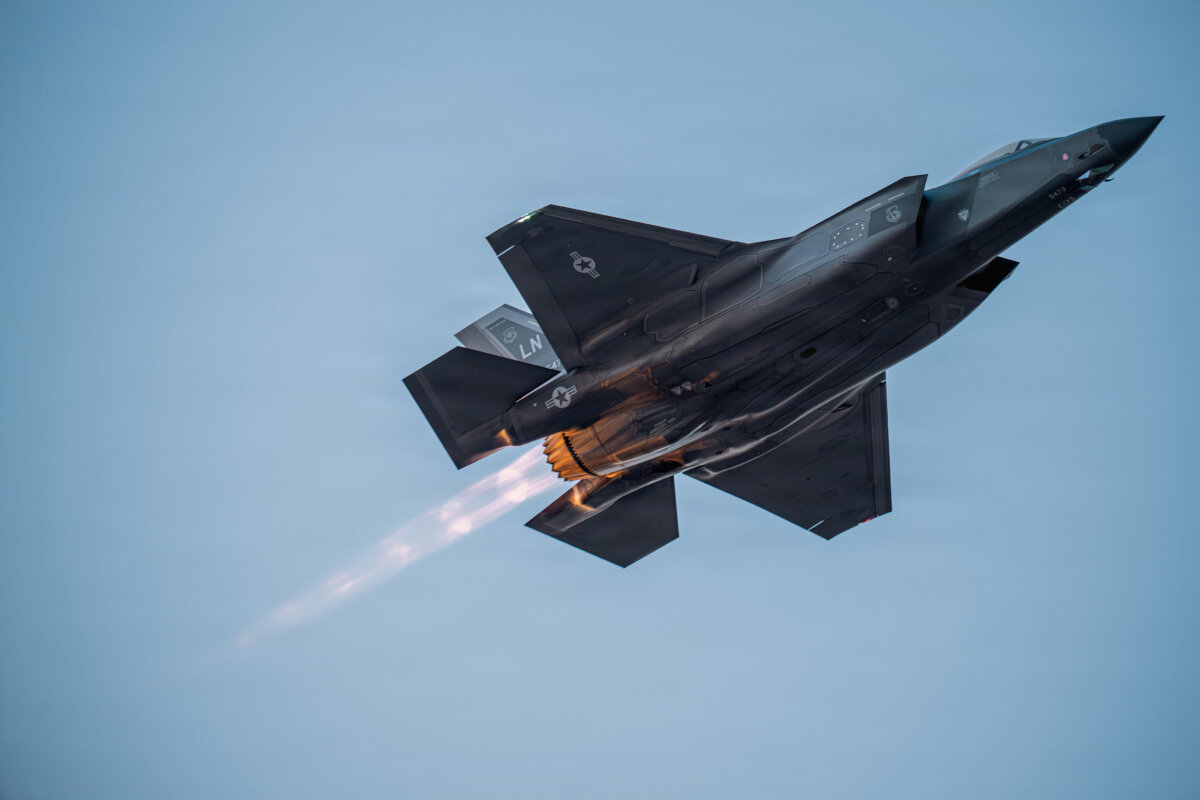
The Liberal government announced in 2023 its decision to procure 88 F-35 jets from Lockheed Martin to update Canada’s aging CF-18 Hornet fleet. But Prime Minister Mark Carney asked for a review of the deal in March 2025 while the trade dispute between Canada and the United States was in its beginning stages.
Ottawa has also been in talks with Swedish company Saab about its Gripen-E fighter jets.
Industry Minister Mélanie Joly said last fall that the European defence company has dangled the possibility of 10,000 aerospace manufacturing jobs coming to Canada if the government puts in an order for a fleet of its Gripen E fighter jets. The company has promised the jets will be built, maintained, and upgraded within Canada.
On the other hand, Joly said Canada “didn’t get enough” out of its current $27 billion deal with American firm Lockheed Martin to buy the 88 U.S.-made F-35 jets. She said Ottawa is continuing to look at what the U.S. firm can offer, but noted she also wants to see if Saab can offer a better deal.
A survey conducted this spring by Nanos Research indicates that Canadians place a higher priority on acquiring the best jets possible than on job creation.
A survey of nearly 1,100 Canadians found that 43 percent of respondents want the government to choose the fighter jets that are “the best solution for the Royal Canadian Air Force,” a 3 percent increase since the same survey was conducted last year.
The number of Canadians who said the decision should be based on job creation decreased from 28 percent in 2025 to 22 percent in this year’s poll.
Eighteen percent of respondents this year and last year indicated that the purchase should be based on defence cooperation with Europe, while 10 percent said it should be based on defence cooperation with the United States, compared to 9 percent last year.
Two percent of respondents in both editions of the surveys indicated that the selection should be determined by the cost of the jets, while the number of uncertain participants increased by 1 percent this year, reaching a total of 5 percent.
The 2026 regional numbers were similar to the nationwide average, ranging from 45.7 percent in Atlantic Canada and 44.7 percent in Ontario, to 41.9 percent in Quebec, 41.7 percent in British Columbia, and 41.6 percent in the Prairies.
The statistics were comparable across both genders, at 43.6 percent of females and 42.8 percent for males, but differed by age. While 48.3 percent of Canadians aged 55 and above, and 45 percent of those aged 35 to 54, favoured the selection of the best military option, only 33.1 percent of those in the 18 to 34 age range agreed.
Atlantic Canadians were the most in favour of the job creation option by far, with 30.8 percent of those surveyed this year choosing jobs as the most important consideration in the procurement deal. Support came in at 22.3 percent in Ontario, 22.5 percent in Quebec, 18.3 percent in the Prairies, and 18.1 percent in British Columbia.
Nearly 27 percent of adult Canadians aged 34 or younger identified job creation as their primary concern, in contrast to just 19.5 percent of those aged 35 to 54, and 20.7 percent of those 55 and older who shared that view.
F-35s Versus Gripens
Ottawa’s announcement of the F-35 review last March said while 16 F-35 fighter jets would be purchased from U.S. firm Lockheed Martin, the remaining 72 aircraft for Canada’s fleet could be sourced from European suppliers like Saab.
Carney has yet to confirm how many F-35 fighter jets Canada will purchase in total. CBC reported in February that Ottawa had quietly initiated payments for key components for 14 additional F-35s. This new order would be separate from Canada’s original order of 16 F-35s, which is expected to be delivered in 2026, with shipments continuing until 2030.
The government said in a media statement last October that Canada is only “contractually obligated to 16 aircraft.”
The F-35 Lightning II and Saab Gripen E are both considered top-tier fighters but they are engineered with distinct priorities in mind. The F-35s provide unparalleled stealth capabilities and sensor fusion for advanced contested scenarios, whereas the Gripen E emphasizes reduced operational expenses, electronic warfare capabilities, and easier maintenance.
The F-35 ultimately outperformed the Gripen E in mission performance in 2021 Canadian evaluations. The data from 2021 indicated that both jets passed mandatory requirements for the Canadian Armed Forces, but the F-35 scored 95 percent on military capabilities, while the Gripen scored 33 percent.
Canada is currently making preparations for the 2028 arrival of the 16 F-35 fighter jets it has purchased. New infrastructure is planned for 4 Wing Cold Lake in Alberta, and 3 Wing Bagotville in Quebec.
Construction was originally to begin at both bases in 2022, but a report from the Auditor General of Canada said the projects were more than three years behind schedule. An assessment performed in December 2024 for Cold Lake and in January 2025 for Bagotville found that both facilities were on track for completion in 2031, according to the report.
National Defence awarded a $15.8 million contract to Raymond EMC Enclosures Ltd. for movable facilities to accommodate the jets until the permanent infrastructure is ready to operate. The enclosures are set to be delivered to Cold Lake between September and next May 2027.
The first eight aircraft will be delivered to the F-35A Pilot Training Center in Luke Air Force Base in Arizona next year, to enable the training of Canadian pilots while the necessary infrastructure to support aircraft delivery in Canada is completed.
 Friends Read Free
Copy
Facebook
Tweet
Friends Read Free
Copy
Facebook
Tweet