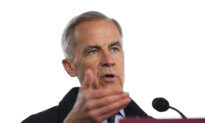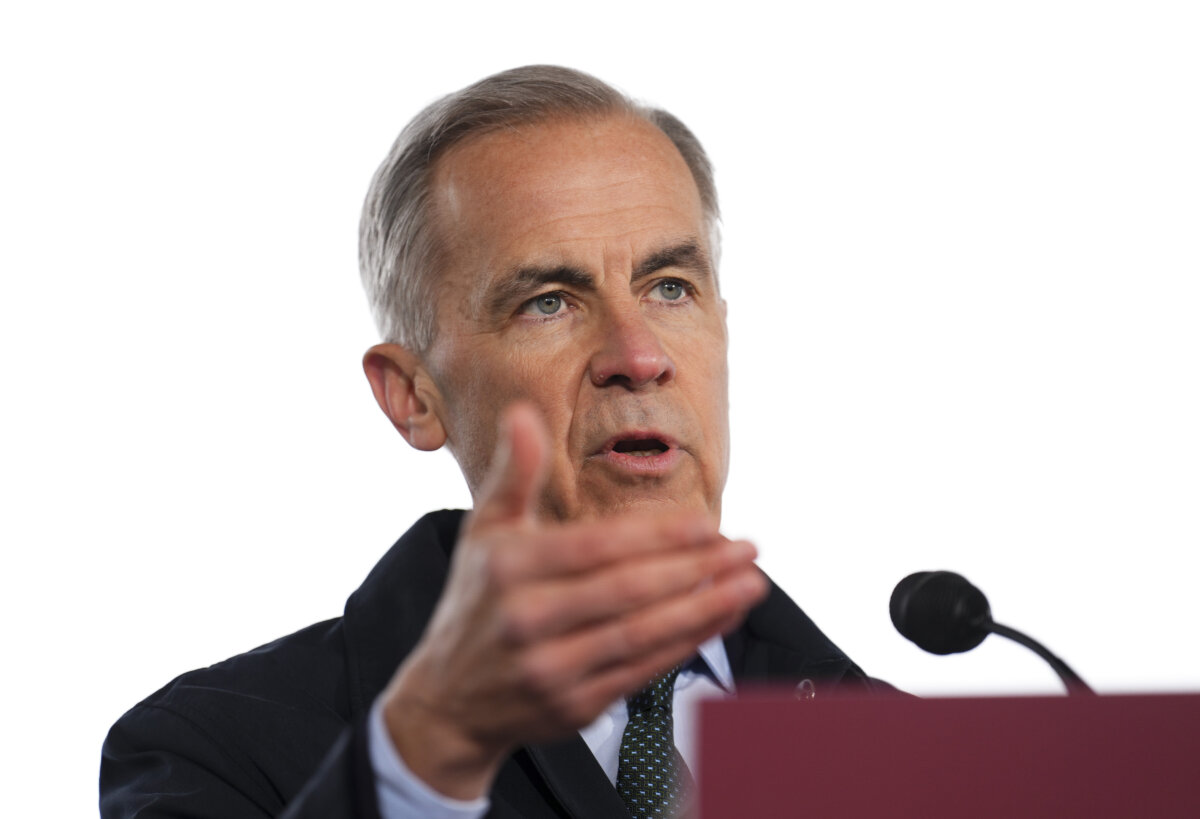

Prime Minister Mark Carney says there are “serious issues” regarding China’s treatment of the Uyghur minority in China, when asked if he believes the persecution amounts to a genocide as declared by a 2021 House of Commons resolution.
The resolution received unanimous support from all parties, including the Liberals, while then-Prime Minister Justin Trudeau and his cabinet abstained from voting.
The question was posed to Carney at a press conference on March 31, as he’s been fielding questions this week about the issue of forced labour in China.
“Look, there are fundamental issues in terms of China’s treatment of the Uyghurs in the past, and they’ve been rightly called out,” Carney said following an unrelated announcement in Wakefield, Que.
When pressed on whether he believes these issues are ongoing, the prime minister said there are “serious issues that remain.” Carney said he had raised the matter during meetings with Chinese officials.
“It’s why it’s essential in our dealings with China, and commercial dealings with China, that we have transparency in terms of where goods come from, the treatment of those workers, and that they fully meet our standards in terms of child labour, slave labour, human rights,” he said.
Conservative Leader Pierre Poilievre criticized Carney for not acknowledging that China is committing genocide.
“Looks like the Davos speech was all a big illusion. Remember he said he was going to put his values ahead of superpowers and authoritarian regimes,” Poilievre told reporters on March 31, referring to Carney’s speech in January at the World Economic Forum in Davos, Switzerland, where he said middle powers should band together to stand up to major powers.
“Now he is showing that he will not put his values forward. Rather, he will pander to a foreign, hostile dictatorship on issues of slavery and genocide.”
The previous day, reporters asked Carney whether he believes forced labour is taking place in China. The prime minister said forced labour takes place around the world and that parts of China are at a “higher risk” for the practice.
The questioning follows controversy sparked by comments from Liberal MP Michael Ma on March 26 during a House of Commons committee meeting on federal electric vehicle (EV) policy.
Ma made the comments after expert witness Margaret McCuaig-Johnston testified about the risk of importing Chinese EVs, which she said could contain parts made with forced labour by the ethnic and religious Uyghur minority. Uyghurs, along with other persecuted minorities in China, are being forced into work camps by the regime, according to governments and human rights organizations.
During his turn to question witnesses, Ma appeared to dismiss the issue of forced labour in China and question McCuaig-Johnston’s credibility. “Your claim about forced labour in Shenzhen—have you witnessed this yourself? Have you been there ever?” he said.
Ma later apologized, saying the comments “inadvertently came across as dismissive of the serious issue of forced labour.” When asked by a reporter last week whether he believes there is forced labour in China, he responded that it happens around the world.
Carney told reporters this week that Ma had apologized as appropriate and that he remains a member of the Liberal caucus.
Ma was elected as a Conservative and crossed the floor in December. Shortly after, he accompanied Carney to China as the sole Liberal backbencher.
China Relations
Scrutiny of Canada-China relations has intensified since Carney’s visit to Beijing, where he lauded the establishment of a new “strategic partnership” with China.
“I believe the progress that we have made in the partnership sets us up well for the new world order,” Carney told Chinese Premier Li Qiang on Jan. 15.
Part of the partnership has involved Canada slashing its 100 percent tariff rate on up to 49,000 Chinese EVs, which are soon slated to enter the Canadian market. Conservative politicians at the federal and provincial level have raised economic and security concerns about the Chinese EVs, as have experts like McCuaig-Johnston.
Meanwhile, the Liberal government says the move will improve affordability and attract Chinese investment to the EV sector. Cabinet also said Chinese EVs will need to comply with privacy laws in the handling of user data.
As part of Ottawa’s pursuit of closer ties with Beijing, Finance Minister François-Philippe Champagne is travelling to China this week. His department says he will meet with government and business leaders to “build strategic partnerships and attract new investments as part of Canada’s broader diversification imperative.”
Asked by reporters on March 30 how he intends to make sure the imported Chinese EVs are free of forced labour, Champagne said Canada has been at the “forefront” of working against the issue. The minister said supply chain integrity is always something raised during trade discussions.
Champagne had rejected the idea of slashing tariffs on Chinese EVs in March 2025 to get Beijing to pull back on its retaliatory tariffs against Canadian agricultural and seafood products.
“We would never be a back door to cheap Chinese vehicles which are overly subsidized and where they don’t respect labour law and environmental laws,” he said.
US Stance
The U.S. administration has kept its 100 percent tariff on Chinese EVs in place and has been adamant that Chinese vehicles coming into Canada will not be allowed to enter the U.S. market.
A focus of U.S. efforts ahead of the review of the United States-Mexico-Canada Agreement (USMCA) on free trade in July has been on preventing foreign countries like China from using Mexico and Canada as transshipment springboards to access the U.S. market.
On March 13, Washington launched an investigation into 60 countries, including Canada, to determine whether they have failed to enforce bans on the importation of goods made with forced labour.
Canada has had a law since 2020 banning these goods, but interception efforts have been limited in scope compared to the United States. Out of 48 suspected shipments detained by the border agency between 2020 and late 2025, 37 were released, two were prohibited, seven were re-exported, and one was abandoned.
In the United States over a similar time span, the law preventing the importation of goods made from Uyghur forced labour has resulted in the denial of nearly 23,000 shipments.
 Friends Read Free
Copy
Facebook
Tweet
Friends Read Free
Copy
Facebook
Tweet